Support for pregnant and new mums experiencing domestic violence
Posted on
Most of us are aware that Christmas time also brings with it a risk of heightened family violence.
But were you aware that pregnancy can further increase a woman’s risk of domestic abuse?
While pregnancy should be a time of excitement and nurturing for expectant mothers, it can also “trigger” violence in their relationships.
Canberra Health Services are currently boosting support for pregnant and new mothers, who risk increased levels of violence as they negotiate pregnancy, birth and child-rearing.
Julianne Nissan, Clinical Midwifery Manager, Maternity Outpatients at Canberra Health Services, says it should be the case that bringing a newborn into the world is an exciting and happy time. “However, this time also brings significant change in relationships and family circumstances and this can exacerbate controlling behaviours,” Julieanne said.
“Violence experienced from an intimate partner before pregnancy is the strongest risk factor for predicting violence during pregnancy. A pregnancy can also act as a trigger for perpetrator jealousy and control and for some women they may experience an increase in violence or experience violence for the first time.”
Women who experience intimate partner violence during pregnancy are four times more likely to report depressive symptoms and 10 times more likely to report anxiety symptoms during pregnancy.
The impact of this violence can affect a mother’s ability to connect with their newborn. The risk of attempted murder or even being murdered, is three times higher amongst women who are abused during pregnancy.
Julieanne noted that every situation was unique because every family had different circumstances. “We want women to know that they are not alone in this experience and we can help them to safely access information and support during this time.”
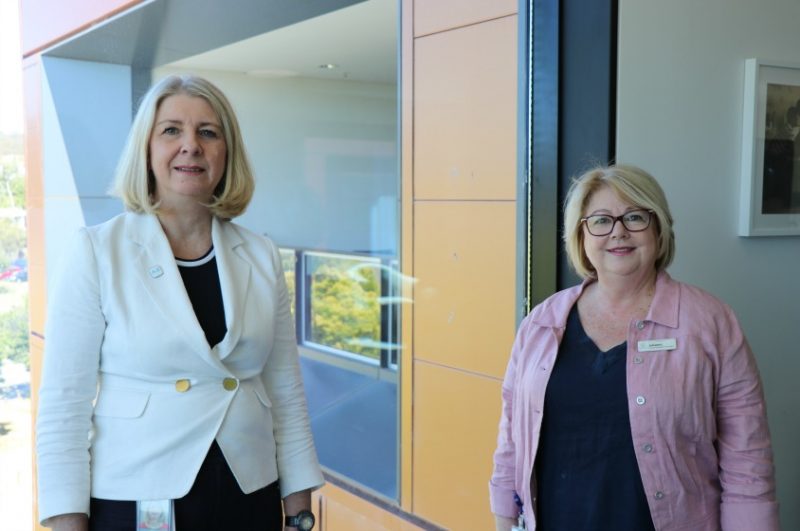
Fiona Holihan, Manager Supporting Safer Families Program, Canberra Health Services, (left) and Julianne Nissan, Clinical Midwifery Manager, Maternity Outpatients, Canberra Health Services.
Fiona Holihan, Manager of the Supporting Safer Families Program at Canberra Health Services, said in light of the risks, Centenary Hospital for Women and Children was actively strengthening support for women throughout their pregnancy.
“This is because midwives in particular, are in a unique position to notice signs and indicators of family violence,” Fiona said.
“Through the Strengthening Health Responses to Family Violence Initiative, which is a whole of health response to address family violence, Canberra Health Services is able to increase the awareness of midwives, the multidisciplinary team and staff to feel more confident in having a sensitive conversation with a woman about family violence.
“By establishing strong relationships between the hospital with the right links to the right community services, there is a greater chance that women who are at risk, will get the support they need, to be safer,” Fiona said.
Julieanne said a program such as this was critical to provide opportunities for women to seek help.
The statistics surrounding domestic violence in Australia are devastating. Intimate partner violence is the greatest risk factor for women aged 25-44 (greater than smoking, alcohol and obesity).
On average, eight women a day are hospitalised after being assaulted by their spouse or partner and one in 12 women hospitalised for partner violence are pregnant.
One in four women has experienced violence by an intimate partner compared to one in 13 men. More than half of the women who experienced violence had children in their care when the violence occurred.
Julieanne and Fiona agreed that friends and family could assist in supporting an expectant or new mother who was dealing with violence by doing the following:
- Notice when a woman becomes more isolated or withdrawn or when there is a significant change in how she interacts with family and friends.
- Make time for her. Many women experiencing family violence can feel lonely, isolated and are fearful. If a woman feels supported and encouraged, she may feel stronger and more able to make decisions.
- Start a conversation by asking how she is.
- If the woman does decide to share her experience, listen to her without judgment. If a woman feels judged she may be less likely to tell anyone else or seek help.
- Believe her.
- Offer ongoing support and understand that she may not be ready to seek further help.
“We would urge any expectant mother to contact or use any of the services specifically set up for women who are vulnerable to family violence. Our program is designed to give our clinicians and midwives to skill set to pick up on the signs and indicators of family violence and thereby this program is appropriately proactive for women, who may feel unable to seek help,” Julianne said.
What services are available for mums?
- Domestic Violence Crisis Service (DVCS) 62800 900 (24 hr)
- Canberra Rape Crisis Centre 6247 2525
- Legal aid ACT 1300 654 314
- Onelink 1800176 468
- Karinya House for mothers and babies 6259 8998
- Women’s legal Centre ACT 1800634669
- 1800RESPECT (24 hour)
What services are available for dads?
- Mensline 1300 789 978
- Everyman.org.au 1800 261 61
- Menslink 6287 2226
- Legal Aid ACT 1300 654 314