Five minutes with author Krissy Kneen
Posted on
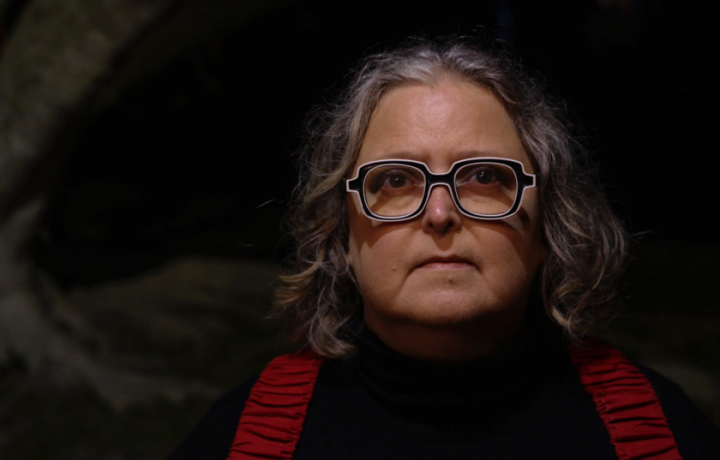
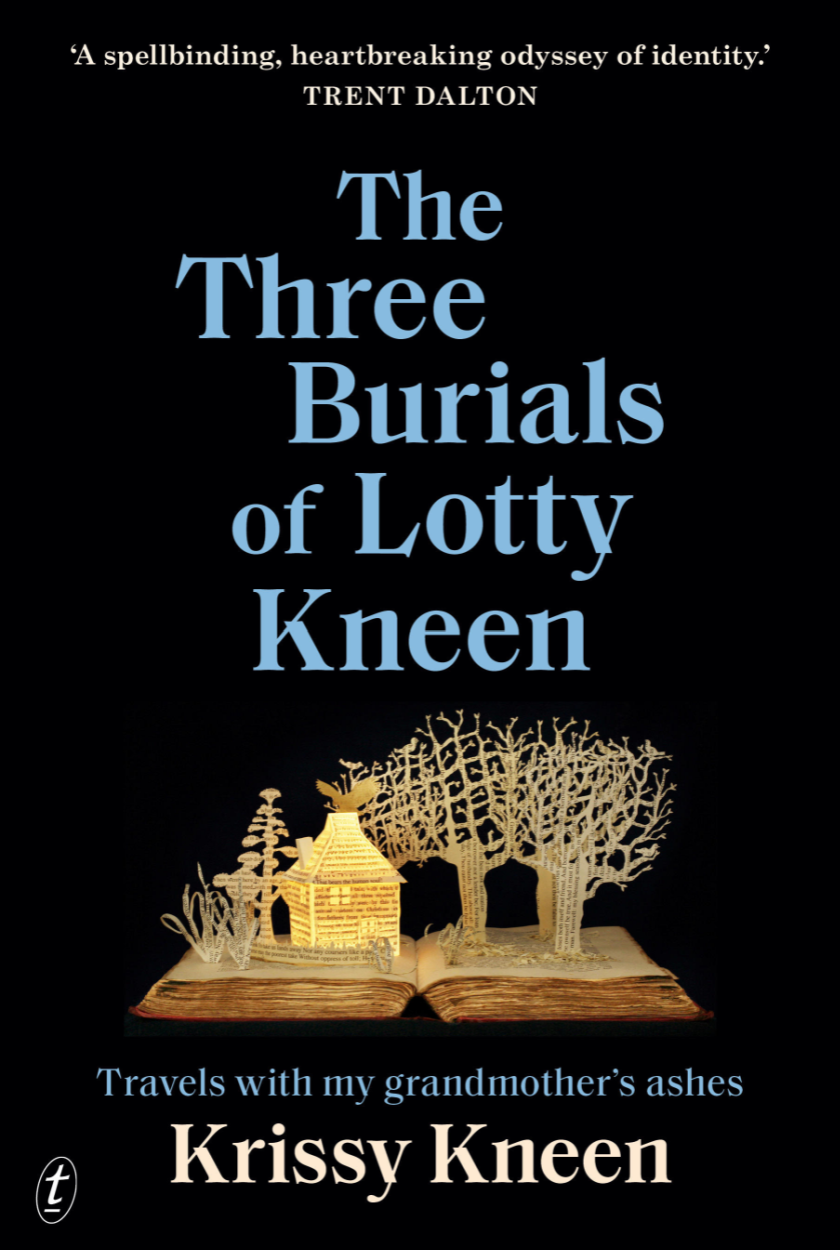
The Three Burials of Lotty Kneen is a tale of discovery—of family and identity which takes memoirist Krissy Kneen to Italy, Slovenia and Egypt to trace her family roots after the death of her tight-lipped and domineering grandmother.
Along the way she uncovers the extraordinary story of the colony of Slovene women who became the nannies of choice for the wealthy Italians of pre-war Alexandria—and identifies as best she can the places where Lotty’s restless, demanding spirit will be at peace.
We took five minutes with Krissy ahead of her Q&A event at Muse on Sat 5 June.
The Three Burials of Lotty Kneen is a discovery of self and family—where did this need for discovery come from?
There’s a fairytale about a woman who marries a rich man. She goes to live in his mansion and has everything she could possibly want, nice clothes, food, books, money.
Her husband goes away regularly and he has only one rule for her, don’t open this one particular door. Of course, this gnaws at her and she can’t leave the idea of the door alone.
And when she finally cracks and opens the door, that’s where the bodies are buried—literally—the bodies of his previous wives.
The fact that I was not allowed to know anything about my own family history was like having a closed door that I was forbidden from opening. It gnaws at you. I felt like I didn’t belong here. I wasn’t like all the other kids, yet I didn’t have a strong community like my greek and Italian and Indian friends at school.
I kept coming back to the closed door—the one about my family history. My grandmother refused to let me know anything about my Slovene heritage or why my mother and grandfather were born in Egypt. I kept searching for the key. I knew that’s where the bodies were buried.
Your fascination with science comes through the book—tell us a little about that.
When you don’t have many family stories, or access to your family history, one of the only things that will place you in the world is your physical body. Genes, microbiome, inherited traits, these are all passed down from mother to daughter.
Your microbiome in particular (almost half your cells are not human cells at all but all a part of the rich microbiome) is passed down through the female line. Your first breath fills you with the viscera of your mother and that has been passed down from her mother—it has a long lineage!
But you know, looking inside my body just provided me with more questions and few answers, but I certainly enjoyed learning about genetics and epigenetics and the gut.
I have a theory that migration impacts on people physically as food culture changes with migration and it completely changes your gut microbiome. I would love to read a book about that.
There’s an aura of fable and fairytale about the book—how deliberate was this?
My grandmother was obsessed by fairytales so I knew that myths and tales needed to provide a structure for the book. This was a quest, just like a lot of good fairytales.
I was searching for the answer to a riddle, but unlike a hero’s journey where the protagonist goes and fights demons and brings the gold back to the village, my journey took me from exile back to the village.
My riches that I found were the knowledge of a shared history and a community to call my own.
Did you gain a different view of matriarchy through the research into your book?
This turned out to be a powerful story of hidden women’s history. What I learned on my journey was that there were strong women who sacrificed the support of their family and the safety of home to go overseas to work and support their villages.
It is certainly a feminist story but a complicated kind of feminism and one with a lot of sadness shrouding it. I grew to understand my grandmother’s power and the power of all those strong resilient women who had to leave all they knew and their loved ones to save them from starvation.
It really underlined to me that we are often telling the stories of brave men, soldiers, fighters, merchants, but we rarely whisper women’s history and we even more rarely build monuments to those women.
The book took you on a literal journey to Slovenia and Egypt—what did you learn about yourself while in these places?
The journey made sense of me. It gave me a community, it showed me that my life is shaped by the things that happened to my ancestors. I think the most surprising thing was to realise that you can’t escape the actions of your ancestors.
Those actions ripple down through the generations and shape you in so many ways. Even if you don’t know what had happened to your mother or your grandmother or your great grandmother, it still lives in you.
What books were relevant to your writing and research of The Three Burials of Lotty Kneen and what’s on your TBR pile?
I have just started Kaya Wilson’s book As Beautiful as Any Other and I am loving it. I have also got Susan Johnson’s book From Where I Fell lined up, after just having finished Anita Heiss’ beautiful Bila Yarrudhanggalangdhuray.
During the writing of The Three Burials of Lotty Kneen I was reading a lot of ghost stories—this book is a kind of ghost story. Every page is haunted by my grandmother. I was also reading books by Eastern European authors including the work of Ludmilla Petrushevskaya I highly recommend her dark, disturbing but compelling books.
THE ESSENTIALS
What: Author Q&A with Krissy Kneen
When: Saturday 5 June from 4-5 pm
Where: Muse Canberra, 69 Canberra Avenue, Kingston
More information + tickets: musecanberra.com.au/events/2021/4/3/krissy-kneen-the-three-burials-of-lotty-kneen