There’s no place like home, a podcast confronting domestic violence

Posted on
Ten brave Australians are speaking candidly about abuse they’ve endured at the hands of a current or former partner in “There’s No Place Like Home”, a compelling new podcast by Future Women that puts survivors at the centre of the story.
This ten-part series reveals what is really happening behind closed doors for victims of domestic and family violence. The chilling and emotional tales of victim-survivors are captivating, and beautifully told. Personal stories are interwoven with expert testimony and the supportive voices of friends and family.
Geraldine recalls the verbal, emotional, financial and physical that left her a shell of herself, feeling powerless to leave her partner almost seven years ago. Unlike other countries like the UK, Scotland and Ireland, Australia is yet to criminalise coercive control. Advocating for new legislation is Geraldine’s mission. This is her story.
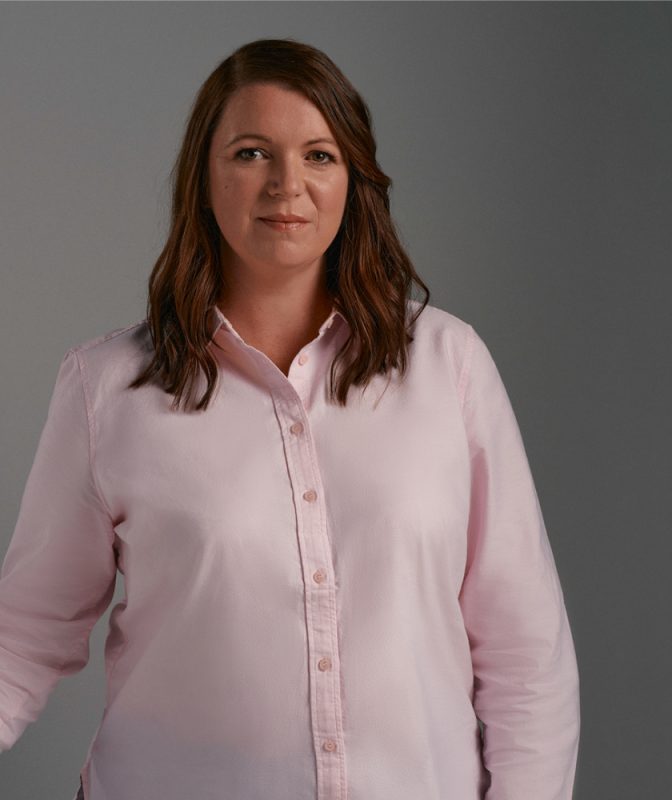
FOR HALF A DECADE I LOVED SOMEONE. I trusted him. I yearned for his love and respect. My name is Geraldine. I am a mother, student, and consultant. And I am also a victim-survivor of intimate partner violence.
When I finally escaped, this man left me physically bruised and I wore his abuse on my face for the world to see. His abuse. His shame… On my face.
I had survived, but I felt dead inside. What no one could see was the way in which his emotional abuse had broken my heart and his psychological abuse had destroyed my mind.
Experiencing that deliberate abuse and violence from someone I truly loved and trusted has changed me. I cannot be who I used to be. She is gone. I still grieve for her and the carefree life that I was supposed to have.
Intimate partner violence is a pattern of behaviour designed to exert power and control with the aim of ensuring dominance of the perpetrator and compliance of the victim. It diminishes autonomy and destroys the victim’s sense of self.
Well-meaning people have assured me since that I am “not a victim but a survivor”. It’s intended to empower me. Designed to help me discard the label of “victim” and focus solely on the fact I am still alive. It is as if they want me to pretend that the abuse and the effect it has on me does not exist and move forward.
Do they know my survival was not a personal triumph but the product of circumstance and luck?
Perpetrators who abuse women and use violence take advantage of the fact people feel anxious about confronting the reality of that violence. They know the community is hesitant and more comfortable to do nothing, turn their attention elsewhere, to ignore and not get involved.
But as a victim-survivor? I insist that we look, that we listen and that we honour my experience and the experiences of so many others. How? By creating safety for other women and ensuring accountability of perpetrators.
For years I have swung between desperately wanting to forget that violence ever happened to me and examining every memory with clarity and care. I have tried to understand and make sense of all the confusing details.
What lessons could I extract from the past to protect myself in the future? Or perhaps there was nothing could have done very differently? And why am I even asking these questions in the first place? Why are we all so quick to interrogate the actions of a victim without properly attributing blame – all the blame – to the perpetrator.
It was his abuse and his shame, that destroyed my life.
Publicly identifying as a victim – and not a survivor – is my act of resistance against perpetrators whose behaviour thrives under silence and shame. I want to reclaim this word ‘victim’. Why? Because being a victim does not expose my weakness, it exposes the lifelong consequences of perpetrators’ abhorrent behaviour.
Our country uses the term survivor as a crutch. It disguises a cruel pursuit of making victims somehow responsible for their own situation, suggesting that they could have done something to stop it.
To my mind, this language makes victims complicit in our own abuse.
Believing it was the victim’s naivety and unintelligence that finds them in love with a perpetrator of violence, is far more comfortable than realising it could happen to anyone. That we are all capable of loving someone who might destroy us.
Perpetrators are not evil creatures lurking in dark corners of the world. They do not wear a badge or a costume. They are unknown and unrecognisable because they walk amongst us, without remark. They exist in our workplaces, in our communities, and in relationships with people we know and care for.
I work professionally in the family violence space. This work gives me purpose. It is a way of making meaning from what I went through. I can contribute to creating change. As a victim-survivor working in family violence prevention, I feel a level of responsibility to outwardly represent hope, healing and recovery.
I am ambitious about creating radical social change. But I also understand that the most powerful thing I can do is just work on myself. I keep pushing up against a history of abuse that has made me believe I am unworthy and unintelligent.
I am, however, determined to prove that I am capable, that I will be successful and that I can move forward. Not to the world, but to myself.
I have previously said that my lived experience is a strength and not a vulnerability. But what I am beginning to understand is that by acknowledging and understanding my vulnerability, I find my strength.
I am committed to showing up authentically, without any identity management. I am a victim. I was abused. And yet still I rise.
You can listen to Geraldine’s story here:
For other stories in the There’s No Place Like Home, you can go here.
There’s No Place Like Home is a Future Women collaboration with Commonwealth Bank, which is supporting long-term financial independence for victim-survivors of financial abuse through CommBank Next Chapter.

