First Nations artists make individual mark on history at National Gallery
Posted on
Ceremony is at the heart of the 4th National Indigenous Art Triennial, the National Gallery of Australia’s flagship exhibition of contemporary Aboriginal and Torres Strait Islander art.
Ceremony remains central to the creative practice of many Aboriginal and Torres Strait Islander artists. For Arrernte and Kalkadoon woman Hetti Perkins, curator of the National Gallery of Australia’s 4th National Indigenous Art Triennial: Ceremony, the concept of iteration is at the heart of ceremonial practice, an acknowledgement of the past, signalling an artist’s conscious engagement with what has come before.
“Ceremony is not a new idea in the context of our unique heritage, but neither is it something that belongs only in the past. In their works, the artists in this exhibition assert the prevalence of ceremony as a forum for artmaking today in First Nations communities,” Perkins says.

Penny Evans, K/Gamilaroi people, gudhuwali BURN, 2022, installation view, commissioned by the National Gallery of Australia, Kamberri/Canberra for the 4th National Indigenous Art Triennial: Ceremony with the support of Pamela Pearce and Wally Patterson through the Patterson Pearce Foundation, image courtesy and © the artist
“In each ceremonial action, artists make an individual mark in our history. Ceremony is the nexus of Country, culture and community, and the 4th National Indigenous Art Triennial is another stitch in a timeless heritage.”
The flagship exhibition of contemporary Aboriginal and Torres Strait Islander art, on display on Ngambri and Ngunnawal land in Kamberri/Canberra, is free to the public and runs until 31 July. It showcases 18 new bodies of work by 38 First Nations artists from across the country.
The expansive exhibition includes works in the National Gallery Sculpture Garden, Fern Garden and on Lake Burley Griffin and brings together a diverse range of artists working in a variety of art forms including sculpture, installation, painting, ceramics, moving image, and photography.

Nicole Foreshew, Wir Guwang (sky rain), 2022, installation view, commissioned by the National Gallery of Australia, Kamberri/Canberra for the 4th National Indigenous Art Triennial: Ceremony, image courtesy and © the artist
A significant focus for the exhibition is engagement with regional traditional custodians. Respected Elder Dr Matilda House and her son Paul Girrawah House have created Mulanggari yur-wang (alive and strong), a permanent public art installation of tree scarring in the National Gallery Sculpture Garden. Carving designs onto, and objects from, living trees without harming them is a cultural practice distinctive to south-eastern Aboriginal communities.
Artists from the Yarrenyty Arltere and Tangentyere Artists collectives have collaborated in Mparntwe/Alice Springs to create a soft sculpture in the form of a Blak Parliament House—an Aboriginal take on Australia’s political heartland.
When the national capital’s Lake Burley Griffin was created in 1963, a ceremony ground near the current National Museum of Australia was flooded. Aṉangu artist Robert Fielding presents Holden On, a creatively resurrected abandoned car whose strategic positioning comments on the political annexing of Ngambri and Ngunnawal land. These cars are laden with memory and symbolism: they are associated with the people who owned them and the journeys they took in their homelands.
Over the opening weeks of the exhibition, Wiradjuri artist and writer S.J Norman inscribed cattle and sheep bones with Walgalu words to interrogate the impacts of colonisation on culture and Country as part of his Bone Library installation.
National Gallery Director Nick Mitzevich said that since the National Indigenous Art Triennial was established in 2007, it had become one of the most important exhibitions for First Nations art, artists, and culture in Australia. “Ceremony continues the legacy of First Nations excellence seen throughout history.”
THE ESSENTIALS
What: 4th National Indigenous Art Triennial: Ceremony
When: Until 31 July 2022
Where: National Gallery of Australia
Web nga.gov.au/niat
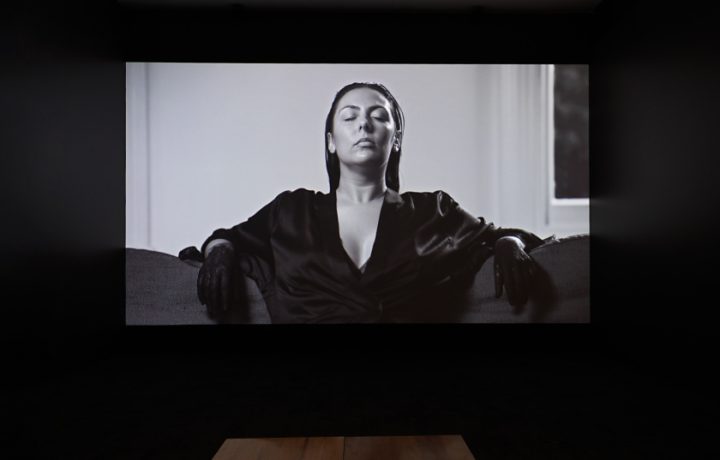
Main Image: Hayley Millar Baker, Gunditjmara and Djabwurrung people, Nyctinasty, 2021, installation view, commissioned by the National Gallery of Australia, Kamberri/Canberra for the 4th National Indigenous Art Triennial: Ceremony with the support of Kerry Gardner AM and Andrew Myer AM, and the Australian Government through the Australia Council for the Arts, its arts funding body, image courtesy the artist and Vivien Anderson Gallery © the artist.