Canberra is Australia’s Pilates capital – and we have the notes to prove it

Posted on
Hailey Bieber might have declared that Pilates is “a little over” in her interview with Time, but with over 20 distinct Pilates studios to choose from in Canberra, it doesn’t feel like her message has hit home.
Just the opposite. In fact, it seems that Canberra is packed full of Pilates princesses.
Taking the world by storm as one of the trendiest workouts to do (and be seen doing) in the 2020s, Pilates is a decades-old method dating back to the 1920s. Focusing on strength, breath, and whole-body alignment, it’s become a cultural phenomenon – and literally the most popular workout in the world.
View this post on Instagram
According to the 2025 ClassPass Look Back Report, 2025 saw Pilates named the most booked workout globally for the third year in a row. It also saw a 66 per cent increase in overall reservations from 2024, with over 15 million Pilates reservations made on ClassPass alone.
If you need even more evidence that Canberra is Australia’s Pilates capital, we have the data to prove it. When looking at the ClassPass Global Superlatives for 2025, Canberra was listed “Most likely to book a Reformer Pilates Class”. The stats don’t lie – and as a reformer Pilates instructor myself, I can attest that we have a thriving community.
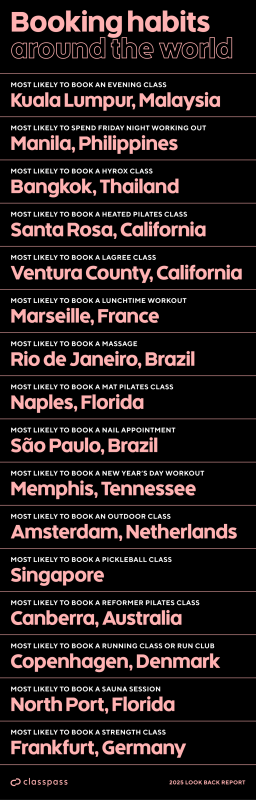
I told you we had notes.
I’ve been teaching casually at GROUNDUP since 2025 after becoming certified with Spicy Pilates (you can read about my journey here). Working with a range of experience levels – from beginners to true Pilates princesses who easily put me to shame – one thing I’ve noticed is that many people want to try Pilates but don’t necessarily know where to start.
So, here’s how to become a Pilates person according to an instructor, covering (hopefully) everything you’ve ever wanted to know.
What exactly is Pilates?
Before Pilates was a form of exercise, it was a person.
Joseph Pilates created the Pilates method after being interned in a camp with other German nationals during World War 1. Using his own knowledge of physical fitness – developed to help overcome childhood ailments – he created a program to help the rehabilitation of injured, disabled, and sick prisoners of war.
The method was influenced by different sources (including yoga, gymnastics and the movement of animals), and the aim was to work the mind and muscles in harmony. Originally known as ‘Contrology’, the method was later renamed to ‘Pilates’ and saw the invention of various pieces of equipment that you recognise today – including the Reformer, the Wunda Chair, the Magic Circle, and the Cadillac.
At its core, Pilates is built on six principles: breath, concentration, centring, control, precision and flow. Using controlled, flowing movements and targeted breathing to balance the body and strengthen stabilising muscles, it focuses on precision rather than rapid repetitions.
What’s the difference between Mat and Reformer Pilates?
It’s as simple as the equipment. Mat Pilates is considered the ‘traditional method’ and follows the original exercises that Joseph Pilates created. Performed on a floor mat using your own body weight, it might involve the use of props (like the Magic Circle or the ball) and is sometimes considered the ‘harder’ of the two.
Reformer Pilates is practised on a specialised, spring-loaded carriage with ropes and is popular due to its highly adaptable nature. It’s believed that the variation was invented after Joseph Pilates used iron bed frames and coiled mattress springs to help bed-bound patients exercise using the resistance. It’s great for those recovering from injuries,
While these are the two main forms of Pilates, it is worth noting that there are many other alternative styles.
Following a landmark U.S. federal court ruling in 2000, the name ‘Pilates’ is actually considered a generic term after it lost trademark protection, meaning that anyone can legally use it to describe their classes. Hybrid and specialised classes like HIIT and Power Pilates are now often seen on timetables, fusing the classic principles with high-intensity movement.
There’s no right or wrong answer on what kind of Pilates class to attend, so it’s worth doing some research to see what’s right for you!
Is Pilates safe for everyone?
If you have an injury, it’s worth speaking to your doctor before booking into a Pilates class. While classes can be modified by your instructor, there are some movements that may aggravate conditions like osteoporosis, herniated discs, or severe joint issues.
Pilates is a great workout to do during pregnancy, but you will need to let your instructor know about your condition before class – that way they can make sure your core doesn’t become overstressed and they can offer modifications after the first trimester (where it’s recommended you avoid lying flat on your back). Hot Mat Pilates – where the room is heated to over 35 degrees – is not prenatal-friendly.
Is Pilates really all about matching sets and matcha lattes?
Nope! While Pilates has generated its own ‘aesthetic’, there is no need to look like what you see online.
There is no ‘generic’ look for a Pilates student or a teacher. Some people love attending in matching sets with a slick-back, others rock up in oversized t-shirts. Some grab a post-class matcha; some will crack an energy drink. Personally, I’ve had clients do class in their pyjama pants with a steaming hot coffee next to them. It’s all about doing what makes you feel good (as long as it’s safe).
That said, it is recommended that you wear something comfortable that isn’t likely to catch on a reformer or equipment. More fitted clothing also allows us to clearly see your alignment (to adjust as needed), and grip socks with rubberised bottoms are essential for stability on the reformer carriage.
Oh, and don’t wear a claw clip. No matter how cute it looks, it will hurt your head and neck when you do any work lying on your back.
Is Pilates just for women?
Pilates is designed for everyone. While content online does predominantly feature women, the focus on core strength, flexibility, and muscle balance means it’s also great for men. In fact, many professional male athletes use it for rehabilitation and conditioning!
What should I bring?
A water bottle, grip socks and a towel are always a good idea.
Is it okay to take breaks during class?
Absolutely. Listen to your body and take breaks whenever you need – you don’t need to wait for the teacher. Make sure to stay hydrated, and if any movement feels ‘wrong’ or hurts in an unusual way, stop and notify the instructor. It’s our job to make sure you’re moving your body in a safe way.
What advice do you have for someone trying it for the first time?
Pilates is about mind-body connection, so a big part of that is listening to yourself and what you need. Take modifications and check in with your body throughout the class.
But the most important thing? Go with an open mind and have fun! Every studio is different, so it might take a while to find a style that resonates with you, but when you do, you’ll be hooked.
Feature image: Muse Pilates Gungahlin.