How I Got Here: Helen Dalley-Fisher AM
Posted on
Admit it, we’ve all been there – stalking social media and LinkedIn profiles, trying desperately to figure out how the hell someone got their dream job.
It seems impossible, and yet there they are, living out your career fantasy (minus the itchy business suit). It might seem hard to believe, but once upon a time, they were also fantasising about their future career, and with some hard work, they made it.
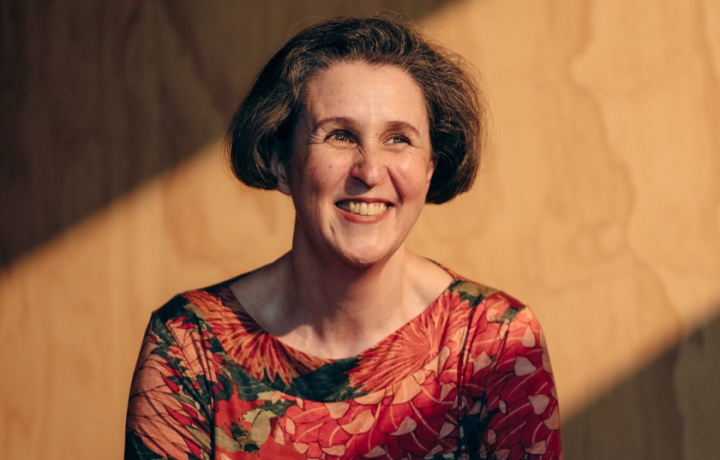
Welcome to How I Got Here, HerCanberra’s series that reveals everything you want to know about the secrets of career success. This week we speak with Helen Dalley-Fisher AM, a gender equality and human rights leader with extensive experience across law, advocacy, public policy and community sectors. She is also the Executive Director of the National Foundation for Australian Women and Chair of the ACT Women’s Advisory Council for Gender Equity.
Beginning her career as a human rights lawyer, Helen progressed to gendered policy advocacy. She was the Convenor of the Equality Rights Alliance (ERA), Australia’s largest network of feminist organisations, for 12 years. In 2025, she was appointed a Member of the Order of Australia for services to women and girls and to law. Helen was involved in the UN and regularly contributes to shadow reports on various human rights treaties. Here, we find out more about her career journey.
Existential crisis time: Who are you and what do you do?
That depends… what day is it? I’m the Executive Director of the National Foundation for Australian Women, Chair of the ACT Women’s Advisory Council for Gender Equity and I run a consulting business advising on human rights and gender. At parties, I sometimes describe myself as a professional feminist. I advocate for the human rights of women and girls and advise governments and businesses on how to use their work and systems to improve gender equality for all of us.
I’m also involved in supporting and developing the feminist movement in Australia, from mentoring individuals to advising NGOs and feminist networks on how to respond to challenges.
Let’s go back to when you were a kid, have you always dreamed of working in this industry?
No! When I was a kid, I wanted to be a barrister. If I’m truthful, that was mostly because I wanted to swoop about in robes like an oversized bat, but it was enough of a goal to get me through an arts/law degree and out into the real world. My career planning has always been a bit haphazard.
Tell us about when you were first starting out, what set a fire in your belly to get here and how did you do it?
My mum was my first feminist influence, and my arts degree had a strong gender focus, but I always thought feminism was a state of mind, not a career plan. Consequently, working out what I’m good for has been a slow burn.
I started in a corporate law firm where I specialised in employment and discrimination law. I noticed that many of my clients used stereotyping as a shortcut to decision-making. I also noticed that the further up the food chain you went, the more often you found yourself in a room full of white men called Paul, James or David. As a white woman with two university degrees, I was used to thinking of myself as pretty privileged, but in these rooms full of powerful people I didn’t see many people like me. If people like me weren’t making it into positions of power, what hope was there for anyone with a disability or a person of colour?
So I left my job and started volunteering at a community legal centre, making myself useful until a paid job came up. I spent 10 years working in community legal centres, helping different clients who all had very similar issues. This got me thinking about the inequities that are unconsciously built into our legal systems, our economy and our governments, and to wonder whether patching up the casualties was the best use of my time. Then one day I saw an ad for a job coordinating one of the National Women’s Alliances. I applied and made the move from helping individuals via the legal system to making upstream improvements through the political system.
Recall a time when you wanted to chuck it all in; what did you tell yourself when it got too hard?
While it sounds exciting and dynamic, making change can be slow, difficult work. Even identifying a problem can take years, and then we need to develop the data pool and build the case for change. At the end of that process, we sit in front of parliamentarians, CEOs and public servants and try to convince them the change will be worth the effort. Some campaigns will take 10 years; other changes can take generations.
When I get frustrated, I remind myself how far we’ve come. In Australia, we have a long history of committed, well-documented feminist action. Everything that we’ve achieved so far is thanks to those women. It helps to remind myself that real change isn’t made by a single hero by the time the credits roll – it’s made by teams of people supporting each other, listening to different perspectives, passing on what they’ve learned and persisting.
What was your biggest break?
Serendipity has been the hallmark of my career. Every time I’ve shifted focus, it’s been enabled by an opportunity that popped up out of the blue. But being offered opportunities to participate in global spaces took my skills to new levels. Soon after starting in community law, I attended UN meetings in Bangkok and New York as an advisor to the fabulous disability expert Dr Rosemary Kayess, who was participating in the negotiation of the Convention on the Rights of Persons with Disability. That pushed me well outside my comfortable little world – I learned a lot, especially about listening and adapting.
Ten years later, I got the chance to attend the Commission on the Status of Women at the UN in New York. I’ve now attended CSW many times, enjoying the twin privileges of meeting feminist activists from around the world and of introducing Australian activists to the UN. That’s not what I expected from my career, back when I was a baby lawyer from a country town.
What’s the best piece of advice you’ve ever received?
Leadership is a caring role. Good leaders harness energy (your own and others’) and hold the group’s strategic purpose, while keeping one eye on the horizon and the other on the needs and relationships within your group. In a feminist model of governance, being a leader means using your power to care for your team and the project, not exercising power over people.
What is it about your industry that you love and what makes you want to pull your hair out?
I love the intellectual challenge of gender analysis, but the best thing about my work is the people. Feminist activists tend to be optimists, even when they’re frustrated. They can be wickedly funny – humour is a key survival tool. It’s lovely to work in a sector in which hope, listening and empathy are core skills. It’s also a creative sector. I am surrounded by people who spend their days imagining how the world could be different and finding creative ways to communicate that to others.
I regularly rant about the problems that arise from poor resourcing for feminist action. We unconsciously assume that work done by women isn’t as good or as important as work done by men – that’s one of the reasons we still have a wage gap. Governments and corporations often see gender equity as a nice-to-have, when it is actually essential to efficiency and critical to the health of our communities.
Consequently, it’s hard to get stable funding or investment in feminist action. As a result, we can end up competing with each other for resources, providing unpaid or underpaid labour and working in silos because we don’t have the luxury of time to build relationships outside our usual circles.
Tell us how you ‘stay in the know’, what media do you consume?
Feminism is truly an international language and some of the most interesting thinking is coming from grassroots women from Global South countries, who are self-publishing their analysis and experiences on platforms such as Substack. Very little of the latest feminist thought makes it to mainstream media, so I mostly keep up to date by following the work of my peers.
Part of my job involves understanding the effects of patriarchy on men and boys. There’s a growing body of research which shows that extremists are deliberately using misogynistic narratives to get the attention of boys and young men who are feeling insecure. This vulnerable audience is encouraged to see male dominance over women as the answer to their woes, and then slowly introduced to racist, Islamophobic, antisemitic, and even anti-democratic ideas. This means I sometimes check in on what is being said on platforms such as Reddit, X, and 4Chan, although I am not very diligent about this! As an antidote to the sadness of those conversations, I turn to comedians such as Hannah Gadsby and Scout Boxall.
Where do you see yourself in five years?
I suspect the next five years are going to be ‘interesting times’. We are currently seeing a nasty backlash against women’s human rights across the world. Rising levels of racism, misogyny, islamophobia and antisemitism make me concerned that people are turning on scapegoats rather than dealing with big, pressing problems like inequitable tax systems, cost of living and climate change. But there are brilliant people out there with exciting ideas about how to tackle these problems, people building up their communities and people having constructive discussions about how to nurture the things that matter most to us. I don’t much mind what role I play, as long as I get to help those people be heard.
Why should people follow in your footsteps?
When I was young, I thought that the world we live in was an immovable certainty. I thought change-makers were idealists, not living in the real world. But as I got older, I realised that our legal and political systems, our economy and even our values are all human creations which have changed many times over the generations. We need as many different voices as possible actively engaged in deciding the direction of future changes. If we don’t engage, our futures will be decided by a small group of people who will look after their own needs.
What advice would you give your past self?
You are not alone. You don’t have to do everything yourself. You are surrounded by clever, willing people who can give you advice and support. You only need to find them and reach out. Trust me – it’ll end in friendships and new ways of seeing the world (and occasional coffees in Manhattan).