Second-hand, baby! How to find pre-loved baby ‘booty’

Posted on
My friend had the most gorgeous second-hand bassinet to give away.
It was an expensive brand in near-new condition (let’s face it, tiny babies don’t do much damage).
But none of her pregnant friends would take it. The handful of likely candidates she knew were all professional women nearing 40. These ladies were having their first baby and only the “best” would do. This involved spending about $2000 on a brand new “bedroom suite” for baby – a matching wooden bassinet, cot, set of drawers, wardrobe and a change table.
OMFG. Have we lost our minds?
As you may know, nesting instincts can be incredibly strong. In my experience nesting may manifest by needing everything to be perfect for baby. This can translate into wanting a host of expensive products that seem be “just right.”
But remember that baby will not know that you’ve spent all that money. Of course the essential ingredient for baby is love, not money. In the year following baby’s birth many of us are going to go through some financially lean times in order to spend time at home with our baby. Make that money work harder by not spending it on stuff that really doesn’t matter, like brand new everything.
If you’re nesting instinct is in overdrive, get pre-loved items and pour your energy into renovating them. You’ll get a super sense of achievement and the outcome will be a unique customised gift for your child. In our family, we were given safe but slightly pre-chewed cots for both our girls, which we painted in bright colours we never could have bought off the shelf.
There are always (dull and frankly pointless) articles in the paper about how it costs hundreds of thousands of dollars to raise a child. Yes, you do have to feed and clothe them. But having a baby can be pretty cheap if you know how. At least for the first little while! The answer is getting everything – well almost – second-hand. I’m obsessed with the second-hand economy, and I’m going to convert you too.
Not only buying second-hand much, much cheaper, it keeps things out of landfill. And who doesn’t feel good about that?
Now let’s start at the beginning.
Work out what you need
When my first child was about a year old, I was in the grip of postnatal depression. I tried to restore order by shopping obsessively for second-hand clothes. I bought piles and piles and piles more than she could ever possibly ever wear. Don’t do this. It’s not frugal and even though it’s second-hand, it’s still needless consumption and may result in you feeling even more overwhelmed.
Try to get a good idea of what you will need and write it down. Research. There are lots of useful lists online. Talk to friends and relatives with small kids and ask them. Then make sure you stick to the list you’ve made.
Can I really get everything I need second-hand?
If you can buy it new in the shops, you can probably get it second-hand if you know where to look. Small babies and children who aren’t yet walking usually don’t wear things out, especially clothing. They grow out of it before this happens. This stops being the case when children turn 3 or 4 and they start to hammer their toys and clothes.
How much should I pay for second-hand items?
Everyone has a different view on this. It will partly depend on the specific product you are buying and the condition it is in. For example, some people believe furniture in good condition should sell for 20 or 30 per cent less than the original price. Used clothing doesn’t retain value in the same way although some items – like cloth nappies or baby carriers – may still be quite dear second-hand. However, if the price is worth it to you, then it’s worth it.
Personally, I will never pay more than half the original price and I will aim for less. There’s nothing more thrilling than paying $1 or $2 for something worth $100 dollars new.
![image[1]](http://hercanberra.com.au/wp-content/uploads/2014/12/image1-1024x768.jpeg) What to be cautious about
What to be cautious about
Check the condition of used items thoroughly. Just like when you are buying a used car, you need to think about wear and tear.
Make sure used items aren’t frayed, missing parts or sharp and make sure they work. I once spent $50 on a breast pump in its original box that had supposedly ‘never been used’ but didn’t even turn on!
In the case of play equipment and furniture, check items are stable.
Items like cots, mattresses and bath aids should comply with Australian Safety Standards. You can check that here.
Car seats
Choice says never to buy car seats second-hand. The main reason for this is that you need to be absolutely sure that it hasn’t been damaged in an accident. You need to keep that precious bundle safe! Having said this, all our car seats were bought second-hand from people we know and trust and they cost about one sixth of the original retail price. That’s a big saving.
Shoes
Our kids have worn plenty of second-hand shoes but podiatrists don’t recommend it if the shoes are worn unevenly or damaged or moulded to the shape of the previous owner’s feet.
Where to go hunting for booty
Fetes
Hands down my favourite place to buy second-hand items for baby are primary school fetes. Parents are usually clearing out baby items and the volume of goods is large. If you get there as the fete opens and the goods haven’t been picked over, you’ll be sure to take home piles of fabulous finds at cheap prices. You can often get a whole bag stuffed full of clothing for $10 or $20.
Make sure you make a beeline for the items you are looking for – such as baby girl clothes or kids’ book s or toddler toys, for example – and search through the piles of goods systematically.
Fetes are amazing for buying children’s books. A few years ago I got about three boxes of quality books for my first child at a fete for $20.
Some of the same rules apply to garage sales, although the volume of items with be smaller. Make sure you choose sales that specify they are selling baby or children’s items.
Op shops
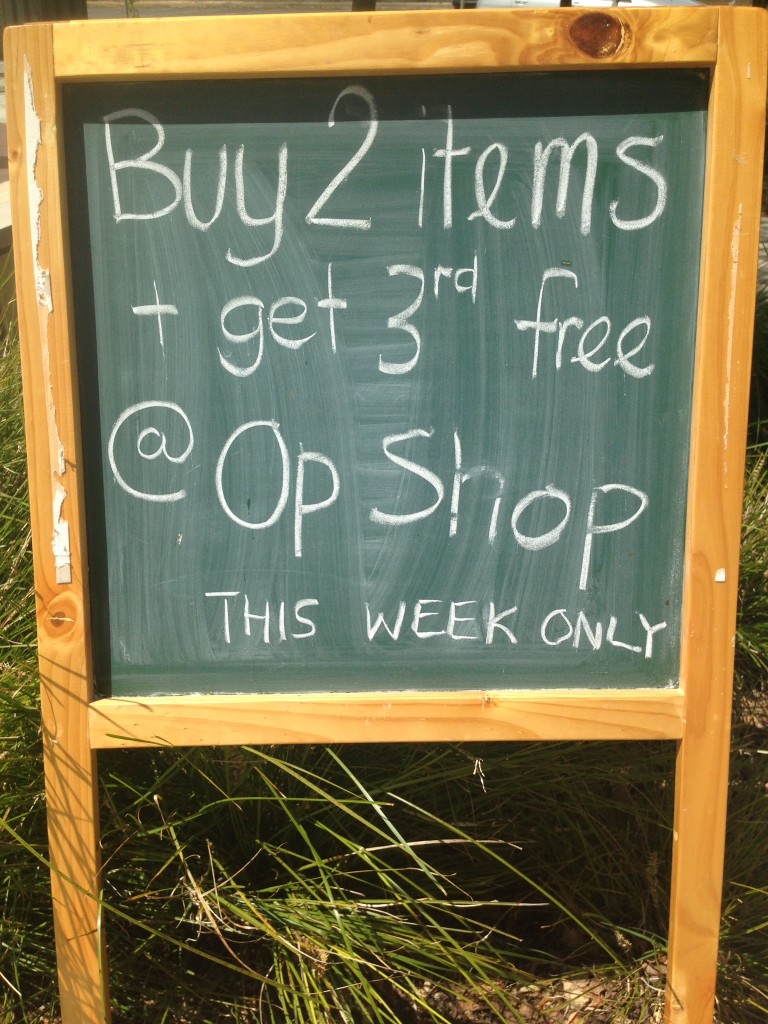
The Canberra region has some fabulous op shops, although they are not as cheap as they once were. Often the best ones are tucked away in the suburbs.
Op shops are best for baby clothes and bedding. I love (read: am totally obsessed with) a hand-knitted baby jumper! You may also find some baby furniture, toys and books in op shops.
Online auction sites or classifieds
If you are looking for something specific – like a brand of baby sling, cloth nappy or high chair your first thought may be to use an auction site like ebay or quicksales.
However, you might also like to try online classifieds like gumtree, allclassifieds or The Trading Post. This way you can find a seller near you, go and inspect the item and not pay postage. Another advantage is that you won’t be bidding against anybody.
On classified sites you can compare the prices of specific items across the websites and make sure what you are paying is reasonable.
Friends and family
Tell other like-minded people with slightly older children what items you are searching for. They will often be delighted to clear said item out of their spare room or garage and may well give it to you free or at a minimal price.
Clothes swaps
You may have heard about Canberra ladies getting together to clear out their wardrobes and swap clothes (often with a glass of champagne or chocolate brownie in hand). You can also organise swaps for baby items.
Freecycle
Freecycle is a network of local online groups that aims to keep reusable things out of landfill by keeping useful items in circulation. Freecycle members can offer an item or ask the group for an item as long as it’s free. Canberra has an extremely active Freecycle group with more than nine-thousand members.However, there are some drawbacks to the system.For the complete low-down on Freecycle, read this article I wrote last year.
Other ideas
Now we’ve started the conversation, I’m sure you can think of plenty of other places to look for used items. You might like to try markets like the Baby and Kids Market or Jamison Trash and Treasure or second-hand shops and car boot sales.
Some public service departments have online noticeboards where staff can buy or sell pre-loved items. We’ve picked up some great finds that way.
Happy hunting and don’t forget to sell or donate your own unwanted baby items. There is nothing quite as satisfying as getting rid of the mountains of outgrown baby gear that is cluttering up your house, once you know you’ve got all the kids you’re going to have!
Feature image of ‘the baby in the crib‘ courtesy of Shutterstock.
Leave a Reply
You must be logged in to post a comment.