Surviving Infertility

Posted on
I never wanted children.
Throughout my 20s I was very focused on my career and at 29, I was single and planning a year-long solo trip around the world. However, this all changed when I became very ill overseas, came home early and met my now-husband. Suddenly I could see a future with this person and it opened up a whole world of things that I had never considered before, including marriage and children.
Fast forward 12 months and I fell pregnant but within a few weeks I had my first miscarriage. The loss caused a great deal of pain and anger but ultimately it brought my husband and I closer together as we grieved for this child that would never be.
Unfortunately the pattern repeated itself twice more over a six month period and we decided to seek help from a fertility specialist. We researched a lot prior to choosing our clinic and I was horrified to see how low the rates were for pregnancy to be achieved and how much lower they were for a birth to occur. We chose Repromed in South Australia as they seemed to have the highest success rates and had a long history of leading the field with reproductive medicine.
The first appointment with our Doctor was a whirlwind of information. I left feeling angry and betrayed by everything I had been led to believe as a woman in my early 30s.
I grew up in an era where Oprah and Cosmopolitan told me I could ‘have it all’. Television shows and magazines repeatedly told me that I didn’t even have to really think about having children until my mid-30s and it would be ‘easy’ well into my 40s. The doctor told me differently.
Female fertility reaches a peak around 30 years of age. Pregnancy is still achievable in mid-late 30s and 40s, but the chances of needing assistance are higher.
The Doctor told me that of the people who have fertility issues after 12 months of trying to conceive, within the next 12 months 80% of them would get pregnant and give birth without any intervention. Of the 20% that are left, 80% of those will get pregnant and give birth in the 12 months after that with assistance.
We ended up in the 20% of 20% and it took us 6 years to eventually achieve a successful pregnancy. During this time, we suffered through six miscarriages, numerous medical procedures and an incredible pressure was placed upon our marriage. Many people separate during fertility treatment and it is easy to see why.
Eventually, our remarkably patient doctor convinced me to try an IVF cycle using ICSI.
Intracytoplasmic Sperm Injection (ICSI) is performed as an additional part of an IVF treatment cycle where a single sperm is injected into each egg to assist fertilisation. I had given up on ever having a child at that point and my husband and I were going through training to be foster carers, but we decided to have one last try as then we would know we had done everything we could.
Incredibly I got pregnant on the first try although I was hospitalised during the pregnancy with Ovarian Hyper Stimulation Syndrome, (a rare side effect of pregnancy hormones) as well as having several complications during the pregnancy.
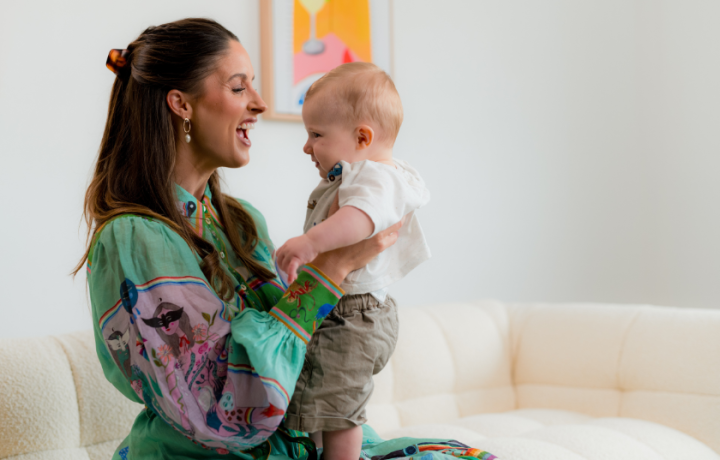
I am now a mum to an incredibly beautiful, perfect little human being. She is the light of my life and worth every single moment of pain and hardship leading up to her birth. She is our little miracle and although she gives me plenty to write about with the challenges that come with being a new parent, she’s a pretty cool kid.
She will be an only child, although I will never forget the babies that came before her, in my heart I am a mum to them as well.
I learnt a lot throughout those six years. I learned that as women we are exceptionally resilient. When we feel we can’t take even a tiny bit more grief, we can. I learned that when going through this process, it is important to surround yourself with people who can cope with it. I lost friends, some of whom have since returned, because they couldn’t handle how angry and sad and broken I was.
I can’t blame them because it is hard to understand how all-encompassing it is if you have not been through it. More importantly, I learned just how many women I know had been through it themselves – I had no idea. As soon as I reached out, so many people privately reached back to say they had been or were going through it.
It is a conversation we rarely have with our circle, even our inner circle.
There is a stigma attached to the subject, a remnant of the times when women were ‘put aside’ for being barren, when it was a woman’s sole purpose in life and so to not give our husband children was to fail at the entire reason for existence. Thankfully we do not live in that world anymore, although it still casts shadows over the topic of female fertility and relegates it to hushed conversations to ensure we don’t burden others with our faulty reproductive systems.
It is no easier for men, with jokes about ‘firing blanks’ and ‘getting the milk man in to do it for him’ running roughshod over any attempts at discussion.
If you are currently going through infertility or sub-fertility you are not alone, even though it feels like the loneliest place in the world.
Reach out in a way that you are comfortable with and you may be surprised by who reaches back.
Know that no matter what the outcome is, you will survive. I thought having a baby was going to be the solution to the pain of infertility, but the years of pain don’t disappear, you survive them. With help if necessary.
For more information:
ACCESS, Australia’s national infertility network access.org.au
ISIS Fertility: www.isisfertility.com.au
Conception Forum on babybelly.com.au: www.bellybelly.com.au
Family Relationship Advice Line: 1800 050 321
IVF Australia Guide to Resources: ivf.com.au
ANZICA, Fertility Society of Australia: www.fertilitysociety.com.au
Polycystic Ovary Support Australia: www.pcosupport.org
Image of ‘back view…‘ via Shutterstock

Leave a Reply
You must be logged in to post a comment.