Horses, homes and history – Reid celebrates 100 years
Posted on
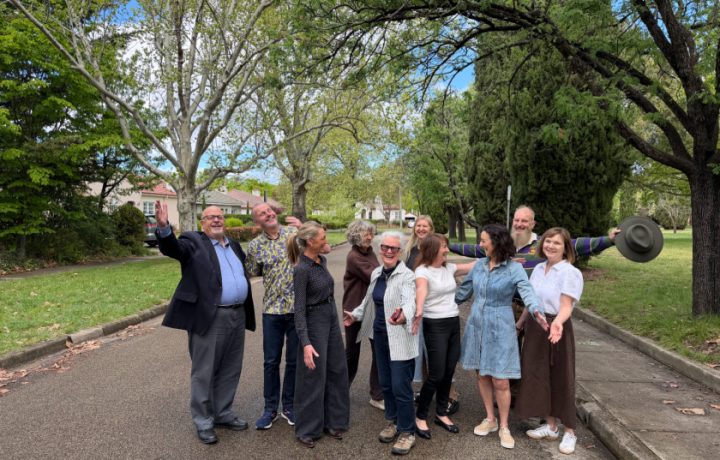
Canberra’s garden suburb is marking the centenary of its first Federal Capital Commission homes with a community party that brings horses, history and neighbours together.
On Sunday, the past will arrive on four hooves. Two draught horses will be among the attractions as residents gather in Reid to celebrate 100 years since the building of the suburb’s first cottages – a playful reminder that horsepower, not Hiluxes, helped build early Canberra.
The Building Reid Centenary celebration is free, open to the public, and will be held from 2.30 pm to 4 pm at the preschool end of Dirrawan Gardens. There will be a sausage sizzle, coffee, drinks, gelato, games and a cake stall, with local historian Tony Maple speaking about the suburb, its houses, tree canopies and the role it played in housing our earliest movers, shakers, planners and thinkers.
It is an appropriately neighbourly way to mark a suburb created not simply as a collection of houses, but as a setting for community life. Reid Residents’ Association president Marianne Albury-Colless says it is the streetscape that gives Reid its unmistakable atmosphere: the broad roads, mature canopies and repeated cottage forms that reveal their differences only when you get in the front door. In autumn the suburb glows and in spring, she jokes, the garden suburb “goes mad” – along with everyone’s hay fever.
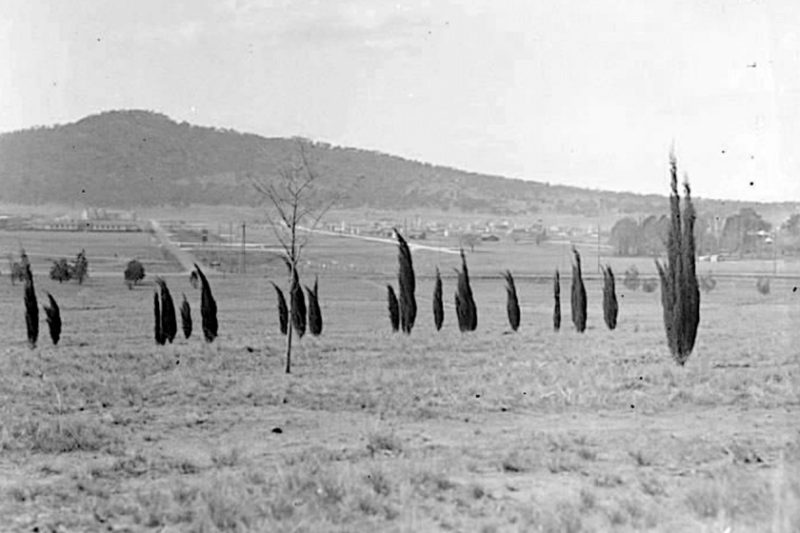
Mount Ainslie and the trees of Reid in their infancy in 1927. Photo from The National Archives
Fun fact: While Reid is considered a bit ritzier that neighbouring Ainslie as it housed the city’s senior bureaucrats within solid brick and stucco homes while the builders and tradespeople were sent off to the cheaper weatherboards across Limestone Avenue, Reid actually began life named “South Ainslie”. The suburb took its genteel and distinctive shape as Canberra prepared for the opening of the Provisional Parliament House in 1927 and for the transfer of public servants from Melbourne. The Federal Capital Commission commissioned the first cottages, 99 of those original homes were built and most are still standing.
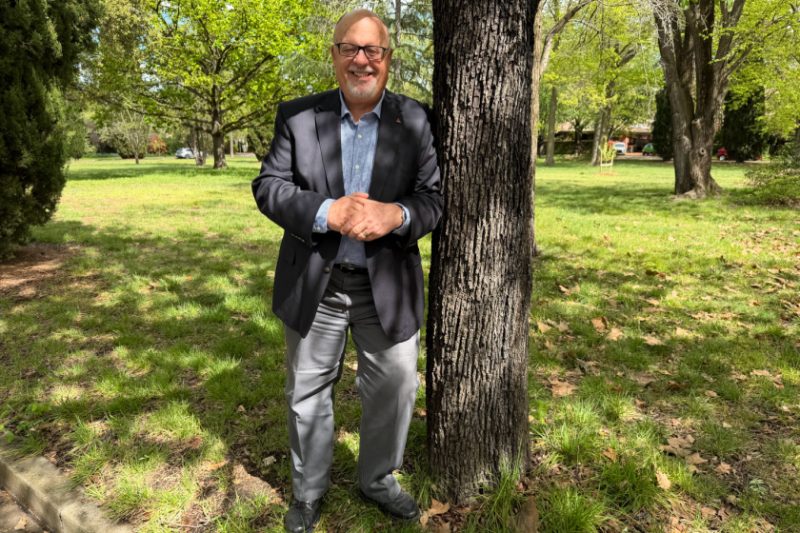
Historian Tony Maple
For Tony, the most remarkable thing about Reid is the speed with which the suburb was created, and the way in which it held to its original planning vision.
“The Government wanted 100 houses within the year. Bang! That’s what it got. And I look around today and see that Reid is a testament to what Governments can do if they put their minds to it. They can achieve quality planning in a short amount of time.”
The suburb’s design carried forward the Walter and Marion Burley Griffins’ garden-city vision, reshaped under architect and town planner Sir John Sulman and architect Henry Maitland Roland, and realised through the Federal Capital Commission, chaired by engineer John Butters. Houses were grouped with streets and two central gardens in a formal relationship that remains distinctive in Canberra. The Reid Housing Precinct’s heritage citation describes it as one of the capital’s earliest garden suburbs and an important example of integrated residential and landscape planning.
For residents, it simply translates to a beautiful suburb in which to live, with an abundance of nature, birds, shade and flowers. Sulman’s planning allowed generous backyards for fruit and vegetables, while the public gardens between groups of homes created natural meeting places, still as relevant today as 100 years ago.
For long-time residents Dorothy and Peter Barclay, the practical appeal is intimacy and access. The city, lake and Mount Ainslie are minutes away, yet on a Sunday the suburb can feel remarkably quiet.
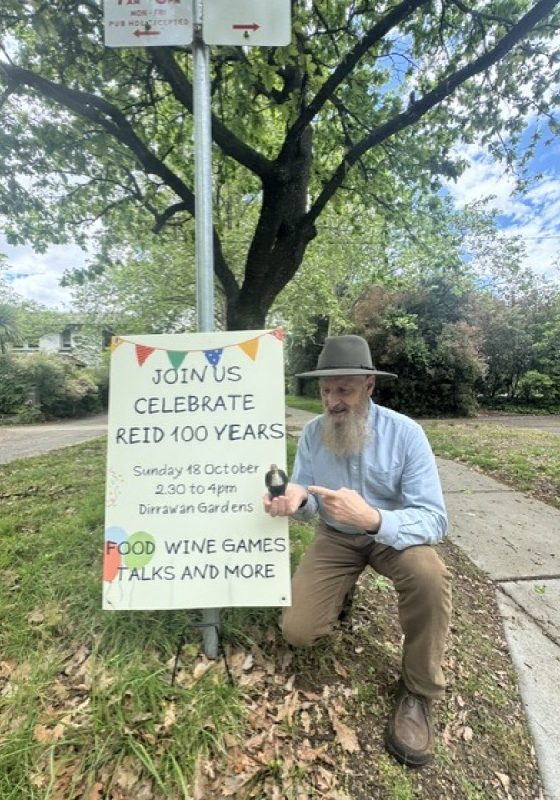
Reid resident Peter Barclay with a small nearly 100-year-old George Reid paperweight he managed to track down.
“It’s like a little village,” they say, with laneways connecting streets, kids growing up together and Christmas drinks held for 25 years in a common garden – exactly the kind of shared space the suburb’s planners intended.
But there has also been progress. Renovations, news homes and new real estate records have been built, with Reid breaking the $5 million mark this year.
Marianne jokes that once people move into Reid they never want to leave, hence the prices rises make perfect sense.
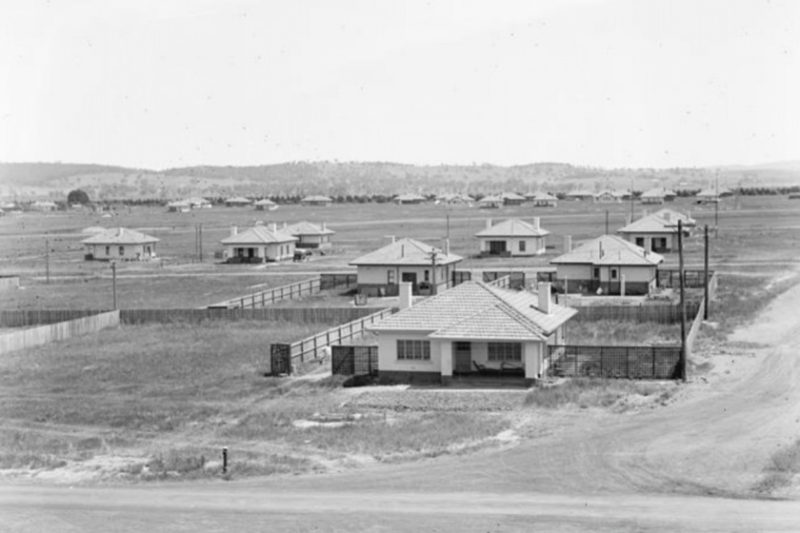
There were a dozen house styles to choose from. Photo from the National Archives
And residents endorse strict planning permissions which preserve the look and feel of the suburb while regeneration occurs with new families moving in.
“We understand that homes built for life in the 1920s must serve families in 2026” says Marianne.
There are other modern pressures too. Residents are petitioning against rat-running and speeding through streets laid out before today’s traffic volumes, particularly near community facilities.
“We love that Canberrans come to Reid, but we want them to slow down to 50 kms please,” she says with a laugh.
Without doubt, Reid residents putting on the party are proud of their little patch of paradise, and they want to invite the rest of the city to join in.
So consider yourself invited on 18 October, where horses will evoke the labour of 1926, the cottages and canopy will show what endured, and the sausage sizzle, children’s games and conversations between old friends will demonstrate the part no plan can manufacture – community.
PS: To ensure enough sausages, drinks and gelato to go around, please register your attendance here.
THE ESSENTIALS
What: Building Reid Centenary Party
When: 2.30 – 4 pm
Where: Dirrawan Gardens (Reid Preschool)
Web: trybooking.com