A love letter to Canberra’s local libraries
Posted on
I still remember the day I first experienced mental imagery when reading Mary Poppins. I must be, as I had always suspected, a witch. I ran to my mother to exclaim my revelation. Reading would become my first love.
On most days my nose was in a book. Mary Poppins became Harry Potter, became The God of Small Things and James Baldwin. Each time a new offering of escape – a new pair of shoes to step into. I credit reading for my empathy, my romanticism and my love for humanity. If we can create such beautiful fictional worlds, why not our own?
But my entry to reading didn’t start with Mary Poppins. It began with community library trips after attending the doctor to get my first immunisations. It was written in the Immunisation Contract drafted by my mother. The quid pro quo for my cooperation. Quiet spaces, hushed whispers and interesting people to observe from afar. As a people watcher in training, this was my heaven.
An unusual amount of autonomy was granted to my small self in these spaces, as I examined each shelf, collecting book covers to present to my parents in the hopes that I could somehow get away with borrowing 15 instead of the contractually agreed upon five. Perhaps a Matilda book cart might help my case, I thought.
When my family moved from Melbourne to Canberra in primary school, local libraries remained a constant neighbour. Canberra’s libraries really were the first third place I knew as a teen. For Canberra high schoolers, the National Library of Australia (“the Nash”) was the place to be. Among the public servants, researchers and university students, a conglomerate of awkward teens would discuss matrices, romantic interests and gossip. In response we would be hit with an angry “SHH” to which we would giggle and comply until the momentum of the conversation took us back to the volume we started with. Being kicked out of the Nash was a semi-regular occurrence for some of the louder among us, and in some ways a rite of passage.
When I moved on to study at the Australian National University, libraries once again presented themselves as steady study buddies. Tears were shed over tight deadlines, bad grades, friendship troubles and broken romances. The library carried it all. We would argue over which campus library was best – Chifley had better cosy study nooks, while Marie Reay had better lighting, and Hancock, for whatever reason, was just more cool. I have to confess, whether our crushes frequented them too would often be the deciding factor. Let a girl romanticise!
The slightly dingy Law Library in the furthest corner of campus was my favourite. Hidden between the bookshelves were tiny desks that not only presented safe spaces for some of the hardest head-in-hands type study sessions of my degree but also offered solidarity in the graffiti sprawled across them from the law students who came before me. “Admin law sucks.” “When will it end?” or a more encouraging “You’ve got this!”
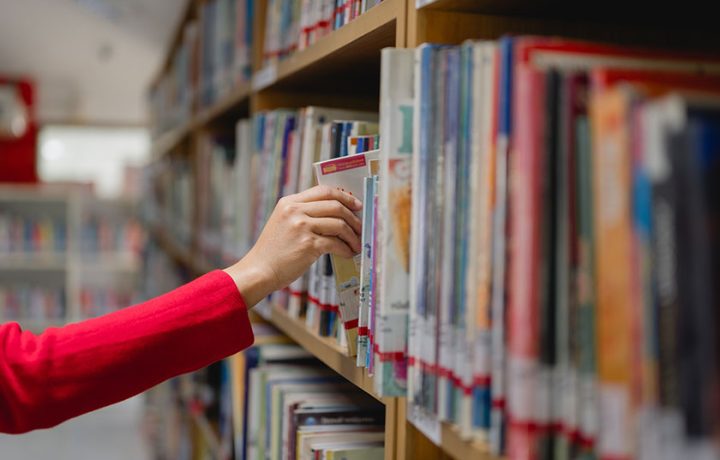
I have recently rediscovered the value in book borrowing libraries. No paywalls, no subscriptions: just me and my library card against the world. And most importantly, the value of libraries extends far beyond accessibility to free information and literature – although of course that is incredible. Libraries, today, offer a rare meeting place and source of community connection. The ‘third place’ is a term coined by sociologist Ray Oldenburg in the 1990s to describe places of community outside of the first place; home, and the second place; work or school. Much of his work was dedicated to arguing that third places are essential for community well-being. Libraries are a quintessential third place.
Take this as a reminder to support your local library – it’s free!
The ACT Government has recently announced changes to public library opening hours. Please consult the Libraries ACT Frequently Asked Questions resource and your local library website to understand how these changes affect you.