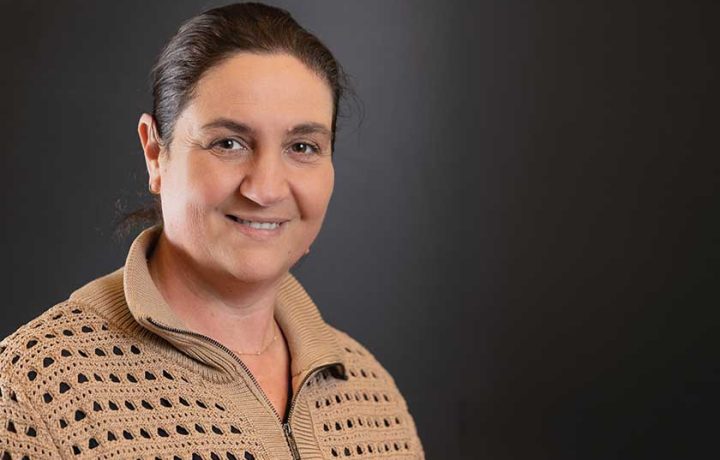
When dementia changes everything, connection can bring people back
Posted on
At Amberfield by LDK Retirement Village, Sally Rallis helps people living with dementia find confidence, friendship and joy — while David and Judy discover what supported accommodation can give back to a family.
On a weekday morning at Amberfield, the coffee is brewing, chairs are pulled into a circle, and the room begins to fill with quiet conversation. Some residents arrive confident and ready for the day; others need reassurance, a gentle prompt, or the familiar face of someone who knows how to make the first step feel safe.
For Sally Rallis, that is where the work begins. As a supportive lifestyle lead at the sprawling facility nestled at the base of the National Arboretum, she spends her mornings with people living with dementia, creating a space where they can paint, move, sing, laugh, remember and, most importantly, be seen.

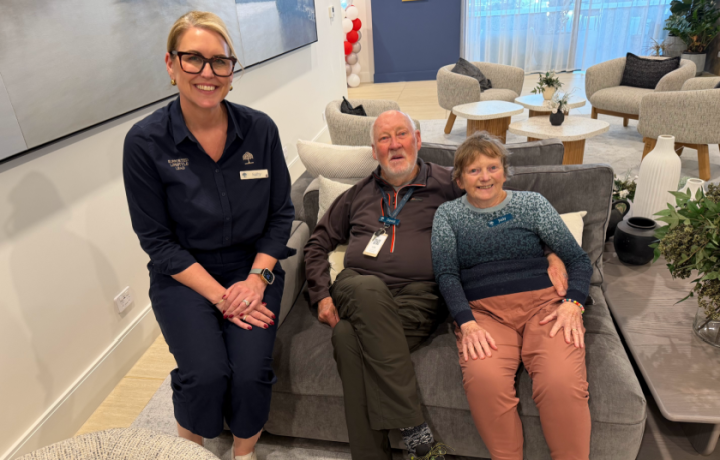
Judy enjoying her art class
“It’s about being there for our residents,” Sally says. “We meet in the morning, we have our coffee, we have our social connections, and then we have something planned for the day.”
The program is still relatively new, but Sally says residents have quickly understood its value. Some come for physiotherapy-based movement sessions, most of which can be done from a chair. Others come for dancing, where music, colour and imagination combine. There are mornings of singing, visits with dogs and even a friendly alpaca, group conversations and quiet creative work. But one of the favourites is watercolour painting.
“No water painting class is ever the same,” Sally says. “It’s not just about the painting. We’ll have a discussion about what we’re painting and see if we can draw memories from them. Sometimes we can sit and chat for 10 minutes before they even pick up a paintbrush.”
Once the brushes are in hand, the room often settles. Concentration takes over and each person interprets the same prompt differently. Then comes the part Sally loves most – the encouragement. Residents look across the table to see what others have made. They praise one another and wait patiently for someone who needs more time. In those moments, dementia is not the defining thing in the room: connection is.
Sally understands the exhaustion and grief that dementia can bring because she has lived alongside it in her own family. After nursing her mother through pancreatic cancer, she cared for her father, who had vascular dementia. That experience changed the course of her life. She moved into caring work, and now, after 10 years in the field, she says the work feels more like a calling.
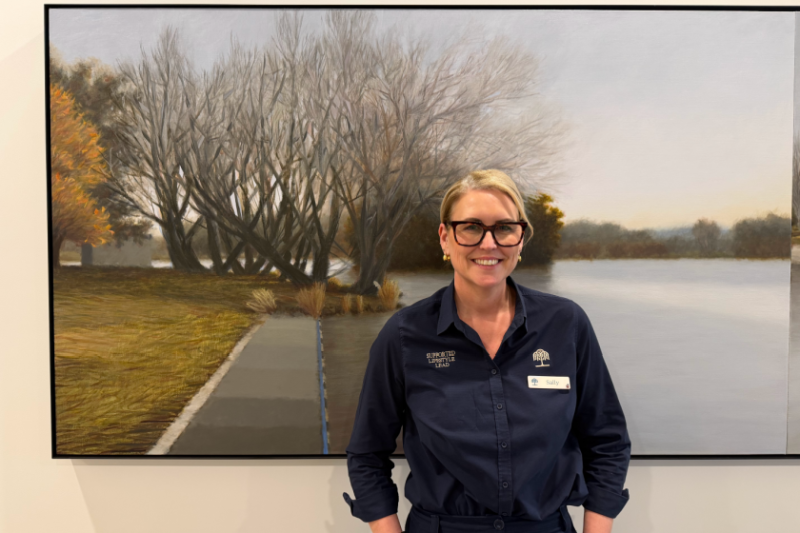
Sally Rallis says caring is her calling
 “I understand. One hundred per cent,” she says. “It’s only through my life experience that I’ve got here.”
That understanding matters because dementia does not only affect the person diagnosed, but it also reshapes marriages, households, friendships and the rhythms of daily life. Carers can find themselves on duty around the clock, unable to leave the person they love, even for a few hours. Sally says some families arrive at the program having never had formal respite before.
“They’ve been there 24/7,” she says. “They’ve never had the opportunity to know their loved one is in a safe, caring environment.”
Dementia is a leading cause of death in Australia, with an estimated 446,500 people living with the condition in 2026. This number is projected to exceed one million by 2065, according to the latest report by the Australian Institute of Health and Welfare.
The burden of care is huge and an estimated 1.7 million people in Australia are involved in caring for someone with dementia, with roughly two in three people with dementia living in the community. Meanwhile, 54 per cent of people in permanent residential aged care have the condition.
For carers who bring their loved ones to Amberfield, the relief is immediate. Sally remembers one person telling her the program had “saved my life” because they did not know how much longer they could cope without it. The respite is not a luxury, it’s a lifeline. It gives carers time to breathe, read, walk, make appointments, attend to their own needs, or simply sit in silence without listening for the next need of their loved one.
It also gives residents something equally essential – a place to belong. Sally has seen people arrive hesitant, withdrawn or tearful, only to slowly build confidence through routine, friendship and gentle encouragement. One woman who once cried regularly has not been seen in tears for months. Another, Judy, once needed repeated reassurance before touching a paintbrush. Now, with guidance, she has a go.
Judy and her husband David moved to Amberfield in mid-October after more than 40 years in their home in Gowrie. Both had been veterinarians. They had imagined ageing in the house where they had built their life, but dementia changed what was possible.
David noticed Judy losing interest in the garden, then in conversations and familiar routines. Their children noticed too. The decline was gradual, then sharper, and in the final year at home, David says life became increasingly difficult.
“She wasn’t enjoying life,” he says. “She was more isolated. I couldn’t do anything. I couldn’t leave her at home.”
Moving to Amberfield was a huge decision, and leaving home was a wrench, but now the couple is thriving. Judy is surrounded by people who understand, and David is supported by his own new friends and community. Some residents have partners living with dementia. Others are on similar paths themselves.
“There’s a lot more social interaction,” David says. “A lot of people have spouses in the same situation, so they’re much more understanding.”
Judy now attends Sally’s morning program most weekdays. Her favourites are watercolours and singing. Music, David says, reaches something that text cannot. Read out a poem, and there may be little connection. Play a few chords from a song from the 1950s or 1960s, and Judy may remember the words straight away.
And because memory can slip away almost as soon as an activity ends, Sally takes photos for Judy and David. When Judy comes back from a class and cannot explain what she has done, the photos become proof and prompt – here you are holding the brush, and here is the painting you made.
It is a small act of documentation with enormous emotional weight. It gives David a way into Judy’s morning. It gives Judy a way back to herself.
While Judy is with Sally and the group, David has time too. He might ride his bike, take photos, or enjoy a few hours knowing Judy is safe and engaged. The couple still spend much of their day together, but Amberfield’s support means the caring load is shared with professionals, and that support can grow as needs change.
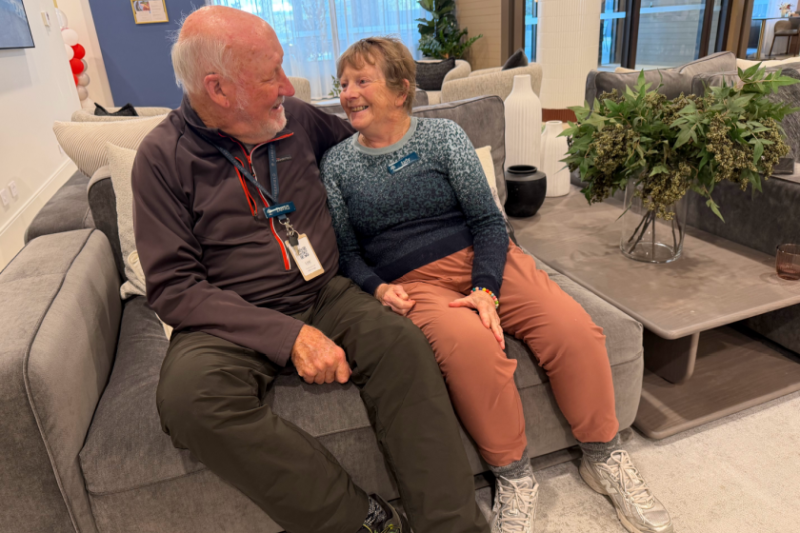
David and Judy haven’t looked back since moving into Amberfield
Amberfield is designed around that idea of continuity. LDK describes the village as a seniors’ living community with personalised 24/7 care, to allow ageing in place, dementia cottages, and a “One Move Promise” so residents can remain within the community as care needs evolve. Its dementia cottages are purpose-designed for people living with memory loss, with private rooms, communal living spaces, secure gardens and around-the-clock support.
For families, that can mean avoiding the painful rupture of moving again and again as illness progresses. For couples, it can mean remaining connected even if one partner eventually needs a higher level of care. The aim is not to separate people from their lives, but to keep them close to familiar routines, familiar faces and the person they love.
Beyond the care itself, Amberfield offers the architecture of ordinary pleasure – from coffee and dining within luxe facilities, fitness, social activities, arts spaces, a library, cinema, salon, landscaped spaces and views across Canberra’s western landscape toward the National Arboretum and Brindabellas. For people living with dementia, these details matter. They provide the scaffold of a life that still celebrates dignity, choice and joy.
Sally believes one of the greatest harms dementia can cause is invisibility. People withdraw because they lose confidence. Society withdraws because it does not know what to say. Older people, she says, can be made to feel as though they no longer matter.
But in a room where someone is encouraged to paint, sing, dance, remember a lyric, pat a dog, or share coffee with a new friend, the opposite message is sent, residents are valued, and their needs matter.
Sally often finds the work is emotional. It is not simply activity programming. It is the slow rebuilding of confidence and the gratitude of exhausted carers. It is a husband seeing a spark return in the woman he has loved for decades. It is a photograph of a painting that says, when words fail, something meaningful still happened today.
For Sally, the residents she works with are not defined by decline.
“They need that social interaction,” she says. “They need to know that someone cares for them.” Her role is to meet them where they are, then gently invite them back into the world.