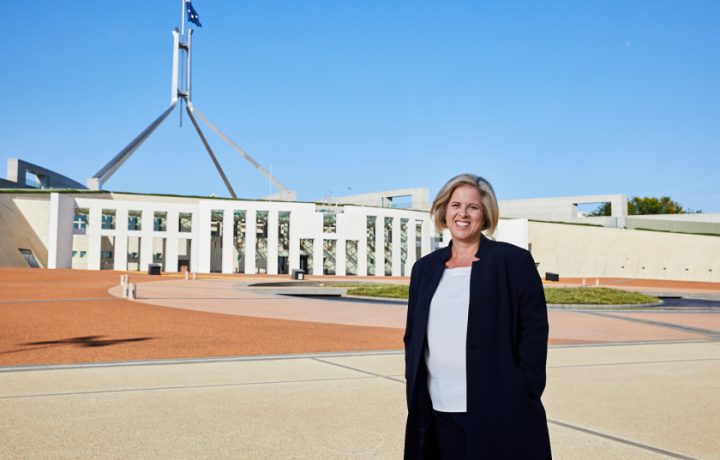
How I Got Here: soft tissue therapist and author Delwyn Griffith
Posted on
Admit it, we’ve all been there – stalking social media and LinkedIn profiles, trying desperately to figure out how the hell someone got their dream job.
It seems impossible, and yet there they are, living out your career fantasy (minus the itchy business suit). It might seem hard to believe, but once upon a time, they were also fantasising about their future career, and with some hard work, they made it.
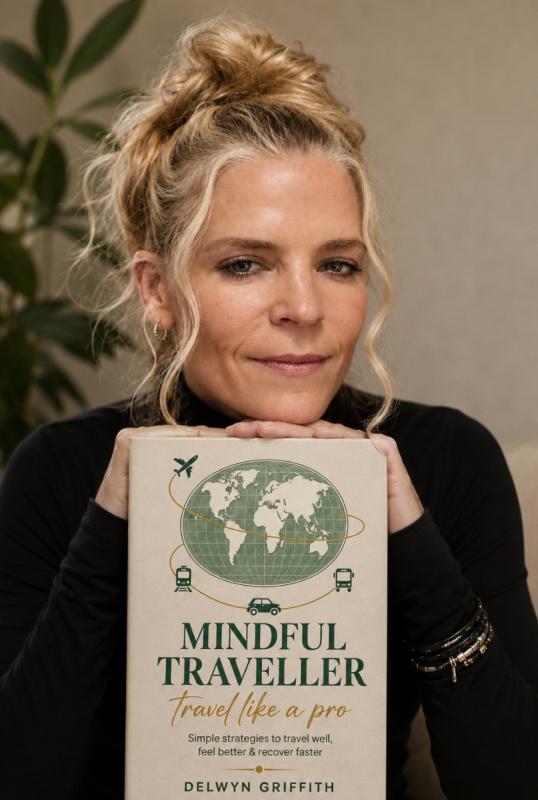
Welcome to How I Got Here, HerCanberra’s series that reveals everything you want to know about the secrets of career success. This week we sit down with soft tissue therapist and author Delwyn Griffith. Ahead of releasing her debut book, Mindful Traveller, Delwyn shares how she built a 30-year career in elite sport, overcame a major diagnosis, and massaged everyone from the Brumbies to P!nk.
Existential crisis time: Who are you and what do you do?
My name is Delwyn Griffith. I am a soft tissue therapist with 30-plus years’ experience in elite sport. I have worked with the ACT Brumbies and the Wallabies for many years and have worked at multiple Rugby World Cups, Australian Olympic Teams and Australian Commonwealth Games teams and most recently, with the USA Women’s Rugby Union World Cup Team. I run a private practice in Canberra, and I am about to release my first book, Mindful Traveller in late-October. It shares my 30 years’ of knowledge and experience travelling with elite sporting teams so that the everyday traveller can learn from and get guidance on travelling well and get the most out of their trip.
Let’s go back to when you were a kid, have you always dreamed of working in this industry?
Honestly, yes, in a roundabout way. I have always wanted a job helping people. I was an athlete myself growing up, experiencing hard training sessions, soreness, and injuries. I enjoyed knowing what helped the body perform at its best. Studying nutrition was my original interest, but I decided to study Human Movement and have not looked back until recently, going back to study Nutrition and Wellness Coaching through Harvard Medical School.
Tell us about when you were first starting out, what set a fire in your belly to get here and how did you do it?
It started with Susan Hobson, a Canberra-based distance runner who started seeing me for soft tissue therapy. She had already made her Olympic debut in Barcelona when I began massaging her in 1994, as she trained on toward Atlanta and eventually her marathon at the Sydney 2000 Games. Watching the rewarding difference that the right treatment made to her performance and recovery was the turning point for me. That was when I knew I wanted to work with elite athletes, and I set myself the goal of working with Australia’s best.
Recall a time when you wanted to chuck it all in; what did you tell yourself when it got too hard?
I have always loved what I do; I have never mentally thought of chucking it all in, but my body had another idea. In 2014, I was diagnosed with psoriatic arthritis and six months later, developed a chronic pain disorder. My rheumatologist advised me to change careers, but this work is my passion and my identity, and what I was good at; it wasn’t that simple. I slowed down for a few years to get my body back on track and reduce the inflammation and pain I was living with, and slowly built up again. It gave me an even greater passion for my work and greater compassion for people living with chronic pain. When it gets hard, I remind myself why I am doing what I do. To help people move better, feel better and assist them in living pain-free.
What was your biggest break?
My biggest break, and my dream, was being selected as the soft tissue therapist for the Wallabies at a Rugby Union World Cup. I have achieved this dream. It was the pinnacle of my career and still is today. I have since gone on to work at four Rugby Union World Cups.
What’s the best piece of advice you’ve ever received?
This one is more of a personal mantra than someone’s advice. Stay in your lane. Only speak on what you truly know, and be willing to admit when you don’t; listen to and accept constructive criticism; it’s how you grow, learn, and improve, both as a person and a professional. Simple, but it’s guided me through thirty years in elite sport and kept me grounded no matter how big the stage got.
What is it about your industry that you love and what makes you want to pull your hair out?
What I love is the trust, someone coming to me often in pain, and watching them leave lighter. I love the problem-solving side of it too, finding the actual cause of the pain, not just where it hurts. What makes me want to pull my hair out is a tough one, but if I had to pick, it is professionals who do not network or collaborate to get the best outcome for their patients. Health professionals work best as a team effort, not in silos.
What was your biggest ‘pinch me’ moment?
I have massaged some incredible athletes over the years but the proudest moment for me still comes back to something simple: standing in a full stadium with the Wallabies staff on the sideline, lined up for the national anthem. That never got old. As for genuine pinch-me moments though, massaging musicians like P!nk, James Blunt, and Anthony Warlow along the way is right up there, not exactly where I expected my career to take me!
Tell us how you ‘stay in the know’, what media do you consume?
I follow Australian and world news in moderation, enough to stay across what is happening without letting it take over. Beyond that, I keep an eye on sports science and nutrition research.
Where do you see yourself in five years?
In five years, I plan to be easing off soft tissue therapy and focusing more on nutrition and wellness consulting, which I finished studying in April 2025. I’ll also have a couple more books out, all aimed at helping people live life to the fullest and build healthy longevity; Mindful Traveller is just the first of what I hope becomes a series.
Why should people follow in your footsteps?
Honestly, I do not think people should follow my path; everyone’s path is different, and it should be. What I would say instead is to back yourself and strive to achieve your own goals. If there is one footstep of mine worth following, it is to believe in yourself and set your goals high. You have not failed if you do not reach them; you have still challenged yourself to grow, and that is what counts.
What advice would you give your past self?
Work hard, set goals, do everything with passion and full effort, but be kind to yourself and take rest. Thirty years in, that balance has mattered more than any single big break.