How I got here: Denita Wawn, first female CEO of Master Builders Australia
Posted on
Admit it, we’ve all been there – stalking social media and LinkedIn profiles, trying desperately to figure out how the hell someone got their dream job.
It seems impossible, and yet there they are, living out your career fantasy (minus the itchy business suit). It might seem hard to believe, but once upon a time, they were also fantasising about their future career, and with some hard work, they made it.
Welcome to How I Got Here, HerCanberra’s series that reveals everything you want to know about the secrets of career success.
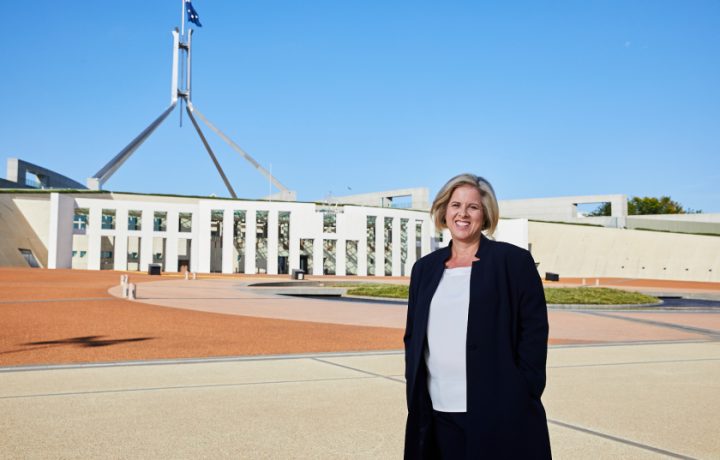
Denita Wawn broke a glass ceiling when she became the first female CEO of Master Builders Australia, having previously been CEO of another male-dominated industry body, the Brewers Association of Australia and New Zealand.
Existential crisis time: Who are you and what do you do?
Regardless of role titles or who I’ve worked for, I’ve always seen myself as a problem solver through advocacy. Assess the issues and the political environment of the day and then work out a strategy. Dogmatic on outcomes, pragmatic on pathways.
Let’s go back to when you were a kid, have you always dreamed of working in this industry?
Never! I was always interested in politics, law, working out solutions, and wanting to represent those who needed support in being heard. After 30 years with 5 member-based organisations, those passions have been able to be pursued.
Tell us about when you were first starting out, what set a fire in your belly to get here and how did you do it?
Despite my interest in politics at a young age, I initially was too timid to pursue that passion and instead applied for a graduate role in my hometown of Hobart but soon realised that was not going to work out, so I bit the bullet, moved to the mainland, started working in politics and haven’t looked back. It’s always easier to challenge yourself if you are pursuing your passions.
Recall a time when you wanted to chuck it all in; what did you tell yourself when it got too hard?
Yes, I’ve had many times when work has been very hard and very overwhelming, but I’m the type of person who doubles down and pushes back – sometimes to my own detriment. It’s about learning how to do a temporary retreat, re-assess and re-energise, and then re-engage even if it is to facilitate a more strategic exit.
What was your biggest break?
I’d just started working at the Australian Hotels Association as an Industrial Relations Adviser in 1995, and three months into the job, the National IR Manager resigned. The CEO asked if I wanted to do the job despite my total lack of experience. I was 25 and believed I was invincible, so I thought, why not go out and prove myself, that was my springboard.
What’s the best piece of advice you’ve ever received?
“Put your brain in gear before engaging your mouth”
What is it about your industry that you love and what makes you want to pull your hair out?
I love the hard work and dedication of the people in building and construction. It’s a tough, demanding industry with amazing tangible outcomes for our country. Frustration is usually because some seek power and self-interest to the detriment of the industry, such as what occurred for too long with the CFMEU.
What was your biggest ‘pinch me’ moment?
As an advocate, you are never the decision maker, only an influencer, so anytime there has been a big policy win to the benefit of who we are representing, it is a big moment, whether it’s getting governments to overturn policy decisions or after a long sustained period, finally getting a policy accepted. Getting the win on CFMEU administration was big, as it required a lot of work with both the Government and the Oppositon to get it across the line.
Equally, it’s the less obvious things that creep up on you as was the case of getting the Pacific Island Workers Scheme idea off the ground in 2008 while at National Farmers Federation and then subsequently visiting Vanuatu in 2016 for Master Builders to discuss extending the scheme to the building industry, where we were shown the benefits from the scheme in terms of living improvements in the villages – I had a bit of an emotional moment to think I had a role in helping that happen.
Tell us how you ‘stay in the know’, what media do you consume?
Devour print media in the mornings, at least 4 newspapers scanned, plus the media summaries from our media team which cover all traditional media. I’m always mindful of making sure we are not operating in the Canberra bubble, so important to read and listen to what people are saying on the ground across the country, whether through traditional media or social media.
Where do you see yourself in five years?
After leaving Master Builders early in 2027, the plan is two-fold. To establish a full-time corporate board director portfolio and implement the lessons of the past 30 years into a corporate environment. The second is to spend more time volunteering on the phones at Lifeline. I’ve done it for the past 5 years but would like to think I would have enough time to do a consistent weekly shift. It is so personally rewarding, in whatever capacity you can, to help others in our community.
Why should people follow in your footsteps?
I’m going to answer this in the context of why more women should follow in my footsteps. When I first started out in political advocacy and industrial relations, there were few women. Even when I started as CEO of Master Builders in 2017, there had never been any female leaders in the organisation, now after 10 years, 6 of the 10 national and state CEOs are female. I would like to think that women feel more comfortable in taking on political industry advocacy roles that have a public profile after seeing more of us doing so, than has historically been the case. Yes, it can be robust and intense but extraordinarily rewarding. From my perspective, the more gender diversity we have in political advocacy, the better the outcomes.
What advice would you give your past self?
Be true to yourself, so trust your gut, stay true to your values, and treat others with respect.