Open adoption: bridging the gap between foster care and forever homes
Posted on
National Adoption Awareness Month in November aims to raise awareness of adoption and the importance of permanency for all children and young people.
Open adoption, in which adoptive and birth families have ongoing contact with eachother, creates a pathway to a loving home for children who cannot safely return to their families, but it is not without its challenges.
Julia and Adrian Cattanach have adopted two boys, Jack, 8 and Grant 12, both adoptions taking six years for each child to finalise and overlapping each other for three years. (The names of the children have been changed for their privacy.)
“I chose adoption because it was the right thing for Jack and Grant,” Julia said.
“It was the only outcome that gave them the security and belonging for the rest of their lives that they truly deserve. I didn’t want them to grow up as ‘kids in care’, I didn’t want them to have their first girlfriend and have to tell them ‘Oh I’m a foster child’.
“For all those reasons and more, they are a part of our family, not just our little family, but our extended family too.”
While Grant’s adoption was relatively straightforward, Julia’s second adoption of Jack was what she has described as “the biggest fight of my life—but the best one”.
She was assisted by Jamie Edwards, the Program Manager of Permanency and Post Order Support at ACT Together, which is a consortia of agencies led by Barnardos Australia.
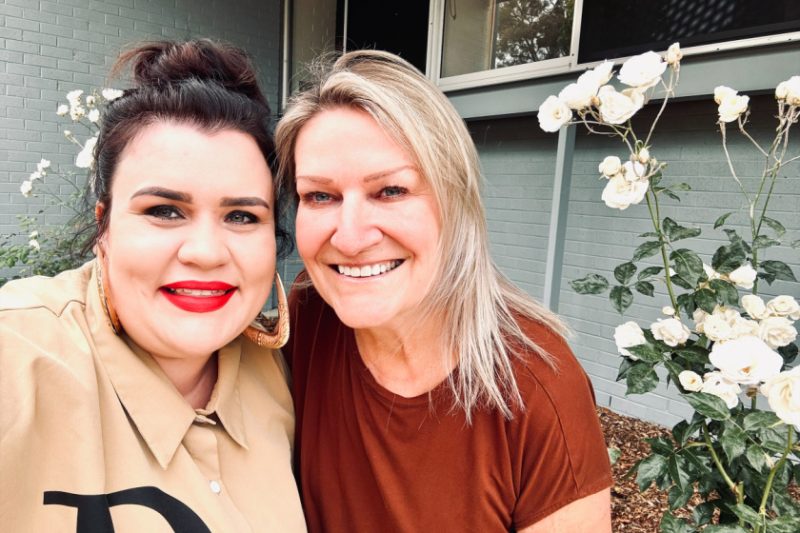
ACT Together Jamie Edwards and open adoption mum Julia Cattanach—making a formidable team.
“We had the right person at the right time, we formed the right team. When Jamie picked up our case, it became the foundation for things finally moving forward.”
Jamie said that while it is a huge legal process to adopt a child in the ACT though open adoption, it is sometimes in the best interest of a child if the courts have determined they cannot live with their biological parents and there are no kinship options available for them.
Last financial year there were eight open adoptions, and this financial year has seen three so far.
Jamie said that raising awareness of the options and pathways was vital to ensure the community knew that Open Adoption was possible.
“The benefit for the child can be very significant. As a child in foster care your legal parent is the Director General, when you are adopted, you exit the agency and loose the stigma of being child in care. Children become legally connected to their psychological parents, they have ability to change their surname and receive a new birth certificate or have dual one which includes both biological and adoptive families.”
“We know outcomes for children who exit on permanent care orders are better than those that stay in the system across every statistic—from ending up in the juvenile justice system to facing unemployment and mental health issues. The sense of legally belonging to someone has a huge psychological impact.”
Julia said the difference in her son Grant following his adoption was a physical transformation.
“He stood up proud, he started saying ‘this is my family’ and having that ownership… It’s so hard to put into words because it’s not a thing, it is a transformation in the child’s existence, it’s like, I belong to you, and you belong to me.”
Jack experienced an identity crisis before adoption.
“Now that has all stopped. Now Jack feels like his home is his domain, both boys are happier, they get to be just kids for the first time. We are just carrying on as a family… for the children the change has been enormous, and for us, it is calm—if you can call two young boys calm!”
Emerging from beneath an absolute mountain of paperwork for Julia has also been a huge relief.
“It was a big journey, lots of tears, lots of joys, lots of frustration. There were so many of hurdles, changes in staff, internal conflict that we weren’t aware of. Even though you have been parenting these children for all their lives, you still feel under scrutiny or, as Jamie describes it ‘a job interview for a job you already have’.”
When asked what she wished she knew at the beginning of the journey, Julia says
“I wish someone had been straight with me and told me how long this process could take. Be truthful. Oh, and all the paperwork. So much paperwork. Over and over again!”
Julia notes how important the relationship with the children’s birth family is, because after adoption, you still need to make sure that you can keep the children connected wherever possible. Julia has put in significant effort to ensure a mutually respectful relationship with the children’s birth families.
Ultimately, her message is of a happy ending.
“We have created a normal family like any other, the kids aren’t wrapped up in cotton wool, they are children, they may come from a care background, but the future is unwritten, we will encourage them to step out and explore and be who they want to be.
“Adoption is the greatest gift that you can give to a child, and if it’s something that you want to do, even though you have to go through all that, it’s still easy to love the children, the love that you never thought you had in you, it’s there. I couldn’t think of any reason not to adopt, and that’s why we did.”
To find out more about Foster Care and Open Adoptions go to acttogether.org.au
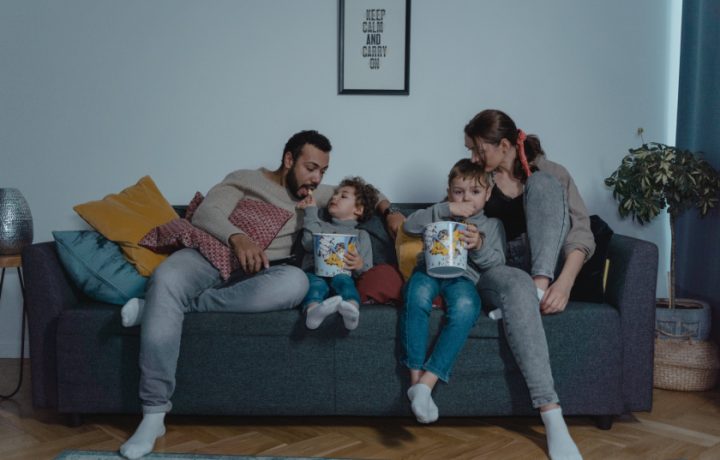
Main image courtesy of Tima Miroshnichenko via Pexels.