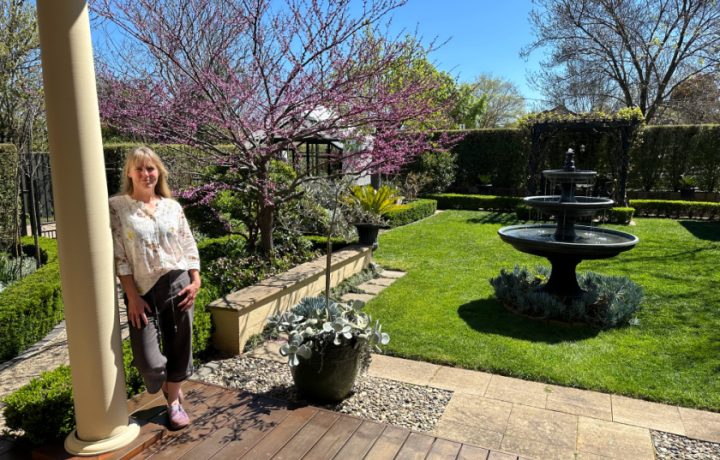
Meet the finalists of the ACT Women’s Awards 2026: Katherine Berney
Posted on
From transforming healthcare and improving women’s safety to opening doors in construction, automotive and sport, 11 remarkable women and gender-diverse people have been named finalists in the 2026 ACT Women’s Awards.
In the lead-up to the 2026 ACT Women’s Awards ceremony on Thursday 3 September, we wanted to get to know each of the finalists a little better. Today we meet Katherine Berney, recognised for influencing national policy reform and systems change to improve women’s safety.
Congratulations on being named a finalist in the 2026 ACT Women’s Awards! How did you feel when you found out?
I was genuinely astonished, humbled and incredibly grateful to be named a finalist. It was a moment where I had to read the email twice to understand. What has made this recognition even more meaningful has been meeting the other finalists, learning about their work and hearing about the changes they have made in their communities. There is something very grounding about being in a room of women doing extraordinary things, often without seeking recognition for it. To be included among them is a real privilege.
In a nutshell, tell us about the work or initiative that led to your nomination.
My work has been driven by a pretty simple belief: everyone should have the opportunity to recover from violence they had no choice in experiencing. I have spent my career working to change systems, policies and structures that shape how we prevent and respond to DFSV. Increasingly my focus has been on system prevention. Responding well to violence is critical, we also need to be ambitious enough to demand that we stop that violence happening in the first place.
For me, this work is ultimately about the kind of country we want Australia to be. When we have less violence, women and children are safer, families and communities are stronger, and we are better country for it.
Looking back, was there a particular moment, challenge or experience that set you on this path?
I am survivor of domestic abuse, and that experience fundamentally changed the way I understood violence, the systems around it and the importance of being heard and believed. During my own recovery I made a decision that has stayed with me: if I have a voice, then I have a responsibility to use it. Not to speak for others but to support and amplify the voice of people who are still finding theirs and help create systems that respond to their experiences. I know change is possible, and I want to make is easier for others to be heard, believed and supported.
What achievement are you most proud of – and why?
I am incredibly proud to have played a part in the work that led to the repeal of the presumption of shared parental responsibility in Australia’s family law act. At the heart of this work were children, we told their stories and insisted decision makers confront what happens when a system designed around parental rights fails to properly centre children’s safety and voices. We made it hard to look away. I am equally proud of how that change was achieved. I had the extraordinary privilege of working alongside women who had been in this fight since before that provision was introduced in 2006. Their advocacy, expertise and persistence created a rich foundation for the reform.
Policy change is rarely an achievement of one person or one moment. We stand on the shoulders of giants, and I consider it an honour to have stood alongside some of them for this change.
Is there a woman, mentor or role model who has inspired your journey?
I am fortunate to have two women who have been a deep inspiration Trish Bergin and my mother Dr Maureen McCluskey OAM. They are very different women, but they share something I deeply admire and seek to always replicate. They understand that another woman’s success does not diminish their own. They support women, celebrate their achievements and create space for others to succeed.
There is enormous power in women who genuinely champion other women, particularly in environments where there is a myth that there is limited space, so we need to compete. Trish told me kindness and empathy is what we should aspire to be known for in leadership every day.
This is not a woman, but my father Professor Clinton Foster PSM told me once “Katherine take the high road and be kind, and you can always be kind.” I live by this motto.
What does being recognised as an ACT Women’s Awards finalist mean to you?
14 years ago, alone in a hospital room during one of the hardest moments of my life, I made a promise that I would try to make what I had gone through mean something and that if I could put my grief back into the world and love, and service to others, then I would have succeeded. That promise stayed with me. It has shaped the choices I have made, the work I have pursued and the way I try to show up for people.
Being recognised in this way takes me back to that hospital room and to the person I was when I made that promise. This is a really wonderful privilege one I take seriously. More than anything it reminds me to keep trying to put something good back into the world.
What advice would you give to a young woman or gender-diverse person hoping to make a difference in their own community or industry?
You can do anything. And when you can, make sure you hold the door open for the women coming behind you.