Five minutes with Sarah Wilson

Posted on
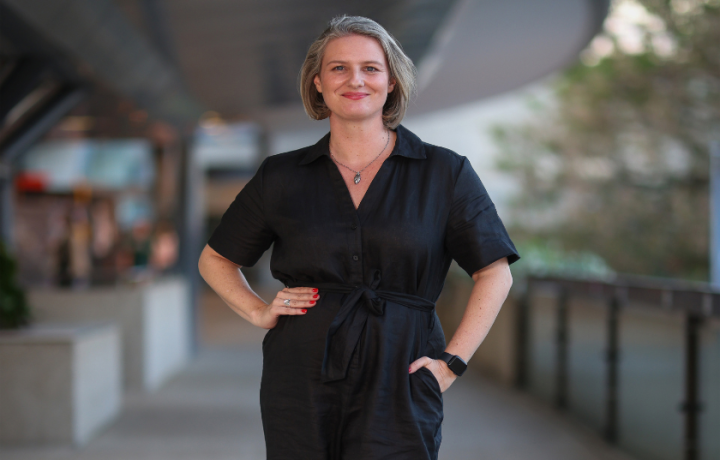
Sarah Wilson rose to fame tackling one of the modern era’s most difficult addictions—sugar.
Since then, she’s written about zero-waste eating (Simplicious Flow) and anxiety (first, we make the beast beautiful), but for her latest book, Sarah is tackling the issue of resilience.
While the community has levelled the blame for our current teenage anxiety epidemic at technology and social media, Sarah has taken a deeper dive in her soon-to-be-published book and has found, more worryingly, that young people lack resilience.
You can hear Sarah speak on the topic when she addresses the National Press Club on October 30 (tickets here) but ahead of her address, we revisited one of our favourite interviews with Sarah, by our Associate Editor Emma Macdonald from our Magazine: Taste (Summer ’18/19).
~
Raised on a semi-subsistence property in Wamboin, Sarah Wilson has risen to become one of the country’s most influential wellness gurus— her I Quit Sugar empire literally changing Australia’s taste for the sweet stuff.
Now she is turning her focus from building an unconventional business to building an unconventional family.
Sarah Wilson is packing up the last vestiges of her I Quit Sugar (IQS) empire in Sydney’s Surry Hills.
She’s mildly irritated as the sustainable wooden desks she had commissioned to fit the space were meant to be left for the new tenant taking over IQS headquarters. But he no longer wants them there and she is left wrapping up a multimillion-dollar business, helping her 20 staff find new employment opportunities, dismantling one of the most successful wellness movements of the last decade— and now in possession of a whole lot of excess timber she needs to sort out. She is also trying to orchestrate getting pregnant. But we’ll get to that in a minute.
Sarah, one of the most headstrong and committed campaigners against waste and excess, needs to ensure the desks are re-homed—it’s another headache to add to her substantial list.
Sarah’s Instagram account often carries her recycling, repurposing, and conscious consumption messages alongside the tag #giveashit.
She really does.
Which is why, ultimately, she’s chosen to walk away from IQS while it remained a thriving commercial venture.
When Sarah made the public announcement in February 2018 that she would close the business down rather than sell it, it created a media storm. Was she in financial strife, was she burnt out? Was sugar coming back on the menu? Nope.
We can actually blame Harry, Sarah’s accountant of six years.
“I started seeing Harry when I started earning money after having none for so long. He asked me what my goals were,” says Sarah.
“I told him I didn’t do goals and I had no real plans for the business. And then I told him a good goal would be to retire in five years with a modest wage to live off until I am 94″ (that’s 50 years away for the now 44-year-old).
Sarah checked in with Harry last January.
“He basically announced I’d hit my goal at four years and 11 months… I thought to myself, ‘OK cool, let’s sell the business then’.”
It seems the antithesis of what every other entrepreneur is striving to achieve—which is to upscale their exposure and earnings with no clear sense of what, or when, is ‘enough’.
Although Sarah is no longer a fan of the word entrepreneur. She says it used to connote the idea of a groundbreaker and now is shorthand for a money maker with no sense of real ingenuity.
In a fitting way, Sarah’s decision to end her business is as unconventional as her decision to start it. Which, in Sarah’s case, is generally the way of things.
She grew up the eldest of six kids in a home built, in part, by her father using scrap materials, in the bush outside Canberra. There were not a lot of material trappings but there were a number of ducks and goats. Sarah was bright and soon found herself succeeding at Lyneham High’s LEAP program. She got into Law at the ANU and honed her advocacy skills and political interests as the Women’s Officer. And while it was not her natural headspace, Sarah’s symmetrical features, beaming smile and awkward tallness saw her seconded into modelling.
She’d turn up at castings after school, having fitted in a mercy dash to the makeup counter at David Jones to swipe some tester mascara across her lashes.

The irony that she would later become the editor of Cosmopolitan Magazine would not have been lost on those who watched her fumble from her skivvies and ill-fitting jeans into a colour-coordinated fashion shoot.
But Sarah was destined for public life. In 2009 her face was beamed across the country as she was made the inaugural (and only) female host of the top-rating first season of MasterChef.
Those who have read her top-selling most recent book First We Make the Beast Beautiful, will know now that Sarah navigated her rising celebrity through crippling anxiety and bipolar episodes. Not to mention an impending hormonal backlash through Hashimoto’s disease.
Her move to quitting sugar was the result of her finally giving in to self-preservation mode and leaving Sydney’s A-list to hole up in a disused army shack in Byron Bay, where she turned her focus inwards for a series of newspaper columns—the earnings from which covered the cost of her food and board and precious little else.
One, published in January 2011, saw her experiment with quitting sugar. Sarah wrote how she liked how she felt. People wanted to know more and she felt compelled to extend the experiment. It was as simple as that.
Of course there was a backlash—“I was accused of all sorts of things, radical things, cutting out an entire food group things,” she recalls of the time.
But these days any glance down the supermarket aisle sees the mass market declaring its products have reduced or no added sugar. Jamie Oliver is banging on about it, as is blokey author Peter FitzSimons. Most informed parents are a little more conscious of the sugar content in their kids’ lunchboxes. Tuckshops have taken the hint. And Sarah could not be happier.
In fact, she feels almost guilty at the extent of the success of IQS.
“There was really no big secret to it. Quitting sugar was beneficial because people had to go out and learn to cook for themselves, which led to them cutting out the processed food, chemicals and trans fats.
“Plus all our menu plans included seven to nine serves of fruit and veg which exceeded Australian nutritional guidelines. Fundamentally, it just makes sense and is what our grandmothers were doing.”
But Sarah was never in it for a quick buck. In fact, her greatest business learning from the IQS experience was to “give first and the abundance will come”.
In the digital space that means basically that she published free content for two years—often devoting 15 hours a day to it— earning not a cent, but building herself a loyal tribe of those interested in, or experimenting with, removing added sugar from their diet.
She was among the first dominant bloggers to refuse display ads, capping her ad revenue at 10 per cent.
“Then I made an investment—of $100—to learn how to write an e-book. I grew that, money started to come in, I bought the trademark, I hired staff, and I was as transparent as possible with my tribe about what I was doing and why.
“My decision to close as opposed to selling continues that storyline—I am totally grateful to the five million people who supported my crazy idea, and selling it to someone who isn’t me is just not appropriate.”
Not that there weren’t offers. But when pressed on the sorts of negotiations that were attempted, Sarah can’t hide her contempt.
“It’s been instructive, not that I have been surprised at the base level of greed. These people talk to me as though I want money. They just can’t grasp that I don’t want it,” says Sarah.
“Giving them my business would be like taking a child from me. My community owns it in any event, and they have always trusted me to do the right thing. It would be the ultimate disloyalty to hand over their email addresses to someone who has not earned their trust.”
While her investment portfolio has been geared to provide her with an average wage to get by on, Sarah avoids the trappings of overt wealth in favour of a peripatetic lifestyle. She doesn’t own a car (she’s been a bike fanatic since childhood), and the concept of settling into a three-bedroom home would feel to her like a jail sentence.
Ironically, a number of parties came forward in the wake of the business closure wanting to buy some of the assets, such as the technology platform she built, and the recipes she created. She put out an expression of interest proposition that committed to all funds going to a philanthropic trust she has set up that will fund food waste and mental health charities she works with.
Sarah now feels propelled in other directions—an upcoming book on sustainability has allowed her to quell her manic moods with long bursts of concentration and writing. But her personal journey is far more complex than her business one.
Sarah has been trying for the past two years to have a child. For many years, she assumed she was infertile due to her Hashimoto’s. When she fell pregnant to her then partner in 2016, Sarah felt a surge of utter surprise—and contentment. She then suffered a miscarriage and the relationship broke down in its wake.
At 44, Sarah is heartbreakingly candid about her desire to love. And to be loved.
“I’ve grown up with lots of kids around, I am particularly protective, I enjoy children and the company of kids. I think I have a young spirit.
“I don’t do regrets. I have gone and worked hard and achieved abundance. But do I feel sadness about not having a partner or a child? Absolutely, to my very core. And at this point a part of me feels completely undernourished.”
On the topic of men, Sarah philosophises: “I have an answer for most things but I don’t have an answer to why I am still single. I am optimistic and so open, but I’ve also been stood up three times in the last fortnight.”
She did glean an insight when a past date admitted, “I always get a sense you’re on your way to somewhere important.”
As a result, her last two pregnancies—also heartbreakingly unsuccessful—have been through overseas donor insemination. In keeping with her personal thoughts about ‘allowing’ things to come, not forcing them, Sarah won’t bring herself to undergo IVF.
“I think I would feel vain if I forced the whole pregnancy thing. The urge to have a baby is absolutely real but I’ve watched lot of friends go through IVF, the costs, the needles, the heartbreak. I have a very happy Plan B, which is to foster a child.
“If I can’t bring a baby into the world in a natural and flowing way then I want to share my life with one of the 40,000 kids who needs a family. That, to me, makes far more sense. And it is authentic to my sense of who I am and how I want to live.”
the essentials
What: Sarah Wilson addresses the National Press Club on behalf of Women in Media
When: Wednesday 30 October from 12-1.30 pm
Where: National Press Club, 16 National Circuit, Barton
More information: npc.org.au/speakers/sarah-wilson
Images supplied.

Leave a Reply