A view of life from the inside – a call to support women through incarceration and beyond
Posted on
My life began with trauma, instability, and pain that no child should ever have to endure.
I experienced severe childhood abuse at the hands of someone I trusted. This trauma shaped the way I saw myself, the world around me, and my place within it. As a child, I struggled to understand what had happened to me. I found it difficult to connect with other children and felt isolated, different and alone.
By the time I reached high school, I already felt disconnected from the people around me. I gravitated toward others who were also on the edge, people who were struggling in their own ways. When I moved to Moss Vale, I met someone who understood the pain that I felt inside. Someone carrying deep trauma like I was. Someone who had access to drugs at just 14 years old – and that was the beginning of my addiction.
Substances became my escape, my coping mechanism, and eventually my entire world. What began in my teenage years continued for decades. Although I had periods of sobriety, much of my life was consumed by addiction, chaos, survival and repeated contact with the justice system.
The first time I went to prison, I was 18 years old. The last time I went to prison, I was 44.
When I entered the Alexander Maconochie Centre (AMC), prison did not shock me. After years of institutionalisation, it felt familiar, comfortable even. In many ways, it was an escape from the constant stress, violence, danger, and instability of life in addiction. One month into my sentence, something happened that would change my life forever. My granddaughter died. I remember being taken to the Women’s Centre and being told the news. I collapsed under the weight of grief. I was devastated and completely unequipped to process that kind of loss while incarcerated. I was told that mental health support would come and speak with me. I genuinely believed someone would sit with me, support me, and help me through that unimaginable pain.
Nobody came.
When I was released, something inside me had changed. For the first time, I truly wanted more for my life. I wanted to stay clean. I wanted to know my children and my grandchildren. I wanted to rebuild relationships, reconnect with my mother, and become someone I could be proud of. So I got sober and for the first time in my life, I fought for my life.
It was during my fight for my life that I started to advocate for systemic reform. I started sharing my experience with ministers, commissioners, practitioners and anyone who would listen. It gave me strength I never knew I had. That’s the power of lived experience, when we speak about what we know, people listen. Most of all the women who we have left behind, they know we get it.
You cannot truly understand the justice system unless you have lived through it. The people who survive addiction, prison, trauma, homelessness, and systemic failure and then rebuild their lives, carry knowledge that cannot be taught in textbooks.
This is a first-person account by Jojo Timbrell, a formerly incarcerated advocate for women in the justice system. She holds a Cert IV in Alcohol and Other Drugs and has worked across government and social services sector as a powerful voice for systemic reform.
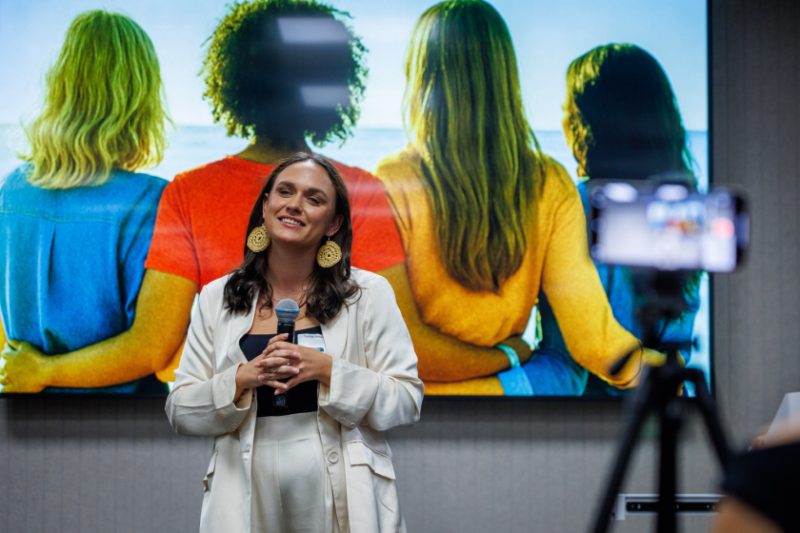
Tahlia Isaac, working to support women rebuilding their lives after prison.
Women are the fastest growing prison population in this country. Shockingly, First Nations women are up to 22 times more likely to be incarcerated than non-Indigenous women, and nationally the rate of reoffending within two years of release sits above 50 per cent.
The statistics in Canberra’s Alex Maconochie Centre, mirror national averages, except for recidivism, which is the lowest in the country, thanks to the “Building Communities, Not Prisons” initiative that aimed to reduce recidivism by 25 per cent by 2025 and makes a clear case for more evidence-based models when it comes to the administration of justice. Now the Corrections Commissioner’s office has committed to a new initiative, led by women with lived prison experience, to reduce the number of women in and returning to prison.
Project:herSELF is a registered Australian charity that supports formerly incarcerated women to heal, own their story and reclaim their futures. Founded in 2024, the peer-led organisation delivers high-impact programs that support women to successfully re-enter the community, and provides a holistic gender-lens to guide ongoing institution reform and service design. Led and managed by women with personal experience of the prison and justice system, Project:herSELF is Australia’s first peer-led organisation to exclusively employ women with conviction histories – each day capturing the grit, determination, and limitless potential of women who are breaking cycles of incarceration.
“I had someone believed in me when I was in prison, that’s likely why I never went back” says Tahlia Isaac, Project:herself’s founder, who took to the National Press Club stage earlier this year to advocate for reform.
“Women often exit prison straight back into the circumstances in which they were incarcerated from, without ever having an opportunity to imagine what life could look like, let alone plan for it to be different. Our peer led mentoring and release planning support helps women not only to imagine that different life, but model it through our own stories, and help women start to plan for it,” she says.
The work that Project:herSELF does in the community is only made possible by the incredible support of community. As a grassroot organisation, Project:herSELF relies on the generosity of the community to continue to show up for women when they leave custody. This June, Project:herSELF is running a giving campaign, asking community members to give just $30 towards the big goal of $30,000 by 30 June. The money raised will help women to rebuild their lives with the most practical of items, that many of us take for granted. When women leave custody, they often leave with just the clothing on their backs, forced to leave their possessions behind if they want to pursue a new life away from the life they were living before prison. Women will be entitled to a crisis payment of $240 to support them until they either get their first pay from an employer or government support payments commence. Project:herSELF show up for women with hygiene products, clothing bundles, household essentials, a cup of coffee and a yarn. The simple things so many of us take for granted, the basic essentials that every woman needs to show up for herself and fight for her life.
You can read more about Project:herSELF here and make a donation here.