Meet the Terracotta Warriors at the National Museum of Australia in Canberra – a once-in-a-lifetime chance to stand face to face with the army of China’s first emperor.
Posted on
More than 2,000 years ago, an emperor set out to rule the afterlife as well as the living world. This summer, Canberra families can step into that story.
For this journalist, the arrival in December of ancient terracotta warriors at the National Museum of Australia stirs some formative memories and rekindles a childhood thrill of discovery.
Back in 1983, a selection of Entombed made an historical visit to Canberra at the newly opened National Gallery of Australia. It was a huge thing for Australia, and an even bigger thing for Canberra to be entrusted with one of the most historically significant and most ancient sets of funerary sculptures.
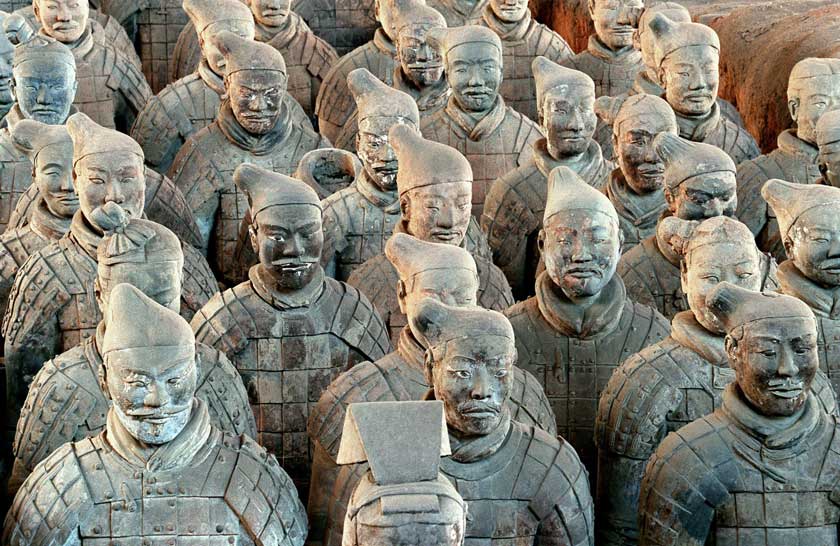
Terracotta warriors stand in formation, Pit 1, Qin Shihuang’s Mausoleum site, Xi’an. Emperor Qinshihuang’s Mausoleum Site Museum
As a primary school student, I was in awe of the stories which accompanied these majestic statues, and I can, to this day, remember impatiently standing in line to get into the gallery chamber before finally standing in front of them, trying to absorb the enormity of their history and meaning.
I remember holding two thoughts in my head at the same time. They were enormous (or at least adult-sized to my then pint-sized frame), but I was also astonished at their simplicity – statues made of earth, yet signifying mystical power in the afterlife, and not as big as I imagined heavenly warriors might be.
Even then, I remember being fascinated by the concept that someone would be so prepared for their death that they would amass themselves an army to protect them in the afterlife. It still fascinates me.
And yes, I will be taking my own children to see them when Terracotta Warriors: Immortality and Empire opens at the National Museum of Australia on 11 December (and runs until 2 May 2027), giving a moment of quiet thanks for the privilege of living in a city where our national institutions bring us treasures from around the world.
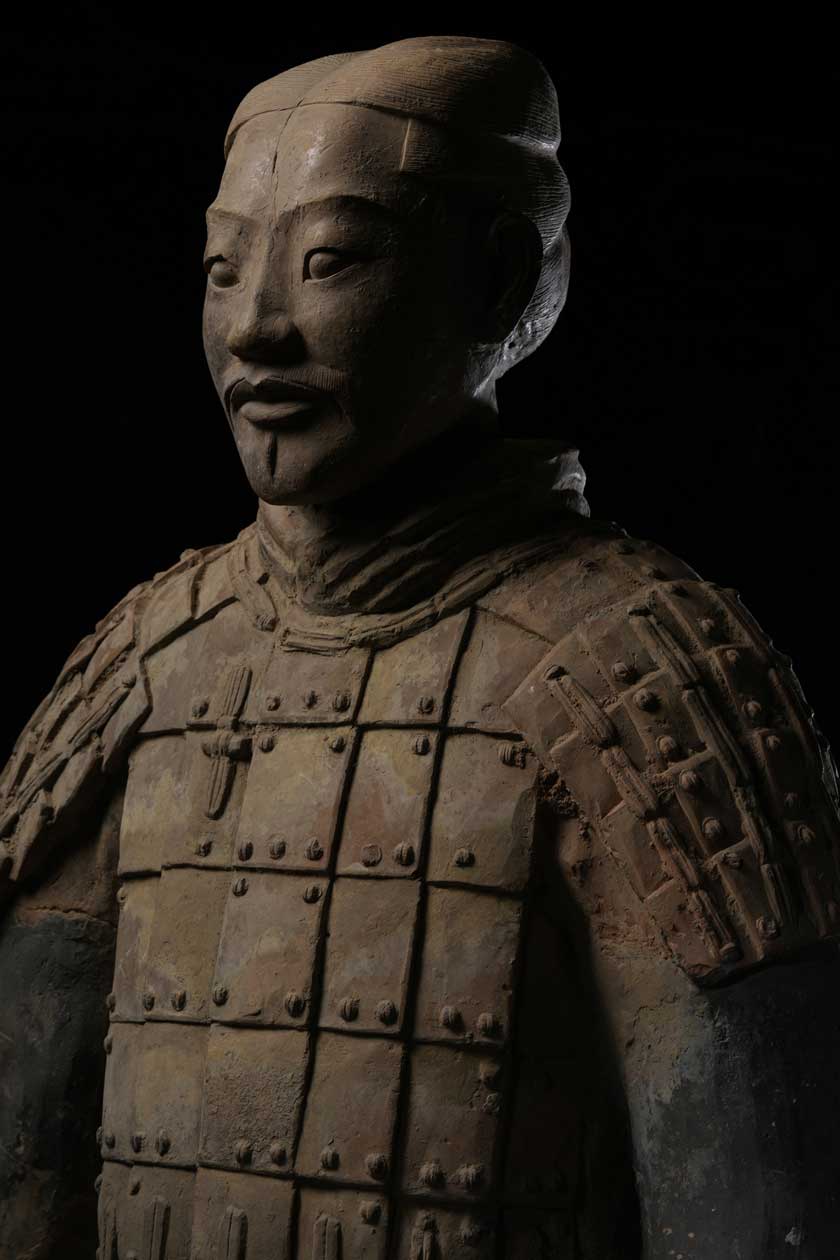
Armoured warrior, Qin dynasty, 221–207 BCE. Emperor Qinshihuang’s Mausoleum Site Museum.
Terracotta Warriors: Immortality and Empire at the National Museum promises to be a more sophisticated and immersive experience than the 1980s gallery tour as it reveals the extraordinary world of Qin Shihuang, China’s first emperor, exploring his life, legacy and quest for immortality.
For the record, it remains one of the most stunning archaeological finds of the 20th century, with a discovery that reads like a movie plot. In 1974, a farmer digging a well in China uncovered the head of a warrior and took it to the local authorities to see what it could be. The world was taken aback.
The scale of the story is hard to grasp. Ying Zheng came to the throne at just 13 and began building his mausoleum straight away. In 221 BCE, he conquered the other warring states and took the title of first emperor. The mausoleum took around 40 years to build and covers 42 square kilometres. At its heart sits a mound about 72 metres tall, and the emperor’s tomb has never been opened to this day. Archaeologists worry that exposure to oxygen could damage what lies inside, just as the original painted colours of the warriors faded once they were uncovered. They are pondering new technologies before risking any damage. It is not a decision to take lightly.
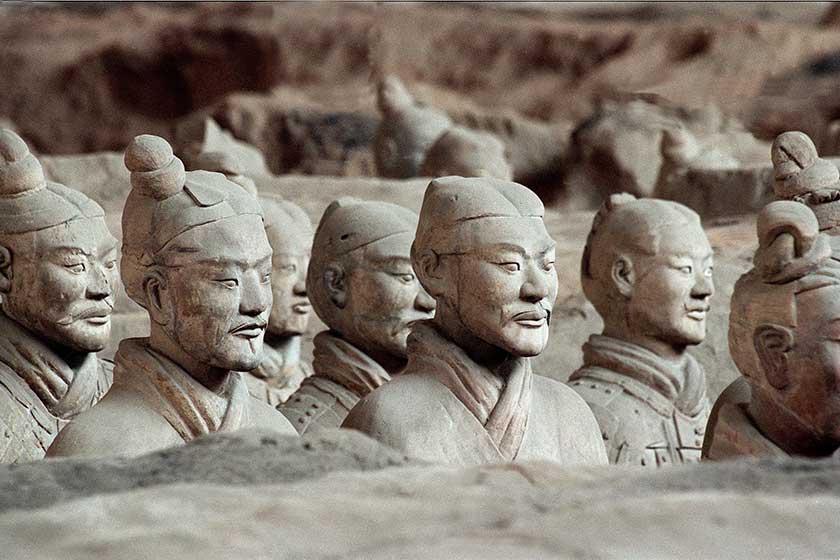
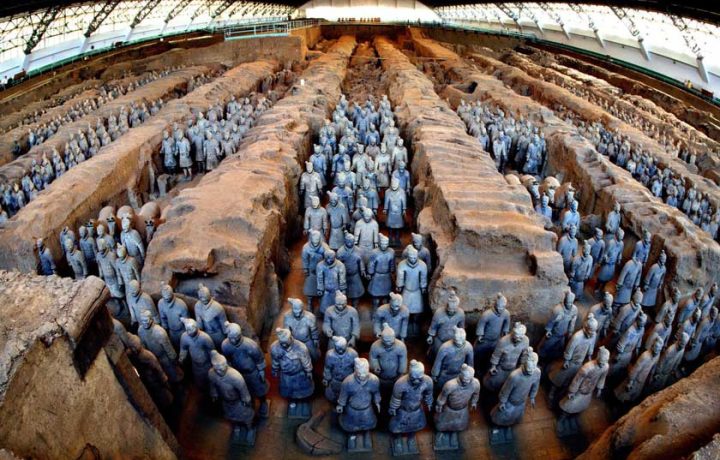
Terracotta warriors stand in formation, Pit 1, Qin Shihuang’s Mausoleum site, Xi’an. Emperor Qinshihuang’s Mausoleum Site Museum
National Museum of Australia curator Henry Buckenham says the warriors have an ability to take hold of the viewer. “They just really enrapture us; they are so powerful as objects.”
Many Canberrans, including me, already know the feeling. Henry concurs, saying, “It’s amazing how many people I speak to, say, ‘Oh, the Terracotta Warriors are coming to Canberra; my parents went to that, or I went to that as a kid ‘”.
This time, visitors will meet more than 170 objects, including a selection of the Terracotta Warriors such as a general, two archers, armoured officers and a charioteer. Alongside them are weapons, heavy stone armour, jade jewellery, bronze ornaments, musical instruments and ritual vessels. Together they span a millennium of ancient Chinese history, from the Spring and Autumn Period (771-475 BCE) to the end of the Eastern Han period (25-220 CE).
The warriors are life-size and were not carved from a single block. Henry explains they were made from a combination of coiled clay and moulds. Remarkably, “some of them actually still have potter’s marks on them – they still carry the names of people who created these objects”. Almost all have suffered some damage over the centuries and have been reconstructed from fragments, but the ones travelling to Canberra are among those in the best condition.
There are also smaller surprises. The Han Yangling figurines, about 60 centimetres tall, come from a later dynasty and include a eunuch and cavalrymen, offering a rare glimpse into the political and social world of the time. “The warriors don’t stand alone,” Henry says. They are part of a much richer story of burial goods and practices.
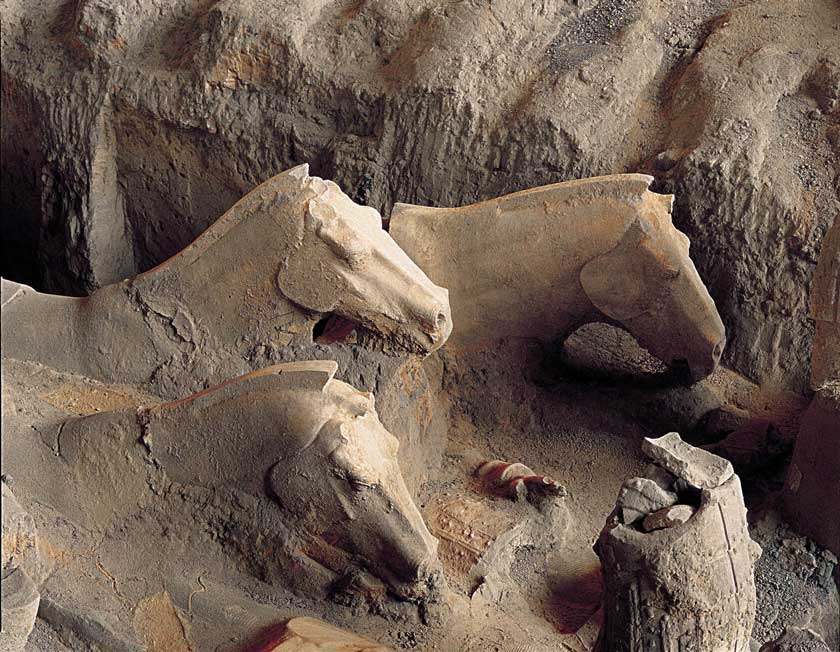
Terracotta horses and warriors emerge from the earth during archaeological excavations at Qin Shihuang’s mausoleum complex in Xi’an, revealing figures concealed for centuries. Emperor Qinshihuang’s Mausoleum Site Museum.
The story has its darker and stranger moments too. Much of the labour was forced labour, and estimated to have involved tens of thousands, if not up to 100,000 workers.
The National Museum has worked hard to capture many points of interest in the exhibition, including a new digital immersive experience that has never been seen in Australia, recreating how the Emperor may have envisioned the afterlife.
Hands-on interactives will include one that lets visitors explore the original painted colours of the warriors and see how they looked when first created.
A kids’ trail led by an ancient dragon called Longlong will walk children through the exhibition and pose questions. Henry hopes it sparks “that intergenerational conversation” between parents, grandparents and kids.
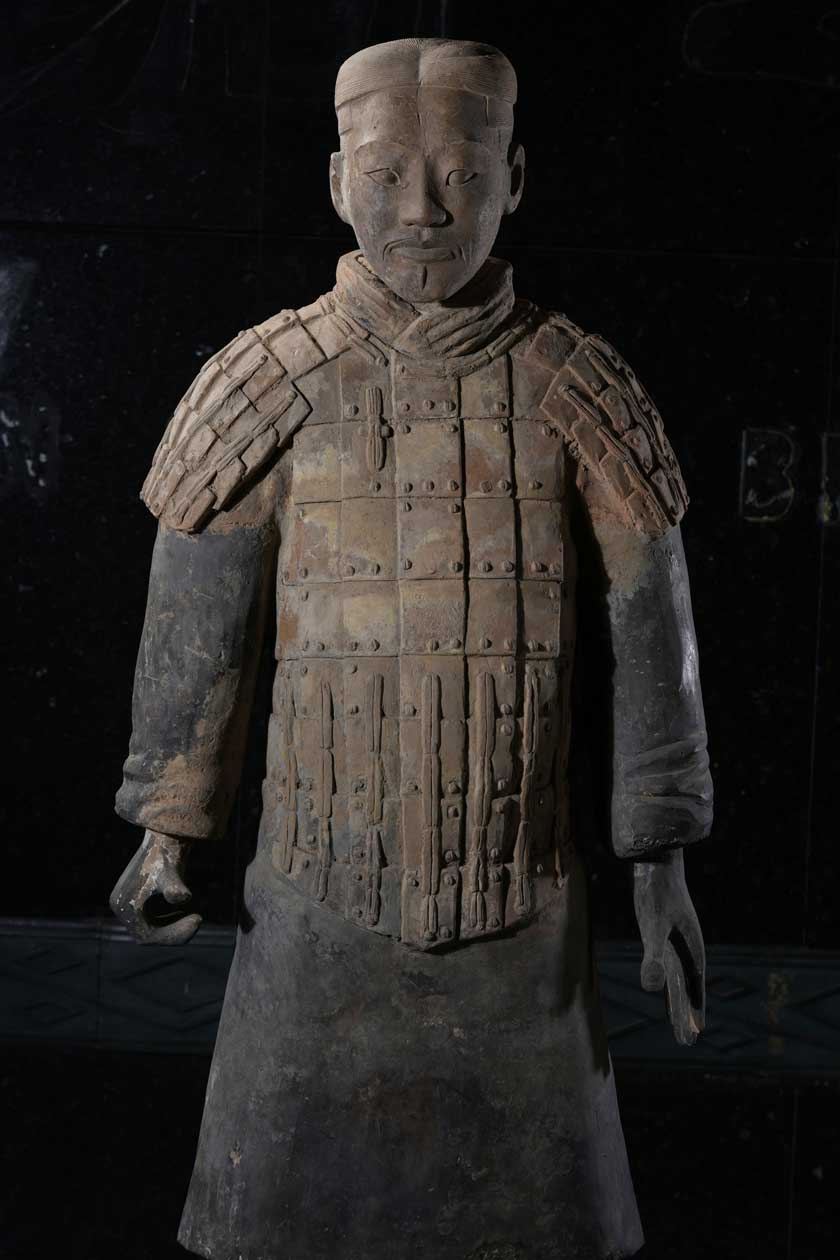
Armoured warrior, Qin dynasty, 221–207 BCE. Emperor Qinshihuang’s Mausoleum Site Museum
There will also be a scent surprise. Henry was captivated by the incense burners, which were once used in ritual to bring people closer to the spirit world, and those same botanical ingredients will be replicated in the exhibition, igniting olfactory senses which, Henry believes, “can bring us 2000 years into the past.”
The exhibition also touches on women’s stories, with the audio tour featuring a segment on Empress Jing, and shining a light on women who held huge influence in a world that rarely recorded their voices.
“We have worked hard to bring these warriors to life within the museum walls and to provide as immersive and interactive an experience as is possible,” Henry says.
“To stand in front of these warriors is such an incredible experience. It’s really emotionally powerful, almost transcendental.” This summer, Canberra gets to feel it too.
Plan your visit
Terracotta Warriors: Immortality and Empire opens on 9 December 2026 until 2 May 2027 with early access tickets just released for visitors wanting to beat opening weekend crowds.
Tickets are $30 for adults, $25 for concessions and $15 for children, and children under 5 are free.
The exhibition was developed by the NMA with its partners: the Shaanxi Provincial Cultural Heritage Administration, Shaanxi Cultural Heritage Promotion Center, Emperor Qinshihuang’s Mausoleum Site Museum and Queensland Museum Kurilpa. It also marks a two-way exchange, with Songlines: Tracking the Seven Sisters heading to Beijing in 2027.
THE ESSENTIALS
What: Terracotta Warriors: Immortality and Empire
When: 9 December 2026 until 2 May 2027
Where: National Museum of Australia, Lawson Crescent, Acton
Web: nma.gov.au/warriors
Feature image: The terracotta army, created to accompany China’s first emperor into the afterlife, stands in formation in Pit 1 at Qin Shihuang’s Mausoleum site in Xi’an. Emperor Qinshihuang’s Mausoleum Site Museum.