Hidden talents brought to light
Posted on
Close your eyes, says Kirsten, and imagine yourself on the beach.
Feel your toes in the sand, hear the water crashing towards you, and smell the salty air, and that tang of seaweed. That zone, she says, from the top of the beach down to where the water would come above your head, is the littoral zone, not quite land, not quite sea, always moving, and full of activity, real and imagined. Now, open your eyes.
No, we aren’t in a meditation class, although everyone looks rested as they open their eyes. We are at Craft ACT’s first exhibition launch of the year, and Dr Kirsten Wehner (Director, PhotoAccess, and formerly Head Curator, People and the Environment, National Museum of Australia) is speaking to the two new exhibitions; The Hidden Sex and Emerging Contemporaries.
Her talk is aimed at making the abundance of creativity in the gallery palpable. It is unashamedly inspired by Julie Ryder’s The Hidden Sex, a rich body of textile work inspired by the mysteries held within two 19th-century albums of pressed seaweeds in the botanical collection of the National Museum of Australia.
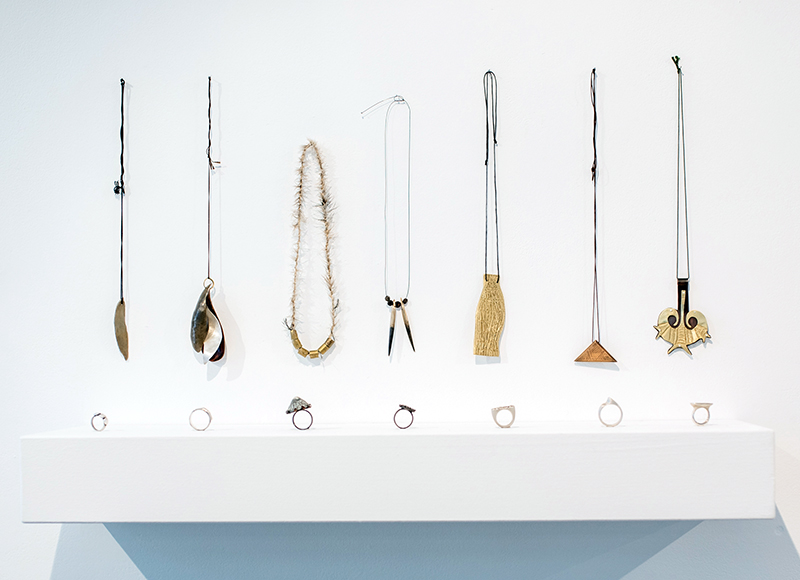
Pendants and rings made by Beverly Smith, Samual Radoll, Angie Davis, Krystal Hurst, Jennifer Kamarre Martiniello, Kayannie Denigan, Emily Beckley in the Indigenous Craft + Design residency and workshop program, 2018. Photo: 5foot Photography.
Ryder is one of Craft ACT’s most respected professional members. She manages to turn rigorous research into exquisite outcomes, combining traditional ‘women’s craft’ with contemporary technologies. Her interest in the albums sparked a journey to herbaria and museums in Australia and Ireland. Seaweed collecting was a global craze in the 19th century but rarely depicted in botanical illustration. Seaweeds are cryptogams (literally, ‘hidden sex’), plants that have no true flowers or seeds, and Ryder is using them as a metaphor for the hidden roles that women played in 19th-century science. Women were forbidden to attend university and were not acknowledged for their groundbreaking work in science, particularly in botany. They provided unpaid labour as citizen scientists. Without them, much of the natural world would remain undiscovered.
The Hidden Sex exhibition is a love letter to these women, and they feel present in the work. Ryder transforms antique gloves and handkerchiefs, the former with painstaking stitching, and the latter with cyanotype, a direct photography technique that has a distinctive deep sky blue, the shade that is over your head when your toes are in the sand.
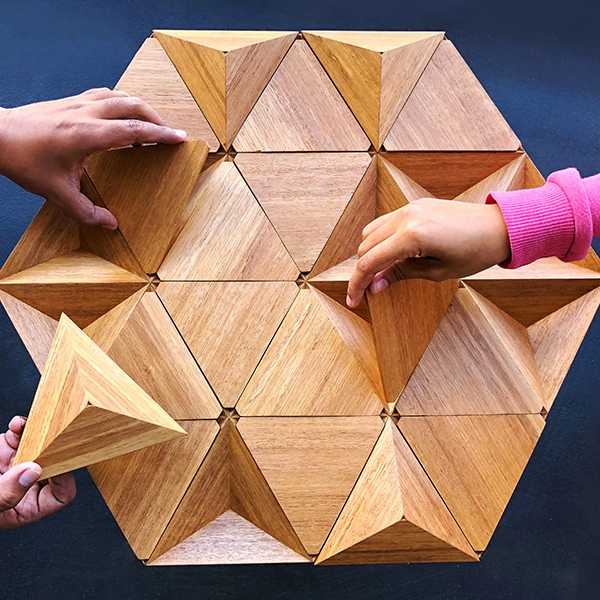
May Kaythari Than Kyaw, Trayble, 2018. Tasmanian oak. Photo: provided by artist.
Ryder cleverly makes connections in her work with scientific processes encountered and developed through that century, and subtly reminds us that we have come a long way. The works have taken years to produce, inspired by a 2016 residency at the National Museum of Australia. They are intricate, experimental and deeply layered, and they illustrate the power of art to share stories, understand history and reveal hidden meanings.
Kirsten deftly applies her metaphor to Emerging Contemporaries, Craft ACT’s annual showcase of outstanding graduates and emerging craft practitioners from the ACT and surrounding region:
“The twenty exciting new artists featured in Craft ACT’s Emerging Contemporaries exhibition are perhaps all themselves in a littoral zone, finding their ecological niche as they transition into professional practice,’’ says Kirsten.
This is fresh craft and design work, hand-picked from our region’s acclaimed institutions: Australian National University School of Art and Design, University of Canberra, Canberra Institute of Technology, Canberra Potters Society and Sturt School for Wood. There is something for every taste: fine wooden furniture, stoneware and porcelain ceramics, experimental textiles, abstract glasswork, and jewellery.
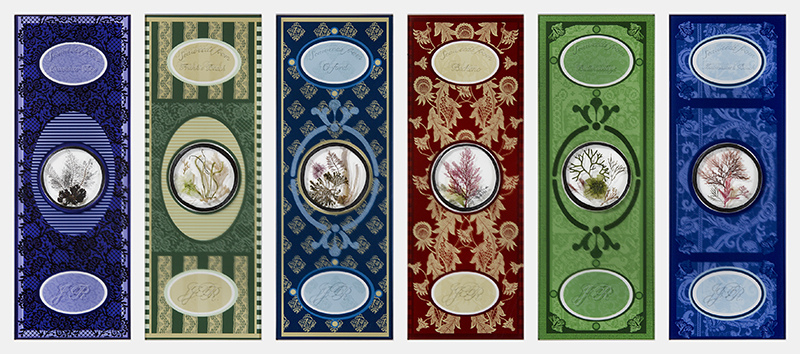
Julie Ryder, Flowers of the Sea, 2019. 6 digitally printed glass slides with pressed seaweeds and engraving. Photo: Dorian Photography.
A special feature is 14 beautiful new pendants and rings produced by seven artists who participated in Craft ACT’s new Indigenous Craft + Design residency and workshop program where they learned contemporary jewellery making techniques, tools and materials. The program was presented by the acclaimed Indigenous Jewellery Project and the workshops were led by Mel Young and Alison Jackson.
Many of the works in Emerging Contemporaries are playful, while others embody that utopian desire for solutions that new designer-makers bring to the world, which is always a good reason to visit these shows. They perhaps give us the same kind of hope and joy as a clear blue day with our toes in the sand, experiencing the openness of the littoral zone.
Julie Ryder: The Hidden Sex and Emerging Contemporaries run until 16 March. Julie Ryder is also giving an artist floor talk to coincide with International Women’s Day: Friday 8 March from 12 – 12:30 pm.
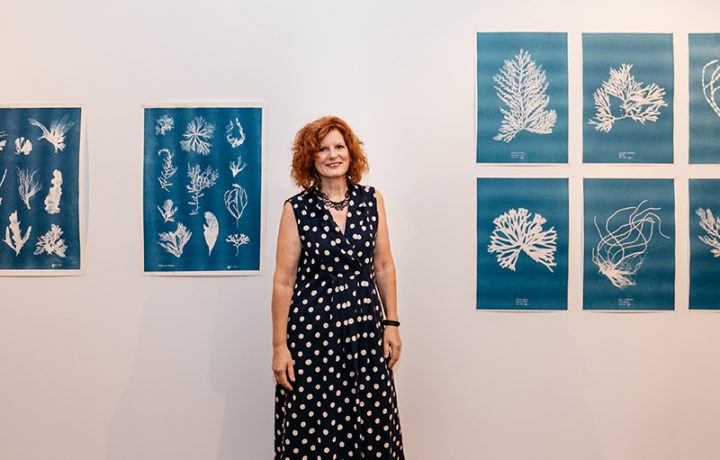
Feature image: Julie Ryder, with ‘Call us not weeds’ I & II (For Anna), 2019. Cyanotype on Fabriano paper. Photo: 5foot Photography.
HerCanberra is a proud sponsor of Craft ACT.

Leave a Reply