Postscript: Life, Love and Loss in Australian Letters reveals the emotional power of handwritten words
Posted on
There’s a quiet power in letter writing. From proclamations of love to formal requests, the written word –formed from pen and ink – can echo across time.
It’s something the National Library of Australia (NLA) knows well.
Home to millions of letters – love letters, scientific reports, impassioned pleas, newsy notes about the week that’s been, and more – the institution has long been the guardian of some of the most remarkable forms of written correspondence.
And now, with the recent publication of Postscript: Life, Love and Loss in Australian Letters, the Library has opened its files to share some of those letters with the world.
Publishing the words of Jane Austen, Judith Wright, Henry Lawson, Mem Fox and Senator Neville Bonner AO in a curated collection, Postscript also adds a modern twist: the letters were passed on as inspiration to a new set of writers to pen their own.
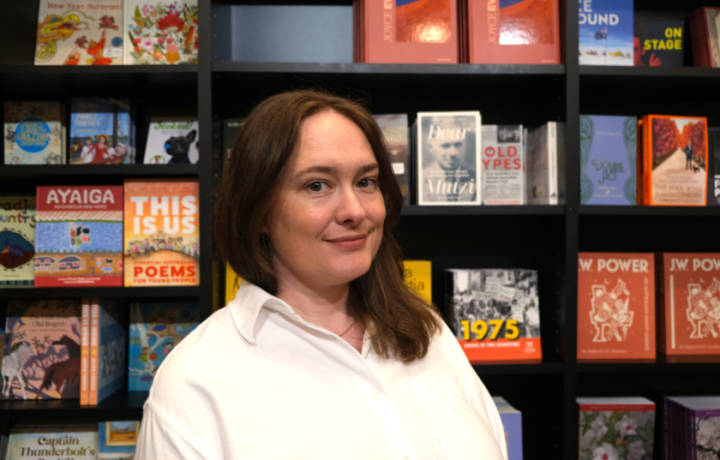
“I worked with modern Australian writers – but not exclusively writers – to find a letter that they found interesting, inspirational or moving,” explains Publisher Lauren Smith.
“It’s got the old and the new letters paired throughout. I was trying to show the beauty of the collection, but also how powerful the collection is as inspiration for any Australian who has a library card.”
“There’s unbelievable access that exists, and that’s one of the things we were trying to show with this book – that all Australians have that access.”
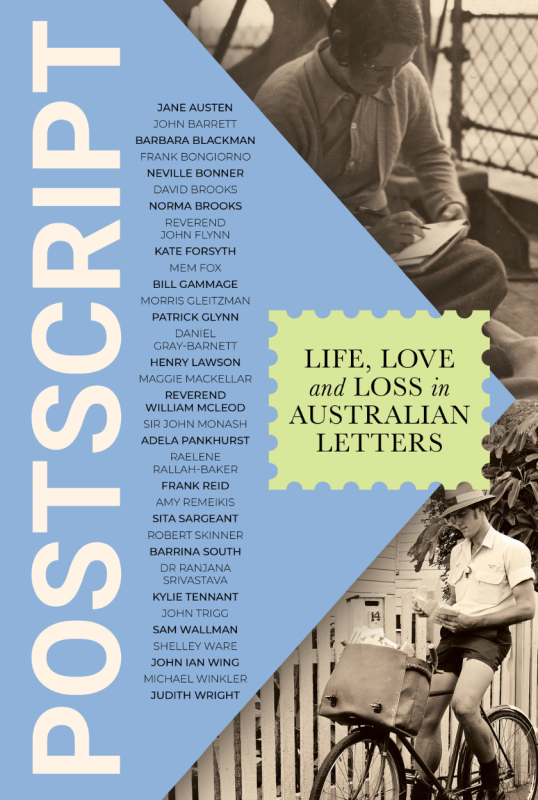
Along with Kate Forsyth, David Brooks, Maggie Mackellar, Ranjana Srivastava and Sam Wallman, other contemporary voices featured in Postscript include Canberra’s own Sita Sargeant and Queanbeyan’s Barrina South.
By turns moving, funny and challenging, Lauren says that the combination of original and old letters will engage and enlarge readers’ sense of empathy – and may even inspire them to pick up the pen themselves.
“I’ve had a lot of conversations with people about the power of a book like this to help encourage people to write – to sit down, think about a person, think about what you’d like to say to that person, and take the time to write it out,” she explains.
“In longhand, in an email or a fax, a long text message, I’ll take them all. I think if it increases the volume of honest and earnest conversation and communication in the world, that’s great.”
Also wanting to show the diversity of the collection available at the Library, Lauren says that at its heart, Postscript is an intimate book.
“The people that we most often tend to write to are our family and our friends. That is the big, strong theme that emerges,” she explains.
“Some of the most beautiful letters from writers have been when they’re writing to a parent to say thank you, or a child to communicate their wishes for the future. Those are some of the most emotional letters in the book, which is perfect with Mother’s Day coming.”
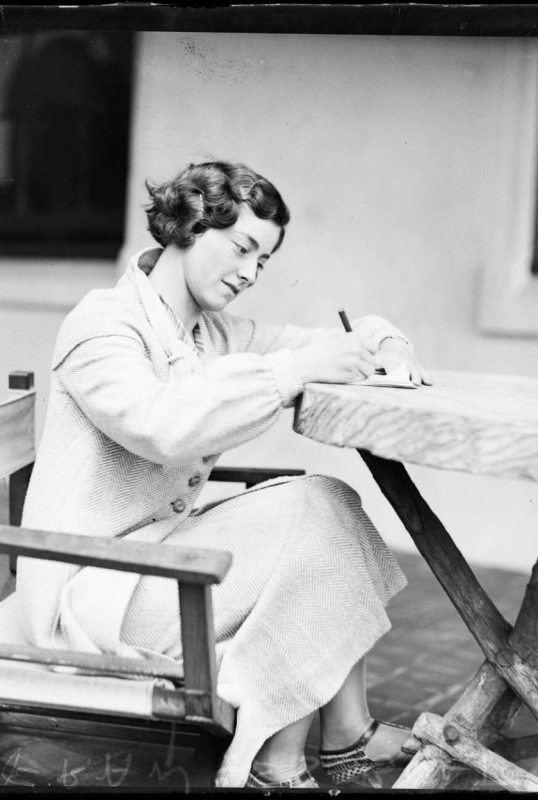
Tapping into that emotion, on Saturday 9 May, the NLA is hosting Postscript: letter writing workshop – an intimate session where Ms Constance Spry’s Letter Writing Service is celebrating the humble art of correspondence. Taking place from 10 am until 12 pm, for $40, participants will also receive their own copy of Postscript.
“We will be providing stationery and typewriters and all sorts of materials to produce a beautiful letter. It is just in time for Mother’s Day, and I can’t think of a single mother who wouldn’t appreciate a letter of thanks, a letter acknowledging all the work that goes into mothering,” says Lauren.
“It’s a beautiful thing to do, or to bring a mother to…just to dedicate that time to sit down and write to someone that you love.”
With the possibility of a second session being held the same afternoon (depending on the demand), it’s a beautiful way to rediscover the lost art of letter writing.
“We almost called it that –The Lost Art of Letter Writing,” Lauren says with a laugh.
“But some of the juiciest parts of letters come out of the postscript – it’s the final extra note, or the extra little bit written after the fact. It is a metaphor for what we have done with the old and the new. All our new letters are the postscript because they were written after the original letters.”
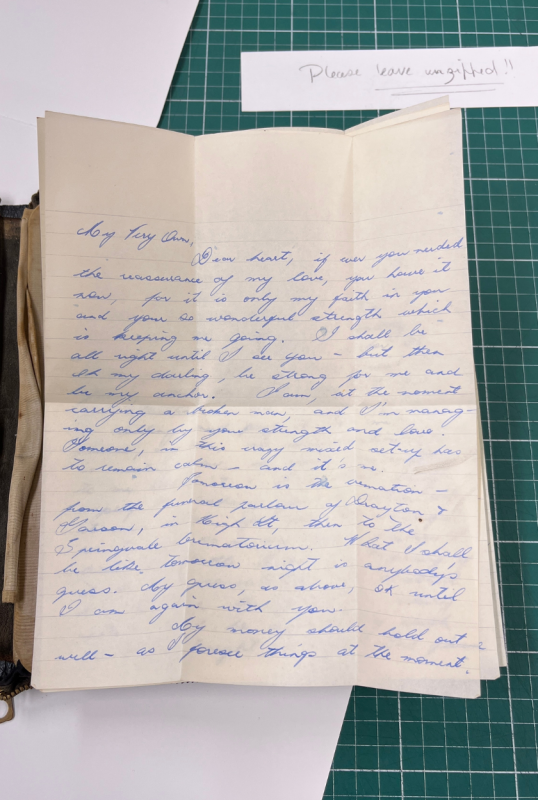
From shaping history to covering philosophical quandaries or giving an insight into someone’s life, Postscript: Life, Love and Loss in Australian Letters is so much more than a book.
It’s humanity in its rawest form – the written word.
“Adela Pankhurst – who was a suffragette – went to prison twice, campaigning for women to have the vote. She wrote a letter to some of her friends in England on the anniversary of their second imprisonment, and one of the notes that she makes at the end is that she isn’t a feminist because she ended up being a homemaker and staying at home rather than going out to get a job,” says Lauren.
“There’s a man named Patrick Glynn – he was a politician – and he was literally sitting at the table where they were debating the Australian Constitution before it was made official. And he wrote a letter proposing marriage to Miss Abigail Dynon…They were married within the week.”
“There’s something unifying and empathy-building in these letters. I love that, and I hope that that’s also one of the things that people think about when they read them.”
Postscript: Life, Love and Loss in Australian Letters is available for purchase from 1 May. Sign up for your free Library card here.
THE ESSENTIALS
What: Postscript: letter writing workshop
When: Saturday 9 May, 10 am – 12 pm
Where: National Library of Australia
Tickets + more information: library.gov.au
Images supplied.