A new exhibition reveals the women behind Holden’s early success
Posted on
National Archives of Australia shares how the Second World War, industrial action and an iconic Australian brand played a part in better working conditions for Australian women.
Holden is an automotive icon, known for producing the first fully Australian-built car, the 48-215 (FX), in 1948. But behind the story of Australia’s favourite car brand is a lesser-known chapter about women, wartime production and the changing role of women in Australia’s workforce.
You just need to go back to the 1940s to uncover it.
Picture this: before the launch of ‘Australia’s own car’, Holden was helping to arm a nation at war.
Shifting 80 to 90 per cent of their production to meet wartime demands, the company played a significant role in manufacturing military vehicles, aircraft engines, wings, anti-tank guns, artillery shells, bombs and more as part of Australia’s contribution to the war effort.
The company was also involved in manufacturing the Bristol Beaufort bomber aircraft. One of its plants produced approximately 9.59 million pressed parts and 910 fuel tanks over the course of the war. The output was staggering.
As men travelled overseas for combat, new opportunities opened for women in manufacturing. Women made up 37 per cent of the Beaufort workforce in suburban South Australia, reflecting the changing role of women in Australia’s workforce during the Second World War.
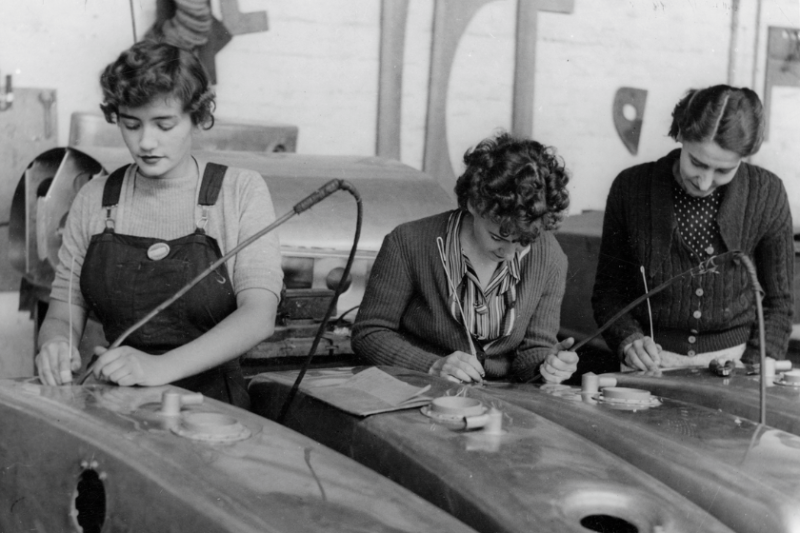
Cleaning dust from bomber tanks, 1943. D Darian Smith, photographer. SLSA: B 7798/420.
This is one of the lesser-known stories that Rear vision: the Holden collection explores at National Archives of Australia.
“At one point, 37 per cent of Bristol Beaufort bomber aircraft parts were made by women,” explains curator Anna Edmundson.
“Many of these women were highly skilled. However, in 1943, many of these women ended up going on strike – not for equal pay but for 60 per cent of the male wage.”
“A strike started in a steelworks, and the women from Holden went out on strike in sympathy. Then the men also went on strike to support the women. Because of that strike, women were granted their allocated 60 per cent.”
Developed by the State Library of South Australia in partnership with Adelaide University, Rear vision: the Holden collection traces the company’s early journey from a 19th-century saddlery, through military production during the Second World War, to the company’s closure in 2017. It’s a unique look at the rise and fall of an Australian icon.
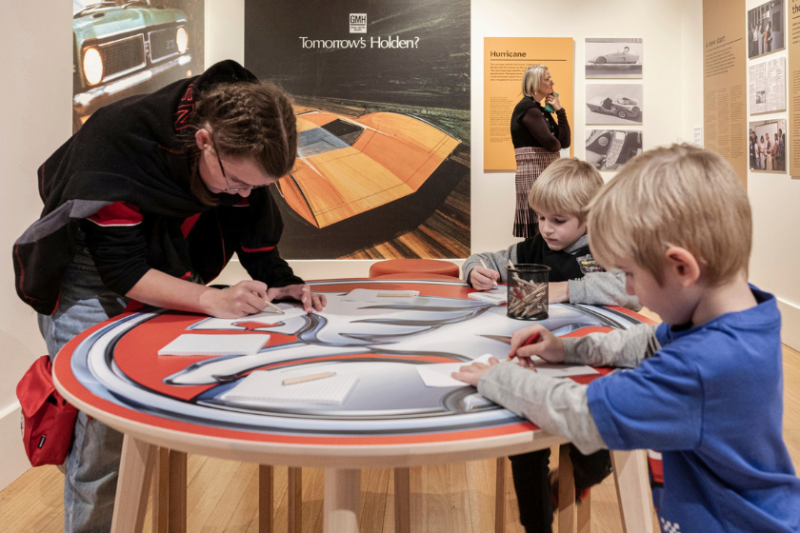
Visitors enjoying the exhibition interactive by drawing and naming their cars of the future.
“What we’ve been able to do here in Canberra is add to the story with our own records. This has been an opportunity to get our records out on display and to go a bit deeper into the story,” explains Anna.
“Not a lot of people know about these stories.”
From showcasing the oldest registered Holden in the ACT to displaying the first and last engines Holden produced, as well as the original bronze lion statue from the Elizabeth plant entrance gate, Anna says the exhibition is full of things to discover.
She also believes that the original materials, rare documents and contributions that make up Rear vision: the Holden collection demonstrate how archives can help to tell the stories that define our nation.
“Everyone has a Holden story,” says Anna. “One of the lovely things about being involved in this exhibition is how personally connected people often feel. There’s something about Holden that people identify with – particularly people of a certain generation.”
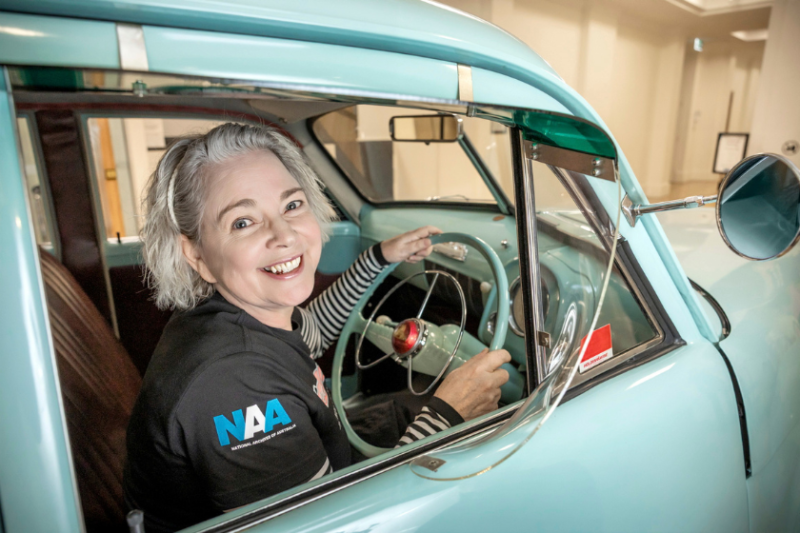
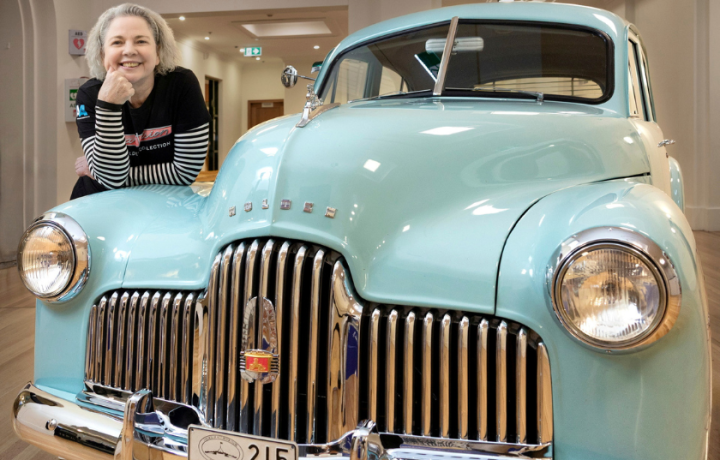
National Archives curator Anna Edmundson with “Ben,” named in honour of former Prime Minister Ben Chifley, a 48-215 (FX) and the oldest Holden registered in the ACT.
Open every day until 11 October, the free exhibition has something for all ages and generations.
Showing a lesser-known side of Holden, from wartime production to the fight for better workplace conditions, the stories in the exhibition reveal how the company helped shape modern Australia.
It’s a brand that was – and remains – deeply woven into Australian life.
“I think it’s an amazing immigrant story and a story of innovation,” says Anna.
“It’s a story that goes beyond cars. It’s really an Australian about an emerging sense of Australian identity delivered through the vehicle of this iconic car.”
THE ESSENTIALS
What: Rear vision: the Holden collection
When: Until Sunday 11 October
Where: National Archives of Australia, Kings Avenue, Parkes
Web: naa.gov.au
Feature image: National Archives curator Anna Edmundson with “Ben,” named in honour of former Prime Minister Ben Chifley, a 48-215 (FX) and the oldest Holden registered in the ACT.