Five minutes with author Karen Viggers

Posted on
Her books have sold over 800,000 copies and been translated into five languages.
But Canberra author Karen Viggers‘ global appeal isn’t because she writes about international locations. Instead, her novels focused on the interior life of those living in wild, remote and beautiful pockets of Australia.
It’s in these quiet spaces that Karen finds the heart of her stories – and the complex family dynamics that inhabit them. So perhaps it’s not surprising that for her fourth novel, Karen returned to the wilderness of Tasmania.
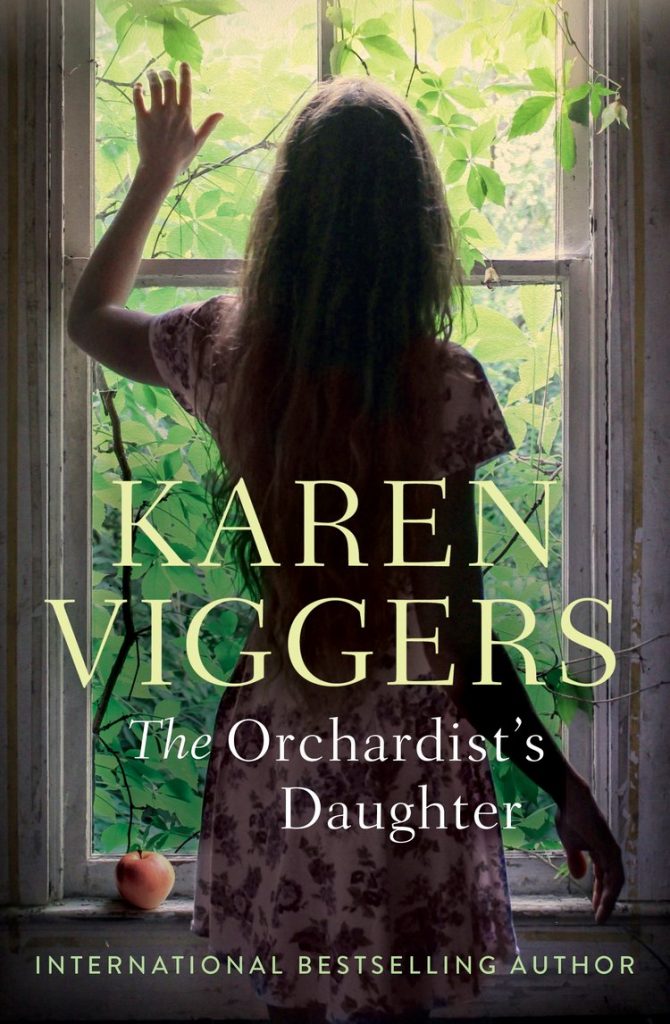
We caught up with Karen to chat about The Orchadist’s Daughter, fictional family dynamics and what the future holds.
What inspired The Orchardist’s Daughter?
The Orchardist’s Daughter, like all of my novels, is embedded in place. It’s set in the old-growth eucalypt forests and rugged mountain of southern Tasmania – a region I love and have explored with my family.
The novel explores the challenges of being an outsider in a small timber town. In my own life, I’ve often felt like an outsider – someone who doesn’t quite fit in. These days I’m comfortable with who I am, but belonging can be a big issue for young people. I’m currently guiding my own teenaged children through to adulthood, and I wanted to explore issues of belonging and the ways young people connect with others and create bonds to find their place in the world.
A country town with internal tensions was the perfect place to do this. I wanted to hover above the community and look at the small ways we can find the courage to be caring and powerful. I wanted to delve into the ways friendships are formed, through shared passions, pets, sport and books. I also wanted to shine a spotlight on less visible forms of oppression in society, like bullying and psychological abuse. But I didn’t want to write a dark novel. The Orchardist’s Daughter is a positive journey of self-realisation and empowerment.
How does your family’s unique blend of flora and fauna enthusiasts inform this novel?
My husband (David Lindenmayer) and I are both passionate about nature and wild places. David has worked in the Victorian mountain ash forests for more than 35 years, and together we have spent hours in the understorey, plucking off leeches and climbing over slippery logs to study the ecosystem.
In writing this novel, I wanted to immerse readers a world of trees, and remind them how lucky we are in Australia to have such beautiful forests to visit. I also wanted to explore issues around forestry, especially the impacts of mechanisation on jobs and sustainability. However, I didn’t want to do this in a didactic way. Rather, I wanted to hover above the issue, exploring different perspectives from inside and outside the industry.
David and I share a passion to conserve wild places and make a contribution in this world. Our time spent in forests and our knowledge of the flora and fauna provides the foundation for my novel. Readers will be able to smell the minty scent of the damp scrub and hear the wind shifting in the canopy, bark slapping against the wet trunks of old trees.
The novel is set in Tasmania – why choose that setting?
One of the key characters in The Orchardist’s Daughter is a parks ranger called Leon who emerged with a strong voice in my earlier novel, The Lightkeeper’s Wife. In The Orchardist’s Daughter, Leon is ready to leave his family home on Bruny Island and commence his own life.
Moving across the D’Entrecasteaux Channel to a town at the foot of the forests was a logical step. Here, Leon was within reach of home if his mother needed him, but he could strive to establish himself independently in a new place with its own challenges.
In writing this book, I visited southern Tasmania several times to develop a strong feeling for place. The Huon River, Tahune Airwalk and Hartz Mountains National Park were places I fell in love with. However, the towns and scenic highlights of the region are not named in the novel because I didn’t want to impose my impressions and presume to know what life is like for people who live in those towns.
What inspired the interesting family dynamics in The Orchardist’s Daughter?
The family dynamics in The Orchardist’s Daughter are the backbone of the novel, but even though all three families face challenges, it is a story of hope, friendship, connection and self-empowerment.
Leon has family difficulties due to his father’s alcohol abuse, and, when he moves to a new town in The Orchardist’s Daughter, he’s trying to leave all that behind. But, even though we can try to start afresh, we always take our troubles with us. A positive for Leon in The Orchardist’s Daughter is reuniting with his grandfather who lives nearby in an old people’s home.
The friendship between Leon and his grandfather is a highlight of the novel. Grandpa is feisty and humorous, and confronts Leon on issues which he might otherwise hide from. I believe there is great value in relationships between younger and older generations, and this is a recurrent theme in my books. I had a close relationship with my paternal grandmother, who was patient and wise, and a great passion for life and reading, even though she had little education. She is probably the reason why I am fascinated by inter-generational relationships.
The second family dynamic in The Orchardist’s Daughter is centred around Mikaela (Miki) who grows up home-schooled and isolated on an apple orchard. When the novel opens, she is living with her older brother who continues to control her. He’s convinced he is protecting her from the world, but he also seems to get off on the power of restricting her life. The idea for Miki came from my observations of a friend’s home-schooled family. Those children were desperate to connect with the world, and I wanted to give them a voice. Creating Miki allowed me to explore the difficulties and tensions of an isolated upbringing.
The other family in The Orchardist’s Daughter is that of Max, Leon’s 10-year-old next door neighbour. Through Max’s young eyes, I wanted to explore the pressures of poverty, disadvantage and lack of education of family lives and relationships. As a writer, I am an observer of people and life. Creating characters allows me to place myself in the skin of others to see what their lives might be like. Seeing the world from Max’s perspective allowed me a touch of lightness and humour, because Max is mostly able to watch and listen without the judgement and sense of responsibility an adult might feel.
How would you describe your writing in three words?
Alive. Accessible. Engaging.
What does 2019 hold for you?
At the moment, I am very busy bringing The Orchardist’s Daughter to the world, meeting with libraries, book commentators and readers. This month I’m travelling to Paris to launch the French edition of the book. After France, I’ll have more time for writing. I can’t wait to throw myself into the first draft of a new novel, because that is the fun stage of the creative journey.
When I start, I will need to banish my inner-editor and let the ideas flow. This will be fun, but will result in a terrible mess – all my first drafts are terrible. But there is always great joy in giving in to the creative surge and riding the wave. The hard work will come later, trying to work out how to rebuild those early words into a coherent and well written narrative.

Leave a Reply