Behind the science: Meet Canberra’s Fierce Ladies
Posted on
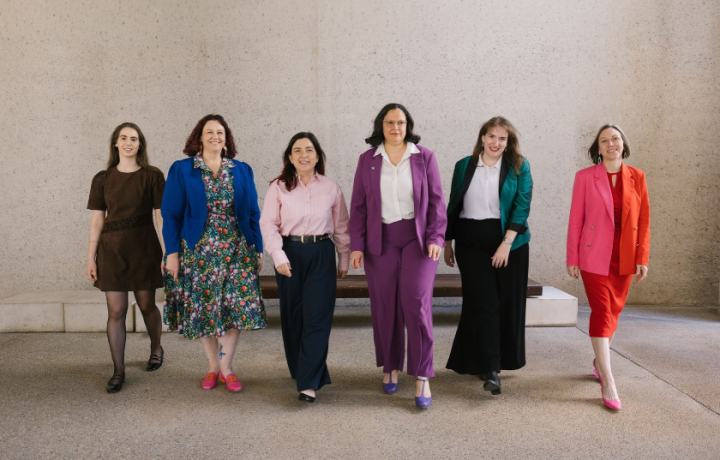
You might not know their names, but you’ve likely benefited from their work. From classrooms and research to government and media, these six Canberra women are shaping the future of Australian science.
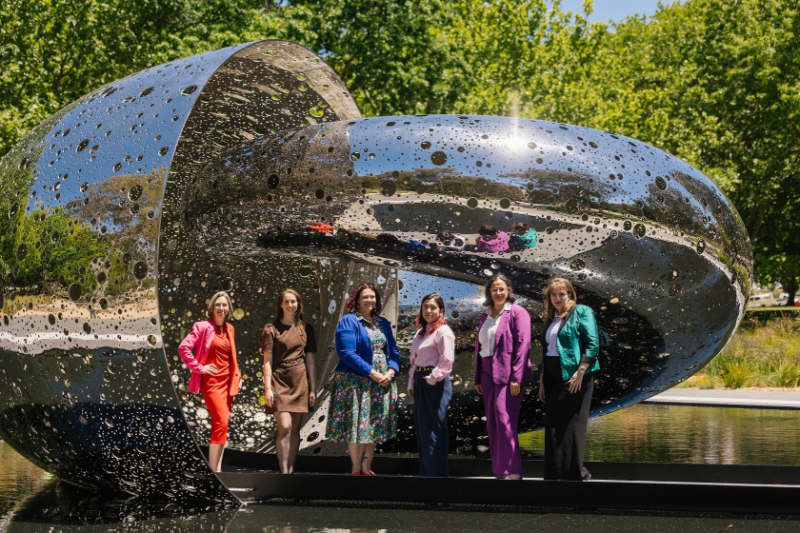
They’re ACT’s Fierce Ladies, part of a national peer support network bringing together women in science communication. They’re connected in their belief that good communication makes the world a better place.
The initial reason for the group’s formation? Nominating other women for awards, because that’s what blokes do. Sharing nomination opportunities and identifying worthy women to nominate across their networks.
Only 32.7 per cent of recipients of the King’s Birthday Honours are women. There’s a persistent gender imbalance in the Order of Australia, and it’s only going to change if more people recognise exceptional women and expand the idea of what it means to lead and contribute and how we value that as a society.
It’s a winning approach. Several science communicators are in the running for the 2027 Australian of the Year awards, including Dr Vanessa Pirotta (NSW), Dr Kirsten Banks (VIC), Dr Lila Landowski (TAS) and Jasmine Fellows (ACT).
Women of science communication
Jasmine Fellows
Science for the next generation
“What if every young Australian could see a future for themselves in science?,” asks Jasmine Fellows, science editor and nominee for ACT Australian of the Year 2027.
It’s the question that has shaped Jasmine’s career. With 20 years’ experience, much of her professional life has been helping young people discover the possibilities of STEM.
“My work helps every child in this country imagine themselves in STEM, if it’s something they want to pursue. Or, for others, it provides a science toolkit to make good decisions in everyday life,” she says.
Jasmine has led publications, including the award-winning Careers with STEM, Australian University Science and Science Meets Business. These publications are available free online for all, based on the belief that access to good science journalism should be for everyone.
She is also undertaking a PhD at the Australian National University (ANU), exploring how science journalists develop and use expert judgement. Soon, she’ll take up a Doctoral Fellowship at The Australia Institute, working at the intersection of evidence, policy and publishing.
For Jasmine, science communication is about more than making research understandable. It’s about supporting Australia to use evidence to make informed decisions.
Jodie Haigh
Uplifting science communicators
The driving force behind Fierce Ladies? That’s Jodie Haigh, whose behind-the-scenes work connecting people, uplifting others and strengthening the science communication community recently earned her the Australian Science Communicators’ Unsung Hero of Science Communication Award.
As an early school leaver, Jodie never imagined a career in science. Studying chemistry as a mature-aged student, it changed her life leading to a career spanning scientific research, science communication and research policy, including roles at the European Molecular Biology Laboratory (EMBL) and Science & Technology Australia.
Today, Jodie works with the 2050 Alliance, a network of nine Australian universities including the University of Canberra, advocating for a stronger, more equitable tertiary education and research system.
As President of Women With Disabilities Australia (WWDA), Jodie also champions the rights and leadership of women, girls and gender-diverse people.
Through Fierce Ladies, Jodie is putting her belief in collective success into practice, bringing women together to celebrate achievements, create opportunities and recognise contributions that might otherwise go unnoticed.
“Curiosity is universal, but opportunity isn’t. Studying science changed my life. The stories we tell, the leadership we recognise and the people we uplift shape whose contributions are valued, who feels they belong and who gets to shape our future,” Jodie says.
Dr Karina Judd
Making science communication more inclusive
Whose voices are we hearing when we talk about science, and whose are missing? It’s a question that Dr Karina Judd brings to her work as a science communication researcher.
Karina is asking who is most impacted by the mining and processing of minerals. She’s making sure these impacts – whether intentional or unintentional – are part of the scientific research from the ground up.
“Science communication can make science better,” says Karina.
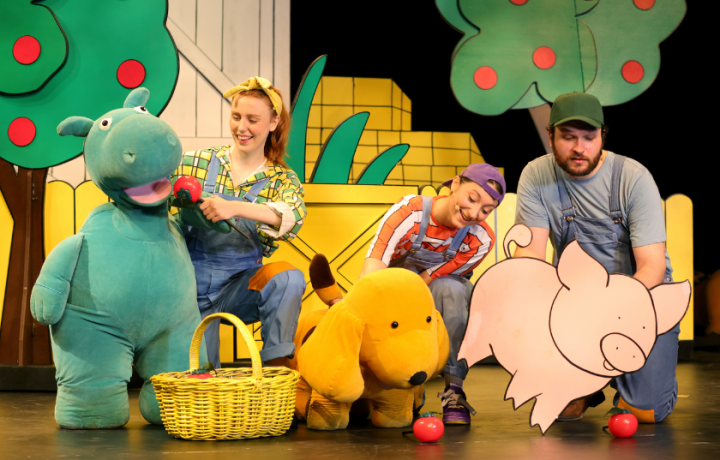
Then there’s Rock Hard! The Geological Cabaret. Karina’s sold-out burlesque show has brought geology to the stage in spectacular style. The show won the 2026 Science at the Fringe Award at the Adelaide Fringe Festival after captivating audiences in Canberra, New South Wales and South Australia.
When asked about how she balances burlesque with academia, Karina says, “There’s a lot of theatricality in academia!”
“My workplace actually loves the show because it’s an innovative way of using a new medium, which hasn’t been used a lot before. Especially making earth science more approachable in a place like Australia where mining is so central to our way of life.”
For Karina, creativity and inclusion are key to getting people curious. And sometimes, it’s literally about making science sexier.
Dr Rachelle Bonner
Science for social change
How do we turn scientific evidence into meaningful action? It’s the question that drives Dr Rachelle Bonner’s work.
“I’m endlessly fascinated by the challenge of turning evidence into action,” she explains.
Part scientist, part storyteller, part professional asker of awkward questions, Rachelle is a proud Wiradjuri woman, ex-public servant, experienced executive leader, advocate, and scholar-practitioner whose career has taken a decidedly choose-your-own-adventure approach.
With a background in medicine and more than 20 years working across toxicology, reproductive medicine, defence, government, health, disability, and human rights, Rachelle brings both scientific rigour and a systems view to her work. From publishing internationally to giving expert testimony at parliamentary inquiries, she has taken research into public spaces.
Her ultimate goal? More curious minds, more voices in the conversation, and fewer people thinking science limits them to a lab.
Her recent research, published in the Journal of Science Communication, explores how National Science Week could better recognise and celebrate Aboriginal and Torres Strait Islander knowledge systems.
Rachelle’s day-to-day work now as Chief of Staff to ACT Greens Leader, Jo Clay MLA, might be a little different from what you imagine.
“The job is much less House of Cards and much more ‘can you explain this 100-page report in three dot points that mean something?’,” she explains.
“A lot of what I do is science communication at its core: making complex information accessible, accurate, and useful for busy people making important decisions about Canberra’s future. Evidence to action in the halls of power.”
Katelyn Tsipiras
Challenging our nation’s priorities
At the Australian National Centre for the Public Awareness of Science, Katelyn is investigating how Australian research funding shapes our scientific priorities. She’s collaborating with former Australian Chief Scientist Professor Ian Chubb to make it happen.
“It’s been such a privilege in my work to hear everyone’s perspectives on how to make our science system better,” says Katelyn. “Everyone wants it. It’s great to hear suggestions that could uplift and bolster science for Australia.”
At the same time, Katelyn is working in science outreach at Mount Stromlo Observatory.
This work is creating strong networks between research and politics, giving her a front-row seat to the forces shaping Australian science.
Camille Thomson
Science where you least expect it
What happens when you take science out of the laboratory and into the pub? For Camille Thomson, that’s exactly the kind of thinking that makes science communication exciting.
A natural translator and facilitator, Camille understands that good science communication must create opportunities for people to engage, ask questions and discover why research matters.
“I like to imagine new ways of taking science to the world, taking it to non-traditional venues – like the pub,” says Camille.
Camille has been a leader within Pint of Science Australia, Fuzzy Logic on 2XX and the Australian Science Communicators. Her career has spanned Geoscience Australia, the Australian Academy of Science and the Australian Academy of Technological Sciences and Engineering.
“I like getting the job done and doing it well,” says Camille. “For me, it’s not about being in the spotlight. It’s about making sure the science is front and centre.”
Images supplied.