A day in the city: Canberra in 2030
Posted on
The projects are underway. Here’s what a day in the city could look like once they’re done.
7.30 am on a Tuesday morning, and the light rail is already busy. From Gungahlin, it runs the length of Northbourne Avenue, the way it has since 2019 – past the coffee shops opening their doors, past the commuters plugged into podcasts – before something new happens at Alinga Street. The light rail doors open, then close again, and the journey continues.
Light Rail Stage 2A extends the network from the city centre to Commonwealth Park, following London Circuit West through City West and NewActon to the lake’s edge. Three new stops – Edinburgh Avenue, City South, and Commonwealth Park – bring this end of the city within reach for the first time without a car, bus or bike.
The tracks run wire-free along a redesigned London Circuit, past new green corridors planted with established trees and footpaths – part of streetscape upgrades that accompany the new route.
By 9 am, the Constitution Avenue end of the city is humming. UNSW Canberra City – built on the corner of Constitution Avenue and Coranderrk Street – is designed to draw around 6,000 students and educators into the inner city, and you can feel it. The campus brings together education, research and industry in fields like cybersecurity, artificial intelligence and public policy, extending the knowledge corridor that runs from here up to Russell. For local students, that means studying in critical fields without leaving Canberra. For the cafés, bookshops and lunch spots nearby, it means a precinct that’s buzzing throughout the week.
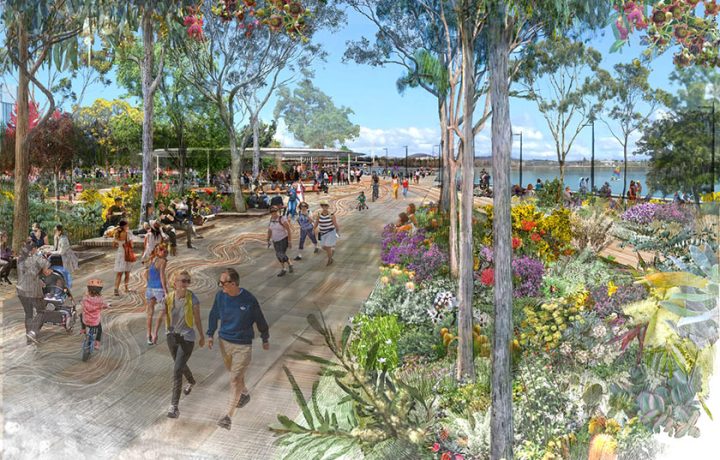
Come midday, it’s the lake that pulls people out of their offices. The Acton Waterfront has been in the making for years – now the boardwalk is completed and a neighbourhood is planned to connect the city centre to the water’s edge. One day, it will be home to shops, businesses, cafes, recreational activities, and accommodation.
Ngamawari, the new park, has been built on land reclaimed from Lake Burley Griffin. Named by Ngunnawal community representatives, Ngamawari – meaning ‘cave place’ in Ngunnawal language – carries the history of limestone caves flooded during the lake’s creation. It’s a place to soak up a bit of Canberra’s story while you eat your lunch on the grass.
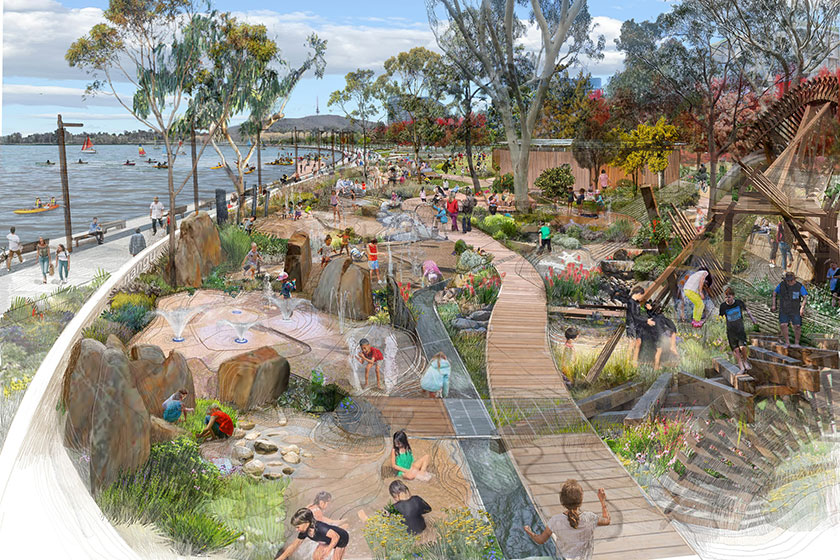
Artist impression of Ngamawari’s adventure playground. Image: City Renewal Authority.
Light rail now stops at Commonwealth Park, and the planned Canberra Aquatic Centre – intended to be accessible to everyone from lap swimmers to young families – adds another reason to spend time in this sprawling urban oasis.
By 7 pm, people are streaming into the Canberra Theatre Centre precinct. The new lyric theatre will seat 2,000 – big enough to finally make Canberra viable for national and international touring productions that have historically bypassed us. Major musicals, opera, ballet, international acts: the kind of shows Canberrans currently travel to Sydney or Melbourne to see. The nearby restaurants and bars are full, and the night is just getting started.
The show ends around 10 pm. People spill out onto the Civic streets, some heading to New Acton for a nightcap, others picking up the light rail on Northbourne for the ride home.
While this is a look into a possible future, it’s not a fantasy. These projects are funded, approved and under construction – the lyric theatre and Light Rail Stage 2A are both planned for completion in 2028, with UNSW Canberra City Stage 1 to follow. The Canberra Aquatic Centre is in early design, and the Acton Waterfront neighbourhood is in active planning. By 2030, the question won’t be whether Canberra has changed. It’ll be which part to visit first.
Feature image: Light Rail Stage 2A will stop at Ngamawari, Acton Waterfront (artist impression). Image: City Renewal Authority.