School holiday getaway? Now’s the time to be vigilant

Posted on
With zero active cases in the ACT, many of us are feeling safe, secure and protected.
While we may be able to enjoy a life that looks a whole lot closer to normal than our friends in Melbourne, it’s important to remember that every single one of us has a role to play in keeping our community safe.
After a long weekend and school holidays, we know that lots of people are enjoying travelling to the south coast, visiting family members interstate, or hosting visiting guests.
Underneath the beach frolicking, picnics and wine quaffing lies an undercurrent of concern that’s still felt by many. It’s not paranoia, but rather an acute awareness that it only takes one active case to cross our border for COVID-19 to spread through the ACT, particularly if we lapse into complacency.
One of the best ways to protect your family and the broader community is to be vigilant about testing, even if you have the slightest of symptoms.
Katy Speldewinde is a nurse who’s currently working at the COVID-19 Walk-in Testing Clinic on Garran Oval. She says it’s essential to get tested if you experience symptoms, particularly after returning from holidays.
“One way of looking at it is your generalised cold and flu-like symptoms, but there are a couple of additional factors that we also consider are important: things like nausea, vomiting, loss of smell, loss of taste, unexplained fevers, people that feel like they’re coming down with something, we would call that symptomatic enough for testing.”
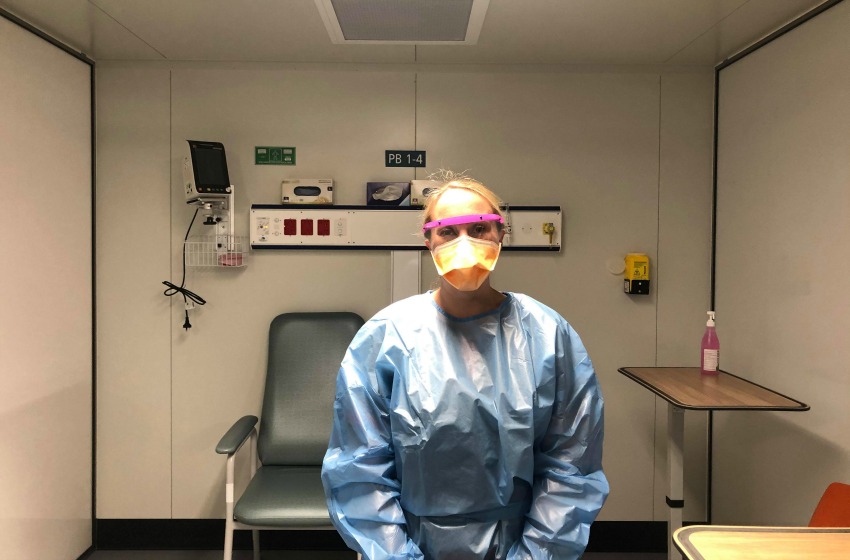
Nurse Katy Speldewinde.
That means that even if you’re feeling run down, have a bit of a headache or even a niggling sore throat; it’s a good idea to get tested.
“We’ve got a couple of different ways [to get tested], we’ve got drive-through clinics, and we’ve got the walk-in centres.”
The process couldn’t be easier: after a brief meet-and-greet with security, you’ll be asked to sanitise your hands and be provided with a mask if you’re not already wearing one. Next, you’ll register at an administration desk, and then have a brief wait before you’re shown into the clinic by a nurse.
“Then we do a little bit of an assessment, including asking where you’ve been, what’s worrying you, whether you’re symptomatic, and what we can do to help. We’ll go through the swab with you, we’ll go through the follow-up and the isolation information, and we’ll take it from there.”
If you think that being tested means spending a week in isolation, you can breathe a sigh of relief—results are currently delivered in just 24-48 hours.
“Isolating until you’ve got your negative results is important, but we also encourage anyone that’s symptomatic [to isolate], just so that we can keep the community illness rate down and low,” says Katy.
There are walk-in clinics at Weston Creek, Garran Oval, and West Belconnen, and drive-through clinics at Exhibition Park and Kambah. If you’re unsure about anything or haven’t received your results in the 24-48-hour window, there is a number that you can call to check-up, and you can also elect to have the results sent to your GP who can chase the results as well.
Not only will getting tested give you and your family peace of mind, but it also helps to grow the information database so that our community can stay protected, both now and into the future.
“The more numbers we get, the bigger picture we have for now, and the bigger picture for the future.”
“Obviously, it’s school holidays at the moment and people are going to go places, and enjoy themselves. What we want to know is what steps we need to be taking to keep people safe, is there something that we need to be looking at and observing, and remember that COVID can come from anywhere, so no one is immune.”
One of the biggest misconceptions, Katy tells me, is that people think that they couldn’t have COVID unless they’ve been to a hot spot. This isn’t the case, as COVID can spread quickly, particularly when so many people are travelling and visiting interstate.
“At this stage of where we are the development of COVID and where we are in the testing phase, we don’t want people to have complacency. We want people to engage as a community, and we don’t want people to think that it can’t affect them. Be vigilant, and exercise caution.”


Leave a Reply