Katy Gallagher on menopause, motherhood and reforming Australia’s health system for women

Posted on
Whatever your politics, you cannot dismiss the impact of the record-breaking $792 million women’s health package announced last year by Finance and Women’s Minister Katy Gallagher, or ignore that this long overdue recognition of the unique health needs of women is making material difference to half of the Australian population.
In fact, some of the reforms are so long overdue you need to take a time machine back to the 1990s to find the last time new contraceptive pills were listed on the PBS, or to 2004 for the last time PBS medicines were capped at $25.
We are talking the year Facebook launched, Peppa Pig first aired in Australia, Rove McManus won the Gold Logie, and Tassie’s Mary Donaldson became a Danish Princess.
For Katy, 2004 was also the year the Stanhope Government was elected as the first majority Labor Government in the ACT, and she was rising through the ranks in the Legislative Assembly, having become an accidental politician of sorts.
After tragically losing her fiancé, Brett Seaman, while she was 13 weeks pregnant in 1997, Katy was supported by the union movement – the group which later encouraged her to run as a Labor candidate for the seat of Molonglo in the 2001 election.
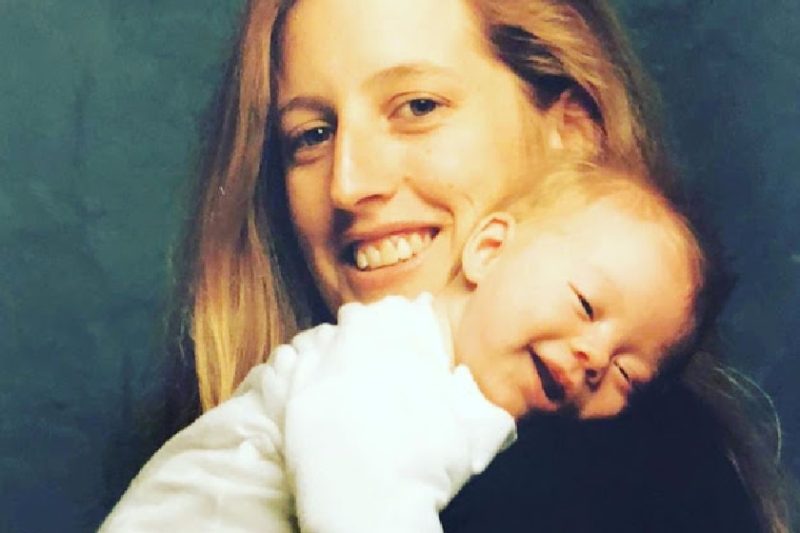
Katy and her newborn Abby, just months after the tragic death of Abby’s father Brett in a cycling accident
Comprehensively shocked to find herself with a seat in the Assembly, and almost second guessing herself out of making the leap into Federal Politics, did she ever think she would be in a position to shepherd the country’s single largest budget for women’s health through parliament – placing words like menopause, endometriosis, Hormone Replacement Therapy, contraception, and Urinary Tract Infections among the Hansard vernacular?
“The answer to that is no!” she says with a laugh.
“I feel like my whole career has been a bit like that. It’s twists and turns and opportunities and setbacks. And I’ve kind of just gone where that journey has taken me, with, you know, a few moments where I’ve had to make hard decisions (notably making the leap from ACT politics to Federal politics).”

Elected ACT Chief Minister in 2011
But Katy acknowledges that her portfolio responsibilities – as both Minister for Finance and Women – present something of a sweet spot for funding such a wide-ranging reform package.
She also credits having a female majority of Labor caucus (56 per cent to be exact) with navigating the funding through the Expenditure Review Committee amid myriad competing Budget demands.
And while the package seeks to support women who have borne the brunt of higher health costs right throughout their reproductive years and beyond, Katy hopes it opens wider conversations around women’s health issues in ways her two daughters, Abby, 29 and Evie, 18, will benefit from.
When I look at my daughters, and even young girls today, I think, imagine what it’ll be like when you come to where we are right now. We are really breaking down a lot of stigma.”
“It’s just nuts to me that for 30 years, we didn’t list a new contraceptive pill on the PBS, or 20 years for menopause treatments. And what that said, what society said, was ‘if you’re going to have it subsidised by the taxpayer, you have the inferior one. Even though we know there’s Yaz and Yasmin and Slinda and all these other ones that have less side effects and are better, we’re not going to subsidise them for you.’ And I think breaking all of that kind of structural inequality down is an ongoing work. There’s still much more to do, but it’s a pretty good kick-off.”

In the Senate Chamber, AUSPIC
It’s almost a year to the week since the package was announced. Since then, more than 660,000 women have accessed more than two million cheaper scripts for new oral contraceptives, menopausal hormone therapies and endometriosis treatment now listed on the PBS.
The price cap on scripts, meanwhile, has been calculated to save Australians over $200 million each year.
Katy, who tries to stay out of the comment section on her social media profiles, is happy to concede that the public reaction has been a resounding thumbs up.
“Largely, you know, I think the feedback has been overwhelmingly positive. A woman shouted at me when I was walking down the street the other day ‘thanks for my medication!’. We know that over 600,000 women have accessed either the menopause or the contraceptive listings in more than two million scripts. So we know it’s having pretty good reach.”
On the topic of menopause, the Women’s Health Package includes the first PBS listing for new menopausal hormone therapies in over 20 years, with around 150,000 women saving hundreds of dollars a year from the listing of Prometrium®, Estrogel® and Estrogel® Pro from 1 March. With 60-day dispensing, it is possible to get two packs of Estrogel for $25.00 (or $7.70 on Health Care Card) – when it used to be around $50 a pack.

Katy and the family dog Pip
There is also more Medicare support for women experiencing menopause, with a new Medicare rebate for menopause health assessments, funding to train health professionals, the first-ever clinical guidelines and a national awareness campaign. Two new Medicare Benefits Schedule items were introduced last July for menopause and perimenopause health assessments, and in that time, over 71,000 women have accessed that assessment.
Katy hopes the package allows more women to receive medical guidance and support at a time in their life where they should not have to simply grin and bear it.
“Take menopause – you’re just meant to get on with it, like women do in so many other areas. And I think this acknowledgement that it is hard, that you should be taking medical advice, that there are treatments available, that you don’t have to go through hot flushes and feeling like you’re losing your memory and things that come and in many ways hit you and make you feel like you’re a different person to what you were. There are all these supports available.”
At 55, Katy herself was of the mistaken view that she was just going to sail through menopause. “I definitely could have benefited from more information and understanding about what was going on.”
In broader terms, more Australian women staying on top of the huge changes that come to their health and wellbeing during their 40s, 50s and beyond can have a significant impact on productivity.

Katy addressing the United Nations as Minister for Women
Menopause Health Australia has estimated a $22 billion cost to the economy from menopause related issues – from women taking time off, cutting back hours, or even retiring early because they cannot manage the severity of their symptoms and find their self-confidence taking a massive hit.
Katy says the new medications available, cost savings, and support for health professionals to better care for women at this time of their lives can all make a material difference.
“It makes a huge difference to household budgets, probably supports you to feel better… supports you to look after your family better, and also, hopefully, be able to participate in the economy in a way that works for you.”
She had no doubt that for some women, the costs of filling a script at the chemist would be factor in their decision to forego medications such as hormone replacement therapy, which can make life infinitely easier for many women. In fact, Katy is embracing “the pause”, saying life after 50 is liberating and there is so much to look forward to after completing the hard work of raising children.

Katy celebrating Canberra’s Centenary with the city’s pioneering women
Like many working women, she has done the juggle of a high-pressure career and motherhood with varying levels of success, admitting a particularly challenging point was the Global Financial Crisis in 2007.
“I often joke with people that I was the ACT Treasurer during the global financial crisis, and I also had Evie, who would have been one, Charlie would have been three, Abby would have been 13, and I pretty much don’t remember 2007-2008. I was like, ‘what happened?’ but I obviously had some very good advisors, because we got through it OK.”
She also admits she long ago gave herself permission to ditch mother guilt – following an existential crisis over having to call in a neighbour to go to Evie’s Mother’s Day breakfast at preschool.
“I was sitting in the car park thinking, what have you become? Where you’ve now moved beyond family, extended family, and you’re now grabbing neighbours to do the Mother’s Day breakfast. And then I just had this moment where I was like, ‘Oh, you know, I can’t do it. I can’t beat myself up. It’s just zapping all my energy’. And so I thought, I’m not going to do it anymore. We’re just going to deal with getting this little show on the road. And that was enormously helpful to me.”
“People may look at me and think, wow, she’s got it all together. But being honest about how mad things are, and at times, how overloaded and crazy things are, is really important. I would hate to project this image that everything’s just smooth. You know my family chaos is like everyone else’s family chaos.”
And in spite of all that chaos, Katy is feeling a measure of freedom now she has gotten all three kids to independence.
“At Evie’s 18th, I thought, this party is actually for me because I didn’t have a dependent, legally dependent child. I’ll accept, you know, I’m still looking after them, of course, and worrying about them but it was just this moment where it hadn’t dawned on me til I was giving some remarks at her birthday to go, ‘actually I’m done. I’ve got three legal adults that I’ve taken from a hospital to here and it’s worked out OK’…So there’s light at the end of the tunnel. Definitely.”
And now that she can see that light, Katy is happy to continue devoting her energy to ensuring new and existing generations of women have their health concerns recognised by the Australian Government, have greater choice and opportunity to manage them, and pay less out-of-pocket costs when they do.