Skin deep: the inside story of our outer selves

Posted on
A fascination with skin set Philippa McGuinness on a journey to dermatologists’ offices, chats with DNA experts, soap historians and cultural theorists, views of TED talks on vitiligo and make-up tutorials by US congresswoman Alexandria Ocasio-Cortez.
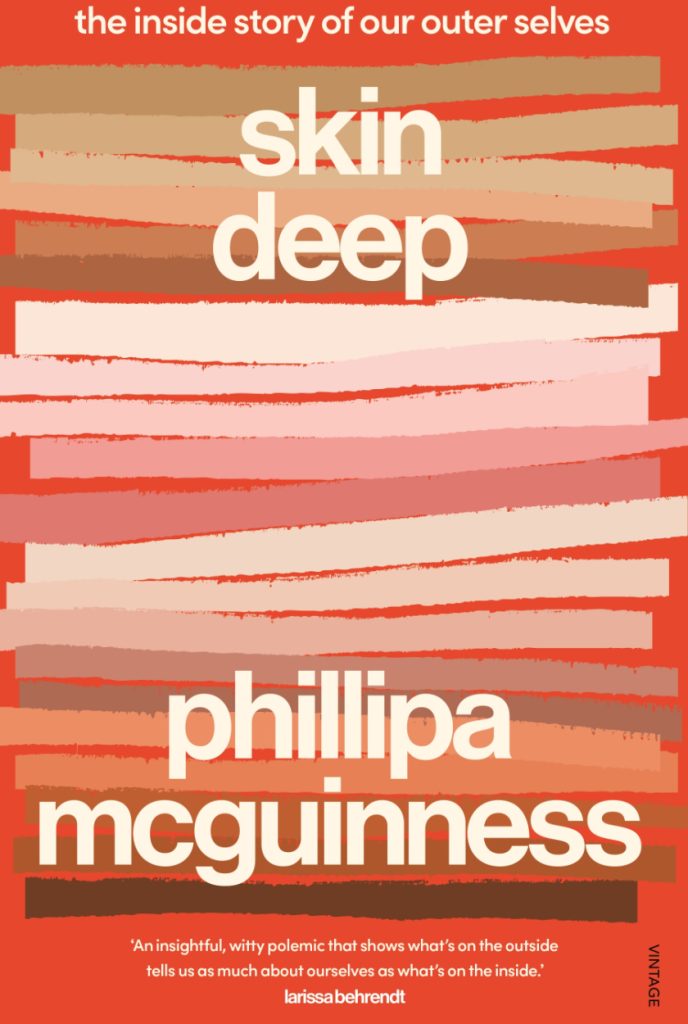
Her new book, Skin Deep is a fascinating exploration of science, culture, health, history and politics. We took five minutes with Pip to discuss skin deep: the inside story of our outer selves.
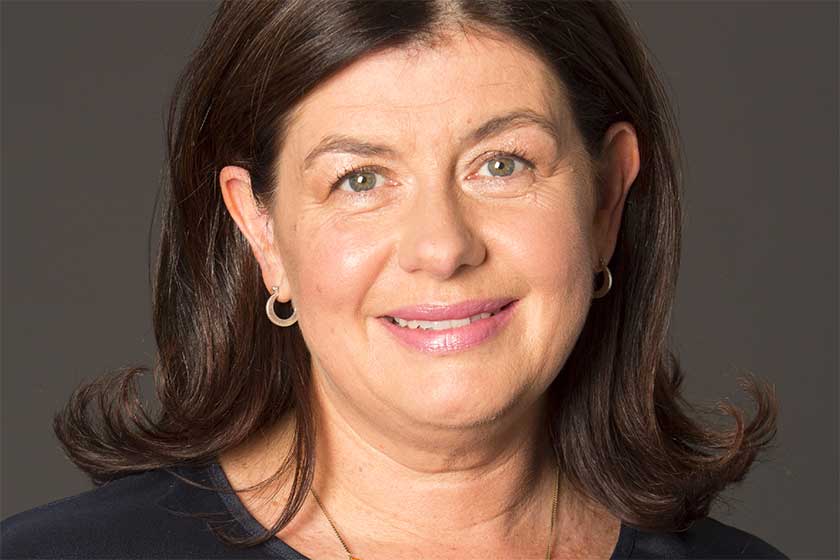
Phillipa McGuinness. Photography: Mel Koutchavli.
What was the initial prompt/kernel of interest for the book?
The idea for a book about skin started to get under my own skin while I was sitting in the packed waiting room of the busy dermatology practice I go to in Sydney’s Eastern Suburbs. Like most of my fellow patients, no doubt, I was there for my regular skin check.
I have had six non-melanoma skin cancers, with the likelihood that more will follow. As I looked around, it seemed that most people in the room had bits chopped out or burnt off—they emerged with steri-strips, having just had a biopsy, or were perhaps returning to get their stitches out after an excision.
I found myself thinking what messed-up situation this was, one that is quite unusual on the planet, not to mention expensive. But before I could get too side-tracked thinking about the forces of colonialism and migration that had led to Celtic-skinned me waiting to see a dermatologist, I started checking out the other patients.
There was a teenager who I could only assume was there for his acne. There were inevitably patients with regular appointments for their chronic eczema or psoriasis. Some may have been wanting to find out what was causing their mysterious or persistent skin rash. And a few people, mainly women, seemed to look younger than they perhaps were. As is the case with many dermatology practices, this one offers injectables and laser treatments alongside standard medical services.
It’s lucky my own dermatologist was running late so I had time to contemplate all this. It seemed there was definitely a story to be told.
What was the most fascinating thing you learned while researching the book?
It’s difficult to single only one thing so I’ll briefly list three:
1. Our skin completely remakes itself every 28 days or so
2. We all know about the gut microbiome and the need to support it but I learnt about the skin microbiome for the first time and the impact it has on our skin and general health.
3. This is related to my second point, but antibiotics as a treatment for acne is the most commonly prescribed antibiotic of all.
As a longtime bookish type, what do you make of the many words and phrases we use around skin in English, like skin deep, under the skin, skin in the game etc. Did you gain insight into any of them? Did you learn any new ones?
Skin as metaphor has rich possibilities. Indeed, I scratched that itch many times, but tried not to overdo it. One word I don’t think I use in the book is ‘cleanskin’, which connotes innocence, and which was originally used to refer to an unbranded animal. It’s also a term that winemakers use for bottles without labels. But I started thinking about ‘cleanskin’ in relation to tattoos which I do write about, and which are now so ubiquitous.
I learnt that the highly evocative (but anatomically incorrect) phrase, ‘By the skin of my teeth’ is biblical. It comes from poor old Job, describing his suffering: ‘My bone cleaveth to my skin and to my flesh, and I am escaped with the skin of my teeth.’
There is a saying in French ‘Je suis bien dans ma peau’, which connotes a sense of being at ease with oneself. But I love to hear about someone ‘bursting out of their skin with excitement’, as if they can’t be contained.
What did you learn about yourself in the process of researching and writing this book?
I always knew that I was likely to get more skin cancers but finding out that 2 out of 3 Australians will have had one by the time they reach the age of 70 means that I am good company.
I learned that like many women, my attitude to beauty and skincare is complicated. I work hard to accept the skin I’m in, warts and all, (not that I have actual warts!) but I know that I am being co-opted by the forces that make us think we need a certain eye cream, or serum, or treatment.
I’m immersed in the visual culture of our age too and hold out hope that maybe these products will actually work even when I know I’m paying for marketing more than the actual jar or bottle.
As a writer, I learned that I like writing about popular science and medical history, as well as the popular culture, historical and personal narratives I’ve written before.
One word of advice for HerCanberra readers when it comes to their skin/thinking about skin?
It’s an acronym but we all know what it means: SPF.
What‘s on your TBR pile?
I’m reading two books at the moment: Olivia Laing’s Everybody and Anna Clark’s Making Australian History. (I don’t usually read two books at the same time but that’s how it has worked out.)
Someone gave me Michael Pollan’s This is Your Mind on Plants recently—it’s right up my alley. I have wanted to read Anwen Crawford’s book No Document, which has been longlisted for the Stella Prize, for about a year and now that my skin-related reading is behind me, I will. Jessica Au’s novel Cold Enough For Snow is also rising to the top of the pile.
Find out more about Philippa and Skin Deep here.