Tara the Capybara: The self-published picture book born from a Canberra teacher’s ADHD diagnosis

Posted on
Not many 29-year-olds can say that they’ve self-published a children’s picture book, let alone that they did it in two days, even completing some of the process on their mobile phone during a concert.
But Canberra primary school teacher Annie Brill did just that.
Because when it came to the decision to share Tara the Capybara with the world, she knew she had to follow through before she lost momentum.
Maybe it was her “ADHD kicking in”, maybe it was because she knew she had written something that could help children just like her. All Annie knew was she had to bring Tara to life and she had to do it now.
“It was very impulsive because I have ADHD,” she says with a laugh.
“It’s not a big deal, it’s not a masterpiece, it’s not some great piece of timeless literature but it is a story that I decided was worth sharing.”
Originally written as a way for her to process her emotions, Tara was never meant to be read beyond the office of Annie’s psychologist. She was diagnosed with ADHD in 2024 while seeing a psychologist for additional mental health support, and says that she never set out to write a book.
“The work I was doing at the time was around processing my own trauma and also navigating that I needed an ADHD diagnosis,” explains Annie.
“We did a lot of role play of talking to my own inner child like how I would talk to a student…it came out of a lot of those conversations.”

Encouraged to write down her feelings and how she would talk to a young version of herself, Annie says the story of Tara “just kind of came out.”
She thought about how she would put her emotions into words that would feel accessible own students and drawing inspiration from the books they love – with Pig the Pug and Macca the Alpaca sitting as firm favourites – and says that a capybara felt like the perfect “odd but lovable” animal to tell her story.
“I’m a little bit odd but that doesn’t make me unlovable or not important – it’s unique. And I decided that would be the character. I then shaped it around myself; I like pink, so my little capybara is going to wear pink!” says Annie.
“This was right after I officially got my ADHD diagnosis and I looked back and I thought about the things in my childhood that would have been so much easier if I understood myself, if I didn’t have that pressure or blame to do more or be better.”
“It was all just a ‘what if?’…It didn’t hold me back, but what could I have achieved?”

The result is a story written for “all the children who feel things deeply”.
Following Tara as she navigates her daily life, Tara the Capybara dives into many things that neurodivergent people find difficult: maintaining focus, organising tasks, managing time, and regulating emotions.
The book also touches on problems making friends; something Annie says every child can relate to.
“I was really intentional in the fact that I didn’t want the book to say, ‘You have ADHD’. I didn’t want to label it; I didn’t want to single out one diagnosis when it could capture a lot of other people’s feelings,” she explains.
“It could be autism, anxiety, trauma or something else. But there’s nothing wrong with your brain and who you are. They’re all different; that’s what makes you special and unique and what you should be cherishing.”
She pauses for a moment, before adding: “It’s okay to feel that you’re different and it’s okay to feel big feelings but also to recognise that everyone feels that.”
Encouraged by her psychologist and some close friends that Tara the Capybara was worth sharing publicly, Annie did consider publishing the book traditionally and tried navigating a few different pathways for getting it illustrated. But, overwhelmed by the admin involved, she decided to put Tara aside.
“It was too much – it was overwhelming, overstimulating and it wasn’t a fun process…I didn’t believe in it enough to push it like that,” explains Annie.
“So, I left it.”
For two years, Tara sat untouched in a forgotten folder – until a chance rediscovery changed everything.
Overtaken by curiosity, she went to ChatGPT to see what Tara would look like with its help. Then, after a day of playing around with the prompts, she realised she had something. So she looked into self-publishing with Amazon, and the decision was made before she had time to talk herself out of it.
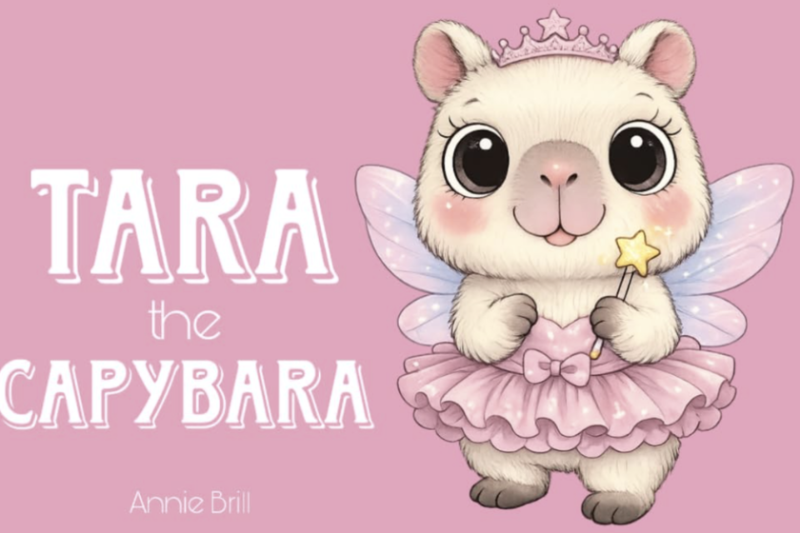
Now with a copy in her own classroom specifically for those kids with big feelings, Annie says that she hopes that anyone who stumbles across Tara the Capybara will get what they need.
Whether it’s people who have never seen themselves represented in a book or parents looking for a way to support their kids, Tara the Capybara offers a warm way to explore neurodiversity.
And while Annie humbly says that it’s “no big deal” that she self-published a book, for little Annie, it is.
It’s what she needed growing up.
“Tara is completely inspired by my childhood experiences as a very anxious, and undiagnosed girl with ADHD,” she says.
“It’s not that I necessarily want to be a big ADHD advocate and tell everyone my own story. But this could have helped me when I needed something to connect with when I wasn’t understanding my own brain.”
You can buy Tara the Capybara here.

