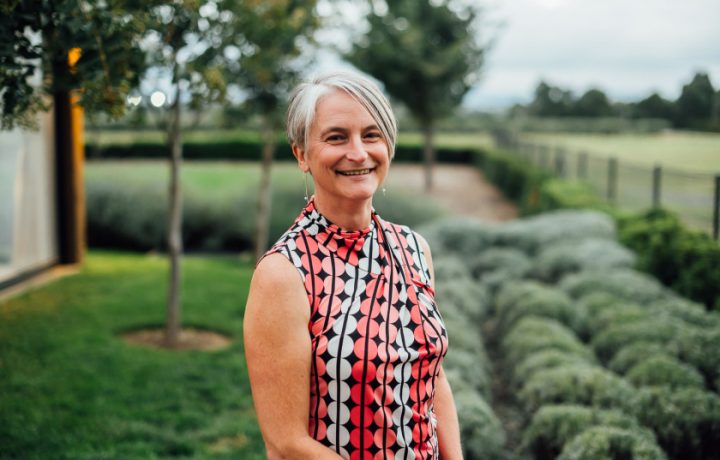
Why Dr Therese Flapper chooses to challenge
Posted on
“My dad burnt my books when I was in Year 7, and he would often throw away my homework. He was an electrician who thought that education was not for women. And my mum never really pushed me. I’m not saying she wasn’t supportive; she just didn’t do anything in particular regarding my education.”
These are powerful words from one of Australia’s most powerful engineers—and worth contemplating today as we #choosetochallenge this International Women’s Day.
Dr Therese Flapper is President of the ACT chapter of Engineers Australia and has spent nearly three decades tackling our nation’s looming water security issues.
A growing population and a changing climate pose huge challenges for the world’s driest continent, and Therese is supporting leading new research and commercialising of new technology to address these challenges.
Therese is General Manager of project management firm TSA Australia in Canberra—a company committed to diversity and inclusion. Therese was TSA’s first female appointed general manager, and she is proud to be a leader in a company that has 39% female participation—a number that is continuing to grow.
Therese has come a long way from her battler background in the Western suburbs of Sydney. Just two girls from her class of 120 went to university. But inspired by her geography teacher, Therese applied to study environmental science at the University of New South Wales.
“I represented .001 percent of the UNSW demographic profile. I came from housing commission, no one in my family had been to uni, and I had to travel more than two hours each way just to get there.”
That first year Therese lived in a caravan in the backyard of her grandmother’s housing commission house.
“Then my grandmother kicked my uncle out of the house so I could have his room. I was the ant’s pants to my grandmother, the bee’s knees. She would brag about me to everyone. She was incredibly supportive of me and my determination to go to uni.”
“To me, education was a way to bust you out,” she adds. But ‘busting out’ meant breaking down a lot of walls.
“There was only one other person from Western Sydney in my course. Everyone else was from fancy schools and the Eastern suburbs. I didn’t make many friends during my first semester, and there were only two girls doing first-year geology.”

Therese Flapper and Marko Osti on site.
Therese had to work two jobs to survive, which set her on her career path and helped find her passion. “I got a cadetship at Sydney Water and became a field technician collecting water samples,” she explains.
Her work at Sydney Water informed her fourth-year honours thesis and she landed a full-time job as a mobile laboratory technician soon after she completed her studies. A Master of Engineering, and then a PhD followed.
“I fell into wastewater treatment. I didn’t plan it; I just went with it. But getting the PhD mattered. I got roles in international water associations. I was invited to strategy advisory groups. The PhD had a weight to it that I never really knew existed.”
After finishing her PhD, Therese landed a role running a water program in Canberra. That was 2002 and she has since grown to love the city she calls home.
Therese remains a rare breed. Women still make up just 12.4 per cent of engineers and earn 11 per cent less than their male counterparts, according to the Australian Government. When Australia’s future depends on STEM—science, technology, engineering and mathematics—this is an issue for everyone, not just women.
Therese likes the acronym STEAM – which includes the arts – rather than STEM. “If we don’t invest in and manage our STEAM, we’ll run out of it and we’ll die,” she warns.
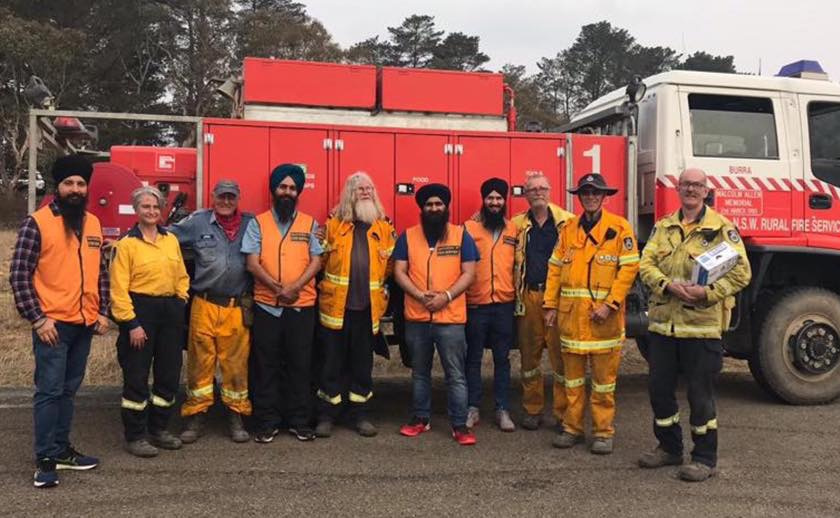
Therese (second from left) fighting fires with the Burra Brigade of the NSW Rural Fire Service team.
Today, on International Women’s Day, it’s worth reflecting on why, despite decades of hard work, there are still so few women in engineering.
Engineers Australia is working hard to address the problem. While Australians have a positive impression of engineers, few in the community and few political decision makers understand what engineers do, how this contributes to community wellbeing and prosperity, and the critical role engineers play in driving technological progress.
“More than two decades ago I was presented Engineers Australia’s national award for the advancement of women in engineering by then prime minister John Howard. Twenty years later our stats haven’t changed.
Engineers Australia’s research has found the issue starts with school. Far fewer girls study advanced maths, physics and chemistry. We tell students to do these subjects without helping them understand the ‘why’. The context is important, as STEM skills are foundations for innovative thinking and real-world problem-solving.
Therese says she can see why some parents “tell their daughters to do something easier”.
“It was so hard for me, but I didn’t want the housing commission to get the better of me. I’m really dogged.” All these years later she is “still fighting, still battling—and still stubborn”.
“People from other socioeconomic backgrounds don’t even know the bias is there.”
She points out that she’s never had a “patron” or a mentor to help her establish networks. There have been times in her career when she’s been told her “background means I don’t know how to negotiate.”
This has, in the past, prevented her from gaining promotions or being paid what she is worth.
“As a manager in a business, when a woman, an Indigenous or disadvantaged person comes to you, you can choose how you act on that,” Therese says.
Beyond the battle is a deep desire to make the world a better place.
“Engineering gives to humanity and the community—dams, roads, bridges, safe water. I can spot a pump station in a treatment plant a mile away. And that means that every day my work touches everybody. The PhD work I’ve done, what I’ve contributed to the world, will undoubtedly have touched hundreds of millions of people and I like knowing that”.
“And besides, engineering is complicated, difficult, messy. But it’s also a whole lot of fun.”
Feature image: Rohan Thomson