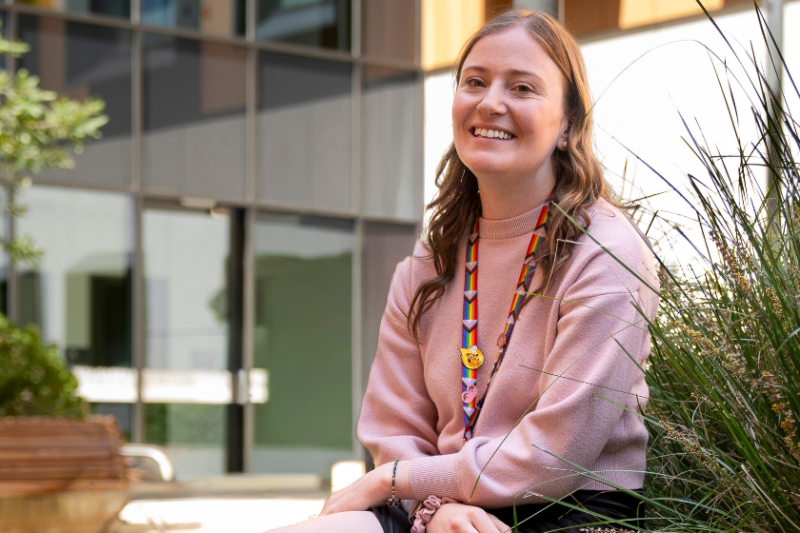
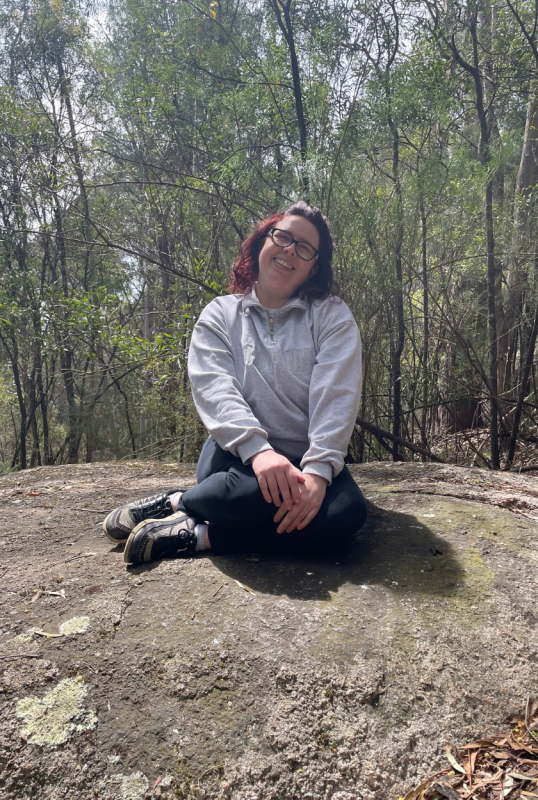
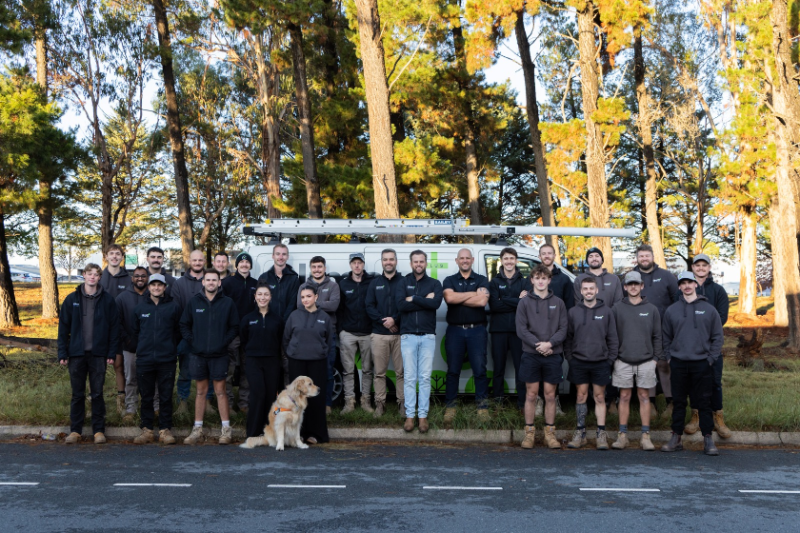
Three Canberran men are challenging themselves to run 24 parkruns in 24 hours this November with a goal to raise $10,000 for Australians Facing Terminal Cancer.
Join Chris Williams, Matthew Leckenby and Toby Fuller on Saturday 7 November as they complete 24 laps of the five-kilometre parkrun course at Lake Tuggeranong in 24 hours. All money raised by the trio will be donated to Dreams2Live4, a national Australian charity helping adults aged 17 and up who are battling terminal cancer.
The men will begin their first run at 8 am, returning every hour to continue their laps until they reach their 120 kilometre mark at 7 am the next day.
“This is a charity that means a lot to us all. Patients living with advanced cancer go through hard times constantly. The least we could do is suffer a little too,” says Chris Williams.
Chris planned this marathon to raise money for Dreams2Live4, a charity that has helped his family firsthand. Chris is a team leader in the Department of Agriculture, Fisheries and Forestry as well as a triathlete and ultramarathon runner. Chris’s sister Natalie lives with stage four breast cancer and has seen for herself the positive impacts of Dreams2Live4’s work.
Chris will be joined on his 24-hour marathon by his brother-in-law Matthew Leckenby, Natalie’s husband, and Toby Fuller, a 27-year-old man living with multiple myeloma.
Natalie first contacted Dreams2Live4 in 2022, saying, “To dream is like a double-edged sword. On one side I am so fortunate to have this opportunity to be able to access the amazing work that you do at Dreams, but on the other hand, gosh I really wish I wasn’t in the position to need it”.
Natalie has been an advocate for Dreams2Live4’s cause. In 2023, Natalie, Chris and Matthew took part in City2Surf, a fun run based in Sydney; they did this run to advocate for Dreams2Live4. Matthew took part in the Canberra Times marathon in 2023 to fundraise for Dreams2Live4. Following this, Chris took part in the 2025 Ironman triathlon as part of his mission to raise $10,000 for Dreams2Live4.
Toby is also a beneficiary of Dreams2Live4. His dream was to gain a place in the TCS Sydney Marathon. Toby now holds a Guinness World Record for the fastest marathon by a runner with multiple myeloma. He was helped to achieve this goal through support from Dreams2Live4.
Running is a huge source of strength for Toby; he is joining Chris and Matthew to help other Australians living with terminal cancer to experience the joy of having their own dream.
Kathryn Patten, CEO of Dreams2Live4 says that Dreams2Live4 aims to shift focus from cancer to life, dreams and goals.
“Dream2Live4 helps to bring hope, joy and light to those living through some of their darkest days by giving people something meaningful to look forward to and creating lasting memories for those they love,” she explains.
“We can’t be more grateful to Chris, Matthew and Toby for undertaking this crazy challenge to help give others living with terminal cancer the opportunity to dream.”
The community is encouraged to get involved in the event, whether you want to join in on one, or a few of the laps, or if joining in on the run isn’t for you, you can show support through cheering on the runners or donating to their cause.
The trio requests a minimum donation of $24 from the runners to Dreams2Live4 to help reach the donation goal of $10,000. So far Chris, Matthew and Toby have interest from more than 450 participants looking to join them for at least one of their 24 laps.
What: 24 Park Runs 24 Hours When: Saturday 7 November, 8 am until Sunday 8 November, 7 am Where: Lake Tuggeranong Parkrun, Canberra Web:dreams2live4.org.au
It’s simple, sustainable and surprisingly satisfying. With food scraps being turned into valuable compost in communities across Australia, why are most Canberrans still missing out?
There’s something wonderful about knowing your food scraps can be put to good use, rather than ending up buried and ruined in landfill.
Welcome to the wonderful world of FOGO.
FOGO stands for Food Organics and Garden Organics. It’s a simple system that allows households to put food scraps into their green-lidded bins alongside garden waste, where they’re collected and processed into compost.
And once you’ve experienced it, it’s hard to imagine going back.
Which raises the question: why doesn’t Canberra have FOGO yet?
FOGO is already part of everyday life across much of regional NSW, including just across the border in Queanbeyan. But Shellharbour has been ahead of the game, embracing FOGO back in 2016. And the story of how it was introduced is almost as interesting as what it has achieved.
Shellharbour City Council didn’t just deliver another bin and hope for the best. It held 28 community events – including free barbecues – visited schools, handed out kitchen caddies and encouraged residents to find their ‘FOGO MOJO’. But Shellharbour wasn’t the first Council to implement FOGO. The earliest adopter was Penrith City Council in 2009, however according to the NSW Environment Protection Authority, Shellharbour’s FOGO service saved ratepayers $219,000 in waste levy payments in its first year alone. Imagine that – yes, I have FOGO FOMO.
A decade later, FOGO is simply part of household life in Shellharbour. No elaborate composting system, no backyard worm farm and no special gardening knowledge required.
And there’s an unexpected bonus: once your food scraps are going into FOGO, your regular rubbish bin becomes noticeably less full.
For anyone who’s ever wrestled with an overflowing red bin on collection day, that’s a small domestic victory worth celebrating.
It’s not just about being green. Of course, the environmental benefits are significant.
When food waste ends up in landfill, it breaks down without oxygen and produces methane, a potent greenhouse gas.
When it’s collected separately through FOGO, it can instead be processed into compost that helps improve soil health and support gardens, parks and agriculture.
It’s a lovely example of the circular economy in action: yesterday’s vegetable peelings helping grow tomorrow’s plants.
But what makes FOGO particularly appealing is that it doesn’t ask us to radically change how we live. We’re already throwing away food scraps. FOGO simply gives us somewhere better to put them.
And unlike some sustainability initiatives that require significant expense, planning or lifestyle changes, this one is refreshingly straightforward.
But what if you don’t have a backyard?
Canberra has plenty of enthusiastic composters. Across the suburbs, households are turning kitchen scraps into nutrient-rich compost, feeding worm farms or letting their backyard chooks enjoy the leftovers.
But what about everyone else?
Canberra is changing. Many of us are living in apartments, townhouses and units, particularly around Civic, Braddon, Kingston, Dickson and other inner-city neighbourhoods.
And while apartment living has plenty of advantages, finding somewhere to compost your vegetable peelings isn’t necessarily one of them.
Not everyone has a garden, space for a worm farm or even a balcony. And let’s be realistic, keeping a composting system in a compact apartment isn’t everyone’s idea of convenient living. It’s certainly not mine.
That’s where FOGO really comes into its own.
A shared organic waste collection in an apartment building could make recycling food scraps just as straightforward as recycling bottles, cans and cardboard.
No backyard required. No composting expertise necessary. Just a kitchen caddy and somewhere to empty it.
And importantly, it means sustainable waste management isn’t something that’s easier simply because you happen to live in a house with a garden.
So, what’s happening in Canberra?
Here’s where things get interesting.
Canberra actually does have FOGO – just not for everyone.
A pilot program began in 2021 and now includes more than 6,000 households in parts of Belconnen, Bruce, Cook, Macquarie and selected apartment buildings in Tuggeranong.
Those fortunate households can already put food scraps into their green bins.
The rest of Canberra? We’re still waiting.
The main obstacle is infrastructure. Before FOGO can be rolled out across the ACT, a large-scale facility is needed to process the collected organic waste. Planning and procurement have taken longer than originally anticipated, pushing back the timetable for a city-wide service.
The ACT Government is now aiming for a rollout by 2030. That’s quite a wait for something that has become routine in communities just up the road.
A small change worth looking forward to
Canberra has embraced plenty of sustainable living habits over the years, from reusable coffee cups and shopping bags to household solar and electric vehicles.
FOGO feels like a natural addition.
It’s practical, accessible and requires very little effort once it becomes part of your routine.
And perhaps most importantly, it makes doing the right thing easier for everyone, whether you live on a quarter-acre block in the suburbs or in an apartment in Braddon.
Sometimes the best environmental changes aren’t the dramatic ones. They’re the small, everyday habits that become so normal we wonder how we ever lived without them.
Come on, Canberra – it’s time to get our FOGO mojo on!
Bringing together three distinctive wine brands — Intrepidus, Lerida Estate and S.C. Fox — Don’t Tell Mel will offer wine lovers the opportunity to discover wines from three producers under one roof.
Described as “Relaxed, approachable and with a sense of humour at its heart”, Don’t Tell Mel is designed to be somewhere people can discover new wines, meet the personalities behind the brands and enjoy the diversity of the Canberra District and surrounding wine community.
Visitors will be able to taste wines, sit and enjoy a glass or two and have a mixed pack shipped to their door.
The concept is deliberately a little different from the traditional cellar door, with each brand bringing its own winemaking philosophy, personality and style to the experience.
Rather than presenting the wineries as one combined brand, the new cellar door celebrates their differences. From the established cool-climate wines of Lerida Estate to the distinctive, unique and diverse winemaking styles of Intrepidus and S.C. Fox.
The opening also gives the wineries a new presence in the heart of Bungendore. For Canberrans, it’s the perfect excuse to grab a meal at Scrumpers Kitchen.
Canberra might be known for its lakes and leafy outlooks, but sometimes the best view comes with a few extra floors between you and the ground.
From rooftop cocktails to sky-high sundowners, these are the elevated drinking spots where the city skyline takes centre stage. You won’t find any lakeside beer gardens or pretty garden vistas here – just city views, a good drink and a fresh perspective on the capital.
Oh My Papa! (City)
Dinner plans that turn into rooftop cocktails? Now we’re talking. The newest addition to Canberra Centre brings modern Asian flavours, cheeky cocktails and a graffiti-inspired rooftop bar with views up and down Bunda Street.
Start with smoky chicken yakitori, crispy karaage chicken bao buns and caramelised pork belly, then head upstairs to settle in for sunset drinks. With bold design, playful Asian-inspired cocktails and plenty of personality, Oh My Papa! is giving Civic a fresh reason to stay out a little longer.
Canberra Centre, Bunda Street, Civic | Open Monday to Sunday, 11.30 am – 3 pm and 5 pm – 10 pm | ohmypapa.com.au
Leyla Bar (Barton)
Overlooking sweeping skyline views of the city, Lake Burley Griffin, and beyond, Leyla Bar is the place to go if you’re craving a classic cocktail while watching the sunset behind some of Canberra’s most iconic buildings. And with breezy, coastal vibes and a menu packed full of delicious Spanish tapas, it’s (literally) an elevated drinking experience.
Level 7, Burbury Close, Barton | Open Tuesday to Sunday, 3 pm until late | leylabar.com.au
The Inn (Ainslie)
You might not expect to find killer views of Canberra at the Ainslie Shops, but that’s where The Inn proves you wrong. Perched upstairs from Edgar’s, not only is this drinking and dining destination refined, but it also offers a unique panoramic view of Telstra Tower and Mount Ainslie. Enjoy the view as you sip champagne with Sydney Rock oysters before digging into simple, wholesome, and flavoursome dishes.
Level 1, Edgar Street, Ainslie | Open Tuesday to Saturday, 5.30 pm until late | edgarsinn.com.au/the-inn
Bar 59 (Belconnen)
Bar 59 is the newest addition to Mercure Canberra Belconnen, bringing locals a luxe spot for a cold drink. Helping you kick off the weekend in style from 4 pm until late on Thursdays and Fridays, Bar 59 will be pouring everything from local spirits, beers, and wines to classic cocktails, all best enjoyed taking in the stunning views of Lake Ginninderra.
Level 11, 59 Cameron Avenue, Belconnen | Thursday and Friday, 4 pm until late | mercurebelconnen.com.au
The Howling Moon (Braddon)
You can’t write a list of rooftop bars in Canberra without mentioning The Howling Moon. Located on top of the Rex Hotel, the views are just as vibrant as the cocktails and are spectacular no matter the weather. Watch the sunset while wolfing down (get it?) delicious snacks and dance under the stars long into the night.
150 Northbourne Avenue, Braddon | Open Monday to Sunday, 4 pm until late | thehowlingmoon.com.au
Highball (City)
With a private, lush, greenery-filled terrace that seems worlds away from the light rail construction of London Circuit and City Hill, Highball isn’t just a bar – it’s a destination. With a fresh and fun vibe (and a very, very extensive rum menu), even with the reminder just out the window, you’ll forget you’re in the heart of Canberra’s city.
Level 1, 75 London Circuit, City | Open Sunday to Wednesday, 4 pm – 12 am and Thursday to Saturday, 4 pm – 3 am | highball.bar
There are few names as synonymous with style and sustainability in the Australian fashion landscape as Linda Jackson AO.
Born in Melbourne in 1950, it was in Sydney during the 1970s that she met designer Jenny Kee AO and formed a creative partnership that saw them become pioneers in the Australian fashion industry.
Flamingo Park was a boutique and fashion label famous for its energetic amalgamation of art, fashion and music; for decades it was the ‘go-to’ store for fashionable Sydneysiders and international names including David Bowie, Mick Jagger and Joni Mitchell. But it was more than a store – it was a hub for those not only interested in creative and artistic fashion, but also those with a love for the Australian environment.
While the boutique closed its doors in 1995, the ethos of Flamingo Park lives on, and there’s no better example than Canberra’s own Clothing The Loop.
An empowering event of sustainable fashion, contemporary dance, live music and immersive design, this year, Clothing The Loop is taking place across one vibrant weekend in November.
The event is presented in collaboration with Australian Dance Party, sustainable fashion pioneer Kelli Donovan, and the Canberra Institute of Technology. The 2026 program not only includes inspiring performances, workshops, installations, and tours, but also a glamorous evening of runway fashion on Friday 6 November.
Showcasing sustainable fashion collections from leading local and national designers, it feels only right that, as a trailblazer in Australian fashion, Linda will be there on the night to show her own designs.
“I was very happy to be invited and to learn about Clothing The Loop in Canberra as I was not aware of this vibrant and creative performance partnership and the Craft + Design Canberra Festival,” she says.
“Since 1992 I have lived and worked in many remote parts of Australia, so to discover the concept and ideas behind this unique event in Canberra and to meet all the creative artists and performers involved will be rather fabulous.”
Linda is known for her distinct approach to fashion design and launched her own label Bush Couture – Australia’s answer to haute couture – in 1982. Working closely with Indigenous communities on textile designs, she blends global influences with native flora, fauna, and the colours of the Australian bush.
But her roots remain firmly planted in sustainable design.
“My mum taught me to sew. My parents were passionate ballroom dancers, so I was surrounded by my mum’s wardrobe of marvellous taffeta, tulle, silk and lace ballroom dancing frock,” explains Linda.
“By 15 I was hunting for ‘30s and ‘40s vintage frocks and fabrics in antique, second-hand and op shops, cutting them up…I was making everything I wore and my friends too.”
“It was a great way to learn to make do with what cloth you had. I loved that you could turn bits around and upside down to create something interesting or make it fit you.”
Linda’s work will be shown on the Clothing The Loop runway alongside 12 other sustainable fashion designers, with live performances by Australian Dance Party and musician and composer Sia Ahmad.
She says that her collection will feature pieces that fans of fashion might recognise from her early archive of ‘70s and ‘80s looks, as well as a few from the early 2000s.
“Travels to central Australia and Lightning Ridge in 1980 inspired my long-term passion for opal and the remote outback. These journeys into the landscape led to the opening of the salon-showroom,” she explains.
“This decade was full of flamboyant inventions created in the studio space and exhibitions – opal jewellery and perfume, Cabaret style fashion shows, and original handprinted, dyed and painted textiles emulating the bush, ocean and fluorescent opals.”
The evening will also feature live dance and music from Australian Dance Party, circular design stalls, and talks from inspiring change makers.
With the chance to upgrade to a VIP experience for opportunities to meet the designers and learn about the sustainable stories behind their work, it’s a unique opportunity to see fashion history in the flesh.
“Keep Australia beautiful was the motto,” says Linda.
“Jenny and I conjured up our dreams and fashion fantasies with no limits to experimenting and challenging ourselves to turn these visions into reality – and have fun doing it, while looking fabulous.”
Clothing The Loop will also continue on Saturday 7 November with a full program of activities for all ages.
Along with the opportunity to dive into artist and designer-led workshops, there will be tours of the sustainably designed CIT campus, stalls from local and interstate small businesses, panel conversations and a clothes swap. Promising a vibrant collision of fashion, art, design and activism, visit the website to see the full program.
This Breast Cancer Awareness Month, people are encouraged to be breast aware, perform regular self-checks and understand what is normal for them so they can identify any changes early.
While mammograms remain the most effective way to detect breast cancer early, becoming familiar with how your breasts normally look and feel can help you notice changes and seek advice sooner.
Jodie Kirkness from BreastScreen ACT says that although some people might feel uncomfortable or embarrassed about checking their breasts, it’s a simple habit that can make a real difference.
“At the end of the day, you’re doing it for your own health,” Jodie says. “Breasts are a normal part of our bodies. It’s really important that we try and make this topic part of everyday conversations.”
Jodie recommends checking your breasts once a month using three simple steps:
Feel for changes while standing up
Look for visual changes in front of a mirror
Feel for changes while lying down
It’s also best to avoid doing self-checks when you’re menstruating, as breasts can be more tender at this time.
“It sounds like a lot of steps, but it doesn’t take long at all and it’s good for your peace of mind,” Jodie says.
Feel for changes standing up
Jodie recommends choosing the same time each month to perform a breast check. You can lather up with some soap in the shower and then, using the pads of your index, middle and ring fingers, move around your breasts to check for any unusual changes.
“I like to think of my breast as having four quarters. Check all the way around and also near the nipples as well. Importantly, use your other hand to go up under your armpit and into your lymph nodes.”
Pay attention to:
New lumps or thickened areas
Changes in the shape or size of your breasts
Changes in texture
Dimpling of the skin
Nipple inversion
Unusual discharge
Jodie Kirkness, BreastScreen ACT
Look for visible changes in the mirror
After your shower, stand in front of the mirror and look at your breasts from the front.
“This helps us notice any changes in shape or size,” Jodie says.
If you haven’t already completed the finger-pad check in the shower, stand in front of a mirror and use the same technique to examine both breasts for any changes that are not normal for you.
“Once you’ve done that, you want to look at yourself in the mirror from side on to see if there are any visible changes in shape or appearance, then switch to the other side.”
Feel for changes while lying down
As you’re getting ready for bed, repeat your breast check while lying down.
“This is because our breasts spread differently when we’re lying down,” Jodie says.
Using the same finger-pad technique, feel around each breast and into the armpit area, paying attention to anything that feels different from normal.
What to do if you do notice a change
If you do notice any unusual changes in your breasts, contact your GP as soon as possible. They can perform a clinical assessment and arrange the most appropriate tests.
Jodie also encourages people to trust their instincts and advocate for their health.
“If you do see your GP and you’re still concerned about a change, don’t hesitate to seek further advice or discuss your concerns again. Advocating for your health is important.”
When to get a mammogram
While being breast aware is important, it does not replace regular screening mammograms, which remain the most effective method of detecting breast cancer early.
Screening mammograms are for people who do not have any breast symptoms or changes. Jodie says all eligible people should make breast screening a regular part of their health care.
Eligible Canberrans aged 50 – 74 years should have a screening mammogram every two years.
Free screening is also available for participants from 40 – 49 years and over 74 years.
Screening mammograms are free, take only a short time, and can detect breast cancer before symptoms appear.
Content warning: This article discusses sexual assault. If you’re currently in distress, please head to 1800RESPECT (1800 737 732) for support.
Before developing PTSD following sexual violence, Hannah Edwards thought she understood it – she had read the literature, after all. But understanding the theory of trauma and living through its daily reality are two entirely different worlds. Here Hannah shares a raw, candid perspective on what navigating life with PTSD really entails, and why empathy remains our strongest tool for support.
I’m on a boat, cruising down a river. I’m conscious of keeping my body well behind the railing, since it’s a crocodile tour. The people in front of me don’t seem to care; every time our guide points out a crocodile, a woman’s arm shoots over the side to get the perfect shot. I know she will be fine. Those crocs aren’t threatened by us, nor do they think our boat is food, and the cooler weather means they’re lethargic. But multiple times during the tour, I imagine her arm being ripped off by a crocodile. I catastrophise so I can mentally prepare for the worst, because I haven’t always done so, to my regret.
I was diagnosed with PTSD in 2025, though I knew I had it earlier. I figured it out in June 2024, sitting in my car outside my son’s daycare, reading about the process of reporting a sexual assault. I resolved not to report – he has children, I thought, and it would upend their lives. I couldn’t do that to his kids. I’d met them. They were good kids. It was that afternoon my brain caught up to the knowledge my body had long felt: I had been raped by someone I trusted with my life, in January 2024, when I was drunk and distressed.
That realisation put some behavioural “quirks” into context. I had been driving in silence for months, because music was regularly triggering. Artists I had seen live with him, songs I had shared with him, even songs that were completely unrelated. Granted, the silence wasn’t much better – I would rehearse or rehash upsetting conversations and verbally relive the assault in excruciating detail. I compulsively watched the road for a black sedan, because any one of them could have been his. My mind was always on – scanning for threats, reliving the assault; and how he had presented himself as an ally – a friend.
I resolved to talk to him. I hadn’t done so in months by my own choice, but my brain could not quieten. After all, he had presented himself as an ally. Restorative justice is a valid option for many; why not me? I truly believed that he was good.
I reach out, and after some back and forth, we meet for coffee. It was there that I disclose to him:
“…On that night, I don’t feel as though you properly sought my consent”.
I don’t use the words “rape” or “sexual assault”. I have to pick my battles.
His immediate reaction validates everything I thought about him. He apologises. He’s horrified. In person, he validates my experience. In person.
A few nights later, via message, he denies everything. He tells me I’m wrong. He stops short of saying I was lying. It becomes a cycle. Validate in person, dispute over messages, and repeat. I tell him that all I want is genuine acknowledgement, then I’ll leave his life for good – though I don’t tell him that part; he’s long insisted we remain friends. He made me promise we would.
Every time we meet, my entire body feels wrong. I feel a discomfort I have never felt before. Waiting for him to arrive is filled with dread; the moments with him filled with what I can only describe as “survival mode”. Tell jokes, listen to him, smile, make eye contact – but not too much. Make it to the end intact. Spend twenty minutes in my car afterwards, decompressing so I can safely drive.
I raise how his flip-flopping has felt. The tears start the second the topic does. He apologises. He tells me he was worried I was going to “ruin his life”. I say – honestly, at that time – that I had considered reporting it but ultimately couldn’t. At the end, he tries to get me to buy his car. His black sedan. That was the last time I would see him socially.
I’m repeating this story now because I realise towards the end of the crocodile tour that, instead of listening to the tour guide or watching the crocodiles, I had been replaying that exact sequence in my mind. The murky river water became a backdrop to the film I had no choice but to watch. It’s not the first time this has happened, nor will it be the last, because my capacity for presence is limited.
It doesn’t manifest solely in big moments. It’s when my son watches two hours of TV, without breakfast, because I can’t get up. It’s when I’m staring blankly at the tiles in the shower. It’s when not even white noise can drown out my mind at bedtime. It’s exhausting to live like this. It’s utterly relentless.
I book a head spa to treat myself. I’m handed a form to fill out about health conditions. I tick PTSD and anxiety; these are definitely relevant. The man who will be doing my treatment says “You’ve been through a lot, haven’t you? You poor thing.” It comes from a place of kindness but makes me acutely aware that his perception of me has changed. I am a person to pity.
For the first time in ages, the ambience in the treatment room gives me a rare moment of peace. But the treatment progresses to an upper body massage, which moves dangerously close to my neck. My assaults didn’t involve choking, but my body doesn’t care. I think about what I will do if those fingers tighten. On the outside, I look calm; in reality, I am frozen in fear.
It’s March 2026. After a four-month review, I’m told, for a second time, that police are finalising their investigation without charge. There isn’t enough evidence. They invite me to ask questions. When I do, I am accused of trying to “elicit information”. Out of about twenty questions, they answer maybe two. I feel they have decided I am no longer credible. What about the evidence you do have? It isn’t enough.
“The system is broken,” says my victim advocate later. I agree aloud but internally do not. The system isn’t broken. It’s working as designed. I spend the rest of that day on my couch, oscillating between sleep and mindless scrolling.
I sleep a lot in the daytime these days.
People think I will heal. I don’t think there is healing from this. There is only adapting to who I am now, and grieving who I could have been. PTSD feels like grief to me. I miss the person I was. She wasn’t perfect – nobody is. But she loved to cook, watch live music, go to the theatre. She took great joy in her veggie patch. She was the Before. The After is different; she is relearning how to walk, in a world that expects her to be walking already. This is who I am now. I’m not stronger for it. I just feel different.
I have to keep going, at the bare minimum, for my son; I don’t have a choice. I keep a mask on so I do not exhaust those around me – I say something funny, talk about food. I engage. I do my best to be present for my son.
Maybe it will get better. I will never wake up free, but I try to believe in some peace amongst the scars.
When it comes to prepping for summer, your mind probably jumps straight to holiday road trips, dusting off the barbecue or stocking up on sunscreen.
But before you completely switch into holiday mode, there’s one crucial thing to consider: is your home actually ready to handle the heat?
We’ve teamed up with the experts at Climate Plus to share the most overlooked maintenance steps homeowners forget to take before the summer heatwave hits, ensuring your home stays comfortable all season long.
1. Don’t wait until the heat hits to test your air-con
Climate Plus Director Liam Zeller says the single biggest mistake people make is waiting until the first sweltering day to switch on the air-con for the first time in six months.
“Every summer we see people discover a problem on the first very hot day, when the system is suddenly being asked to work at full capacity,” Liam says.
“Our main advice is not to wait until the first extreme-temperature day to think about your home. Spring is a good opportunity to switch the cooling system on, clean what you can safely maintain yourself and organise a professional service if one is due.
“For refrigerated systems, homeowners can help by cleaning filters, keeping indoor vents clear and making sure the outdoor unit has good airflow around it. For evaporative systems, a pre-summer service by Climate Plus can check components such as the pads, water distribution and general operation.”
2. Preparation is key
Liam says being summer-ready means looking at your home as a whole ecosystem, given that small, unnoticed issues can quickly spiral into big (and costly) headaches.
“Canberra homes have to cope with very cold winters and very hot summers, and that makes preventative maintenance particularly worthwhile,” Liam says.
“Whether it’s plumbing, electrical, hot water or heating and cooling, regular checks and servicing can help identify potential problems early.
“The benefit of Climate Plus is that we have the expertise across these areas to help homeowners keep their home in good working order, and our technicians understand they are working within a much bigger home system. If somebody notices an obvious plumbing concern while they are on site, such as signs of leakage, corrosion, unusual water behaviour or another issue worth investigating, we want that raised with the homeowner rather than ignored.”
3. Consider passive cooling hacks
Want to keep those electricity bills from skyrocketing? Lean into passive cooling.
“Closing blinds before the heat arrives, addressing draughts and using ceiling fans can reduce the amount of work the system has to do,” Liam says.
If you’re looking to reduce the cost of keeping your home cool, it could be worth speaking with Climate Plus about whether solar suits your home.
“We’ve helped loads of Canberra homeowners bring their energy bills down by installing solar. It’s particularly effective here in Canberra, given we have sunny days year-round and all throughout winter,” Liam says.
“The important part is sizing and designing the solution properly. An inexpensive unit that is wrong for the space can end up being poor value if it struggles constantly, while an unnecessarily large or complicated system can mean spending money where it isn’t needed.”
4. Trust the experts
With Climate Plus offering heating, cooling, electrical, plumbing, solar and hot water services, staying on top of your entire home’s summer health check has never been easier.
“For us, it comes back to giving homeowners clear advice, explaining their options in plain English and helping them make a decision that suits their home rather than applying the same solution everywhere,” Liam says.
“With all these services under one roof, we can make it easier for Canberra homeowners to maintain and care for their entire property, not just fix individual problems as they arise.”
Ready to cross off your summer checklist?
Head over to the Climate Plus Book a Service page to book your pre-summer cooling service, or speak to the team about plumbing, electrical, hot water and solar.