Talkin’ Bout A (Fashion) Revolution
Posted on
Tomorrow is Fashion Revolution Day and a group of Fashfest designers are taking part of this global movement by wearing their clothes inside out and displaying their labels on the outside.
It’s all in the name of ethical fashion…and it’s all about 24 April 2013. The day when more than 1,130 innocent garment workers were killed and more than 2500 injured when the nine-storey Rana Plaza garment factory complex collapsed in Dhaka, Bangladesh—the largest industrial accident anywhere in the world for more than a generation.
Fashion Revolution Day begs you to ask one, simple question: Who made your clothes?
[pe2-image src=”http://lh3.ggpht.com/-QrLt3hJOBN4/U1boFU_TdII/AAAAAAAAByM/VWagxubaBt0/s144-c-o/_DSC6038.jpeg” href=”https://picasaweb.google.com/108454826374315674707/FashionRevolution#6005242331376350338″ caption=”Hannah Parrish of Canberra label Audrey Blue” type=”image” alt=”_DSC6038.jpeg” pe2_single_image_size=”w614″ pe2_caption=”1″ pe2_img_align=”center” ]
‘The Rana Plaza tragedy made news headlines around the world. And it left a black mark on the fashion industry as a whole for taking advantage to the point of neglect and abuse’, says Hannah Parrish of Canberra label Audrey Blue (above) ‘And for some—more responsible—parts of the industry it was a wake-up call with people saying “enough is enough”.’
‘How can you be happy wearing your clothes when you know it has caused harm to someone?’ asks Hannah Parrish, who will showcase a new collection of ethically produced designs at this year’s Fashfest. ‘How is it that we have lost connection to the clothes we wear?’
If Hannah is passionate about anything it’s about building a viable, vibrant Fairtrade and organic market in Australia. Research she undertook for her label led her to India, one of the world’s largest producers of cottons and textiles. There she witnessed first-hand the potential for fashion to be a force for good.
‘India has many sad stories of how people have suffered because of the fashion industry, including people who want cheap clothes or high-fashion clothes as cheaply as possible,’ says Hannah. ‘But equally I came across many people trying to do the right thing by their workers, and the environment. It convinced me that what happened at Rana Plaza was inexcusable and unnecessary.’
‘Major brands are choosing to take advantage of the economic situation of Bangladesh and other poor countries,’ says Hannah. ‘The industry can pay decent wages and provide safe working conditions and still make money. For example, a piece of clothing sold by a major brand in an a shopping centre might cost the buyer more than $100, but the worker who sewed it might have only made a few cents.
Hannah says those who operate ethically in the fashion industry understand that everybody along the supply chain needs to make a profit but she is convinced this is ‘too skewed’ to labels ‘making massive profits at the expense of paying its suppliers too little to provide decent wages and working conditions.
[pe2-image src=”http://lh6.ggpht.com/-2_KVqB_OZIA/U1boGPFbhgI/AAAAAAAAByY/rP8SX-OQeZY/s144-c-o/AudreyBlue_photo3collection1_bluecowltop.jpeg” href=”https://picasaweb.google.com/108454826374315674707/FashionRevolution#6005242346971301378″ caption=”Audrey Blue – ethical fashion. Image by Haley Richardson Photography.” type=”image” alt=”AudreyBlue_photo3collection1_bluecowltop.jpeg” pe2_single_image_size=”w614″ pe2_img_align=”center” pe2_caption=”1″ ]
Audrey Blue’s clothing is designed here in Canberra by Hannah but manufactured in India, using organic cotton and through a production chain certified under international and independent Fair Trade standards. Hannah says this minimises the environmental impact and it means those working in the production chain are paid a living wage and work in decent conditions, including regular hours, being paid overtime and receiving sick leave. Indeed, Audrey Blue is the first—and until recently the only—women’s fashion label to be certified under the Global Organic Textile Standard in Australia.
Fashion Revolution is the brainchild of Britain’s Carry Somers who created the pioneering Fair Trade fashion brand Pachacuti. Carry contacted ethical fashion designer Orsola de Castro, founder of the UK’s label From Somewhere—which makes clothes out of recycled offcuts of luxury materials— and the movement took its first baby step forward.
‘We’re asking people to engage in a journey of discovery,’ says Orsola. ‘A journey backwards to the history of what they are wearing.’
Hannah is a member of the Ethical Fashion Forum and has met Orsola through events in London. ‘She’s brilliant and totally committed,’ says Hannah.
[pe2-image src=”http://lh6.ggpht.com/-GBvYk_8FZ0M/U1boCa5q8EI/AAAAAAAABxs/IXp6N4qAp_I/s144-c-o/AudreyBlue_photo6businessshirts_threestyles.jpg” href=”https://picasaweb.google.com/108454826374315674707/FashionRevolution#6005242281423728706″ caption=”Audrey Blue: part of Fashion Revolution Day.” type=”image” alt=”AudreyBlue_photo6businessshirts_threestyles.jpg” pe2_single_image_size=”w614″ pe2_img_align=”center” pe2_caption=”1″ ]
The questions Fashion Revolution wants you to ask yourself are basic. Who grew the cotton? Who spun the threads that made the fabric? Who designed the clothes? Who sewed the garments?
Then if you want (or dare), you can dig deeper and ask whether you would be prepared to only buy clothing from a label that produces its garments ethically, through every step of the supply chain. It might mean having a few less pieces in your wardrobe but does that really matter?
The Fashfest designers wearing their clothes inside out tomorrow aren’t doing so just to sell more garments. They’re doing so because they believe there is a different way. Each designer does not necessarily follow the same way, but they all follow a different way.
That includes the Fashfest designers behind labels who believe in a transformation, like G. Ginchy. Designer Gina Poulakis creates bespoke garments from pre-existing vintage clothing which she disassembles and recreates into a garment or vintage fabric stripped from an existing object, such as curtains. And designer Hanny Dewar of Hanny-D Creations, who makes one-off, hand-made clothing out of recycled garments and rescued oddments. And designer Suzan Dlouhy, from SZN, who for the most part uses waste from other designers to create ‘new’. And designers who design using zero-waste techniques like Jade Sargent of Sovata.
Your clothes already tell a story about who you are, says Fashion Revolution. Now they can tell a better one.
How to get involved:
- Wear your clothes inside out
- Take a photo and tweet it to #insideout
- Stay curious. Keep talking. Find out more from Fashionrevolution.org
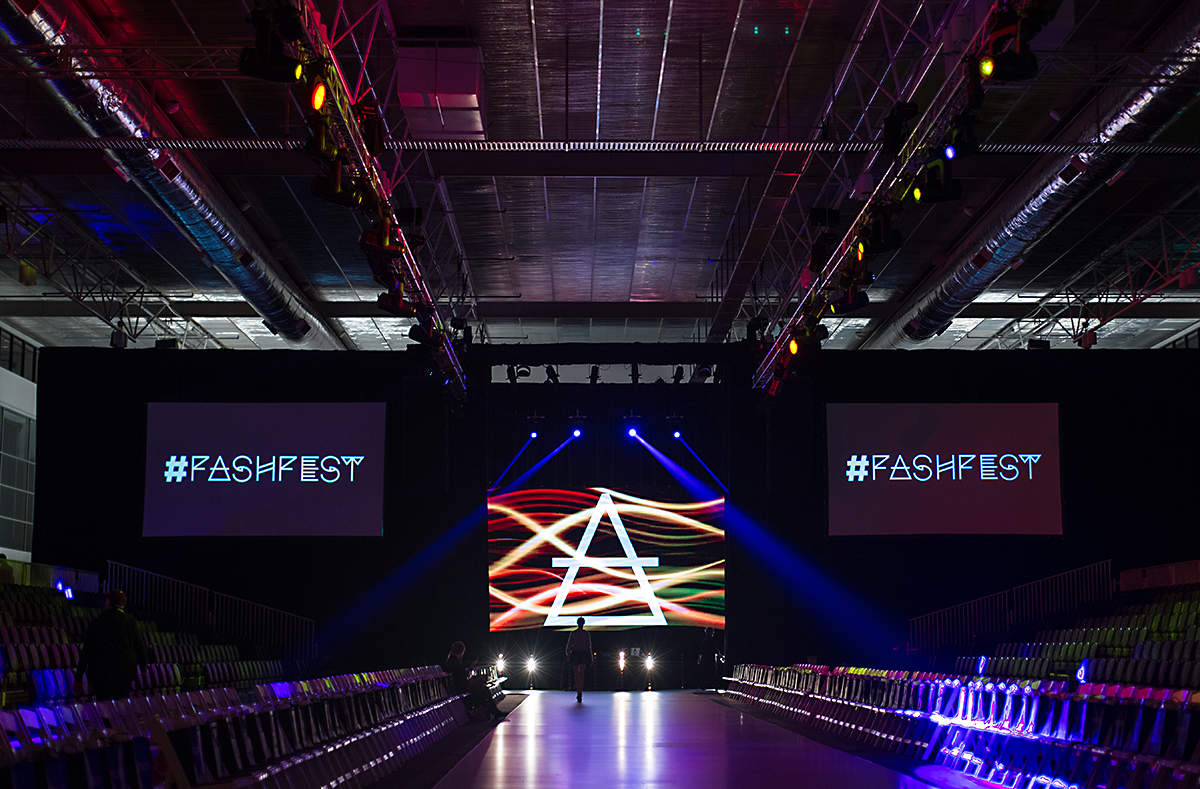
Fashfest is on 30 April to 3 May at the Canberra Airport, 2 Molonglo Drive, Brindabella Park.

Leave a Reply