She’s on the trails: the mental and emotional side of the pie
Posted on
Are you one of the many Canberrans who have started exploring the trails?
Welcome to part four of She’s on the trails—and our final article for this series.
Trail running and walking is great for your mental, emotional, and physical health. In part four, I want to shine a light on the mental and emotional side of the pie; exercise can be the best medicine for some. We live in the bush capital, and all deserve a chance to get the most out of our bodies while exploring the trails.
Did you know that 12% of the Australian population report suffering from a common mental disorder (eg: depression and anxiety)? The prevalence of chronic pain is estimated to increase to 5.23 million people by 2050. Just over half of people living with chronic pain are women.
If you do have depression, anxiety or chronic pain, regular exercise is vital for your recovery, developing confidence, and empowering you to re-engage and get back to the activities you used to want, and need to do (and being on the trails in nature is a secondary win!).
Here’s how exercise can help:
- It improves your mood.
- It increases serotonin—regulating your emotions.
- Your dopamine gets a boost.
- You have a sense of accomplishment.
- It jump-starts our attention system.
- It keeps you away from the daily chores.
At HerCanberra, we like to keep it simple:
- Lace up your shoes (start)
- Find a local trail (do)
- Start moving (ease into it)
- Find an event/create a goal that suits your fitness (stay motivated)
Remember, you don’t have to start with a run straight away— you can walk. We’ve said it once and we’ll say it again: PROGRESS, NOT PERFECTION. Just start.
Did you read part one, two and three of She’s on the trails?
Here’s a snap-shot of the hacks:
Part one (available here)—Consistency, scheduling recovery days/low load days, sleep, cross training/Hydrotherapy Hydrolates (Aquatic Pilates); strength bands PDF workout, trigger point balls, foam rolls and toe spacers, and enjoy the view!
Part two (available here)—Be consistent with your progressive overload, coffee/brunch date post run, hip mobility conditioning, hip and leg strength and footwear.
Part three (available here)—Self- massage techniques (and a program to print from Myogen); hydration tips and appropriate trail snacks to keep the energy constant, and gut happy from The Healthy Eating Hub.
Part four—We are highlighting the importance of finding a community of like-minded people, or find an accountability buddy; investing in a trail running backpack and chit-chatting to a local guru on ankle strength.
Here we go:
The Loneliness Epidemic
It’s a thing. The pandemic has deepened the feeling of disconnect and isolation for many of us. And don’t get me started on social media. In theory, social media can bring together like-minded people; however, the internet must be used in the right way when it comes to finding your tribe. It is more important than ever to make connections with like-minded people, who make you feel good about being your unique self. Joining the trail running or walking movement is a step in the right direction.
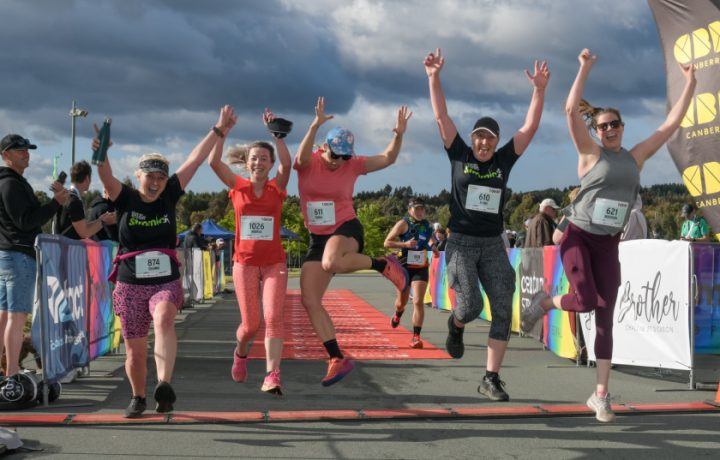
Having an accountability buddy helps too— checking in with each other and sharing your plan. Every year for my birthday I get a bunch of running mates together, and we do the Stromlo Running Festival (pictured). Do you have someone you could rope onto the trails? Remember, they don’t have to be a runner— you can start with a trail walk!
Invest in a running backpack
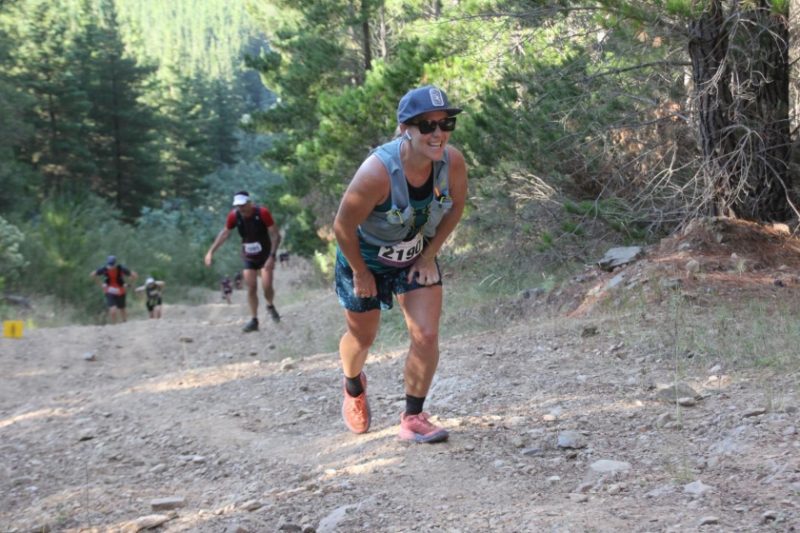
Beginner or longstanding running enthusiast—the running backpacks are great. I recently bought mine from Macpac— it’s lightweight, flexible material to grab and go; accessible from the front and back pocket. Think— music, phone (for those managing heart rate, sugar levels, etc), EpiPen, snake bandage, medication, sun cream, snacks and water.
If you invest in the trail running or walking backpack, you’re more likely to search for the trails, and stay out there longer. It’s like investing in a gym membership— you’re more likely to go if you pay for it!
Ankle strength
Before we hit the trails, we need to condition our ankles. We sat down to speak with Podiatrist and runner Kyle Dedini from Canberra Foot and Ankle Clinic to talk about ankle strength exercises to help reduce the chance of injuries when running on trails. The main differences from running on trails as opposed to grass or pavement is the constant changes in the terrain. We find trail surfaces can vary from hard, soft, loose gravel, hilly, icy, and have obstructions such as branches, twigs, and rocks. It is these variations in the terrain that make the chance of ankle injuries much more common compared to going for a run around the lake on a nice flat, smooth surface. While nothing will replace common sense such as running at an appropriate pace, wearing appropriate trail shoes, and running to the conditions of the trail, adding in two or three days of ankle strength work to help with balance, proprioception, and strength will help reduce the risk of injury.
The following program is an easy way to progress from single leg balance, into double leg multi directional jumping, into single leg hop and stick, and finally into single leg side to side hopping. A single leg calf raise exercise has also been added as a strong calf goes a long way to keeping your feet free from injury.
Here is the PDF print out version (print here).
Want to test yourself on a single leg calf raise? Record your score and try to improve each time you do these exercises. It is not a race so do not push yourself to do more than your body allows as we do not want to cause an injury
Here’s what you’re aiming for:
Females
- Age 20-29 you are aiming for 30 reps
- Age 30-39 you are aiming for 27 reps
- Age 40-49 you are aiming for 24 reps
- Age 50-59 you are aiming for 21 reps
- Age 60-69 you are aiming for 19 reps
- Age 70-79 you are aiming for 16 reps
- Age 80-89 you are aiming for 13 reps
Males
- Age 20-29 you are aiming for 37 reps
- Age 30-39 you are aiming for 32 reps
- Age 40-49 you are aiming for 28 reps
- Age 50-59 you are aiming for 23 reps
- Age 60-69 you are aiming for 19 reps
- Age 70-79 you are aiming for 14 reps
- Age 80-89 you are aiming for 10 reps
Do not be discouraged if you do not hit the ‘normal’ range for your sex and age. These are the numbers for health and/strong runners, and the reason we are doing these exercises is to build your strength in a slow and controlled manner to get your strength to these numbers to reduce injury in the future.
Complete these exercises once per day, two to three times per week. As always, if you are not confident performing exercises unsupervised or are currently dealing with an injury it is recommended that you seek advice from a health professional. Thanks Kyle.
And that’s a wrap—we hope you enjoyed the series of She’s on the trails. Trail running/walking should be for everybody. Everyone deserves time in nature, and a moment to themselves.
Did we inspire you to hit Canberra’s bush lands?
Love, Kirra
Capital Hydrotherapy and Exercise Physiology is open for one-on-one Hydrotherapy, Aquatic Physiotherapy (and land-based Physio), land-based Exercise Physiology, small group therapy, Hydrolates™ classes (Aquatic Pilates) with strict COVID-safe precautions.
If you are injured, have a chronic health condition, or need a plan to improve your health and wellbeing—call us today 6156 2223!

