Five minutes with Sarah Hayden

Posted on
When Australian actress Chloé Hayden rose to fame in cult television hit Heartbreak High, she began to change the narrative around neurodiversity.
Now, her mother Sarah Hayden is sharing her own experiences of watching, supporting and cheering for her neurodivergent child in her book Parenting Different: How to raise your neurodivergent kids to be their authentic, awesome selves – and she wants to help other parents do the same.
Just in time for World Autism Awareness Day on Wednesday 2 April, we sat down with Sarah to talk about her new book, raising Chloé, and how people can help their neurodivergent children not just survive but thrive.
Parenting Different captures an important perspective shift. Can you explain why you chose this title and what it represents about your approach?
I wanted a title that acknowledged both the uniqueness of neurodivergent children, and the transformation parents go through when they learn to meet their child’s needs in a way that truly works. Too often, parenting books focus on fixing or normalising a child’s differences. Parenting Different flips that entirely – it’s about embracing those differences and parenting in a way that honours and nurtures them.
In your introduction, you mention this is “the book I wish I’d had” when Chloé was diagnosed. What specific gaps in existing parenting literature did you set out to fill?
Most parenting books I found after Chloé’s diagnosis were focused on behaviour management or making neurodivergent kids fit into a neurotypical mould. They were very “text booky” and boring – bordering on negative. There was very little about understanding their sensory world, their emotions, their social experiences, or how to help them thrive as themselves, not just cope.
I wanted to write a book that gave parents practical tools while also validating their experiences and giving them permission to parent in a way that truly works for their child. Give them permission to do things “differently” to what they’ve possibly been told is the “right” way.
Could you share the moment when you first realised that conventional parenting advice might not work for your family?
It was a combination of things but probably the first time was when we saw the huge decline in Chloé’s mental health and how unhappy she was. People were telling me things like “Just be consistent with consequences,” as if that was the magic fix for meltdowns or school refusal. I tried everything I was “supposed” to do, but it only made things worse. Chloé wasn’t being defiant – she was overwhelmed. I remember thinking, “If I just stick to the rules…but she’s still suffering, maybe the rules are wrong”. That was the beginning of unlearning everything I thought I knew about parenting.
What was the most surprising thing you learned about yourself during your journey parenting a neurodivergent child?
That I was neurodivergent myself!
But also, how much of my own conditioning I had to undo. I had been raised to believe that success looked a certain way, that social norms were rules rather than suggestions, and that being a “good parent” meant having a child who fit in. Learning to see the world through Chloé’s eyes challenged everything I thought I knew – not just about parenting, but about myself.
You mention helping parents “unlearn everything they thought they needed to know about parenting.” What are some of the most important things parents might need to unlearn?
- That compliance equals success. Instead, we need to focus on connection and understanding.
- That meltdowns are bad behaviour. They’re actually a sign of distress, not defiance.
- That social skills training means forcing kids to act neurotypical. Authentic communication should be the goal, not masking.
- That independence means doing everything alone. True independence is knowing when to ask for help and feeling safe to do so.
Instead of focusing on a child’s deficits, focus on their strengths! Mental health matters more than ANYTHING. Without it we have nothing.
In the book, you include Chloé’s perspectives. Were there any insights she shared that surprised you or changed your understanding of her experience?
So many! One that really stuck with me was when she told me that as a child, she thought everyone felt overwhelmed all the time, but that she was just worse at handling it. She also always knew she was “different” and didn’t feel she fit in, well before she had a formal diagnosis of autism. She believed she was failing at being a person. That broke my heart because I realised how much pressure she had internalised without me even knowing. It made me rethink how we frame self-regulation – our kids don’t need to “toughen up”; they need to know their feelings are valid and that there are ways to work with their brain instead of against it.
How has Chloé’s success influenced other neurodivergent young people who follow her work, and what has it been like watching her become a role model?
It’s been incredible. We get messages from young people and parents who say that seeing Chloé succeed has helped them embrace their own differences and dream bigger. We get messages from parents and young people that because of her they got their own diagnosis which has been life changing. We get messages that she has literally saved someone’s life. I get parents tell me their child is no longer embarrassed or ashamed of their diagnosis because of this wonderful role model they now have.
It’s also emotional for me because when she was little, I worried so much about her future. Now, seeing her thrive and inspire others, I wish I could go back and tell myself, “She’s going to be okay. More than okay. Not in SPITE of her autism but BECAUSE of it!”
What lessons have you learned from Chloé that have shaped the advice you give to other parents of neurodivergent children with big dreams?
That success doesn’t have to look conventional. Chloé has taught me that the right environment, the right support, and the right people make all the difference.
When parents ask me if their child will be able to achieve their goals, I remind them: it’s not about if, it’s about how. Our job is to remove barriers, not lower expectations. I can’t tell you how many people told me the worst thing we could do is pull her out of school and homeschool her – it turns out it was the single best decision we ever made with her.
What misconceptions about autism do you hope to challenge in Australian media and society?
- That autism is just a childhood condition – autistic kids grow into autistic adults.
- That being verbal means someone isn’t “that autistic.” Communication differences exist in many forms.
- That autism is a deficit instead of a different way of thinking and experiencing the world.
- That autistic brains are not broken. They are beautiful and brilliant in their own ways.
- That autistic people don’t want friendships or relationships. Many do, but they might connect in different ways.
Is there anything else you would like to add?
Just that parents of neurodivergent kids are often made to feel like they’re doing it wrong – especially when they go against mainstream advice. But trust your child. Trust yourself. Your parenting might look different, but different isn’t wrong. It’s just different. And different can be wonderful.
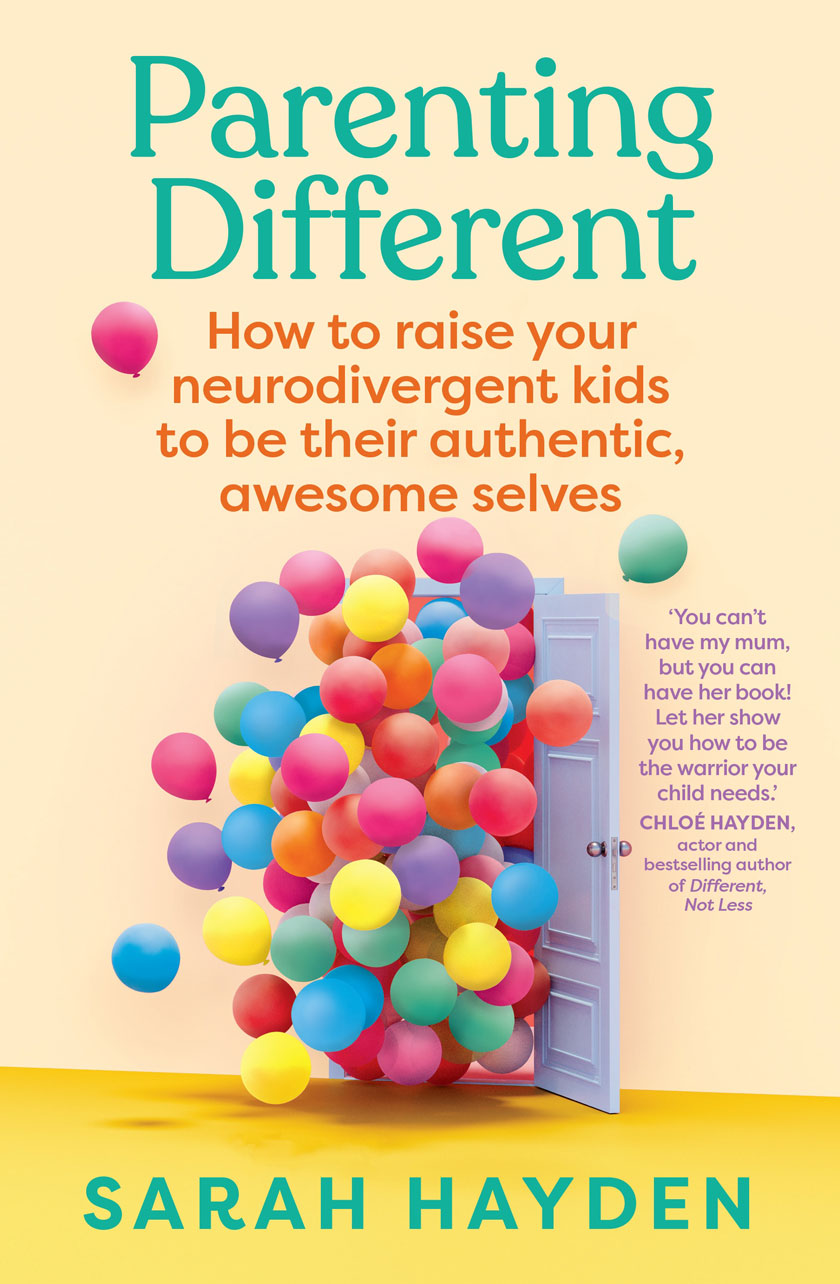
Parenting Different is in bookstores now.

