Canberra fashion designers: making a difference one stitch at a time
Posted on
It’s hard to fathom that the fabulous world of fashion can be so frivolous.
It’s a wasteful industry and one of the biggest environmental polluters to boot.
It’s also an industry famous for exploiting workers, relying on child labour, paying a pittance to have garments made, and making money off the backs of those forced to work in unsafe conditions. Just look at the fire earlier this month in the Bangladeshi garment factory that killed nine people when a faulty machine exploded or the catastrophe last November when 112 workers were killed in a fire in another Bangladeshi clothes factory.
But a world without fashion is a world that would likely stop turning. So what’s the answer to the cheap, fast-fashion circuit so many adore? What’s the solution for consumers who love their cupboards overflowing with a sensational selection of stylish pieces?
Sustainability. Yup. Sustainability.
Steven Wright, senior lecturer in fashion at Canberra Institute of Technology (CIT), says no formal international body has yet to define what ‘sustainability’ means in fashion but there’s no doubt it represents a broad spectrum of thinking and practice.
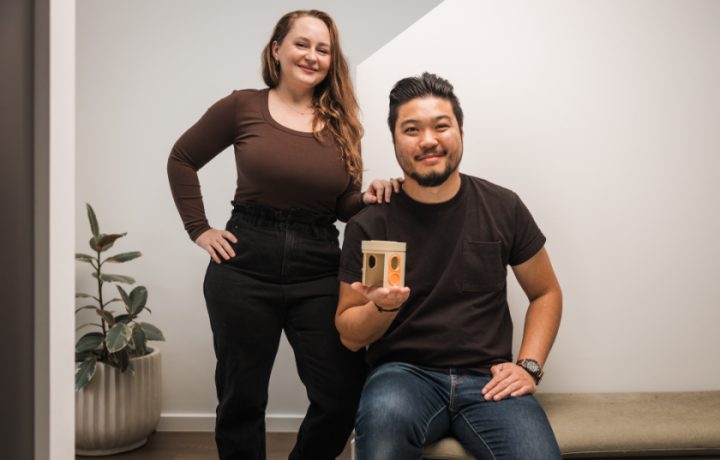
Canberra has a high percentage of sustainable designers. Top of mind this week is contemporary eco-women’s wear label, Pure Pod (top right), that just won ‘Best Fashion Product’ at Sydney’s Green Lifestyle Awards (9 October). Creative founders Kelli Donovan and Sean Watson studied fashion at CIT in the 1990s and through their label are making the world a better place, one stitch at a time.
Sustainability for Pure Pod is about manufacturing garments ethically and producing them with sustainable or organic fabrics to lower the company’s environmental footprint. This isn’t the company’s first accolade. Not long after Pure Pod made its debut at Fashfest (pictured below at right) with ‘Rosie the Riveter’—a collection depicting women looking glamorous while performing men’s jobs during the war—its designs were on the catwalk at Sustainable Threads. Pure Pod then showcased at Vancouver Eco Fashion Week and later this month will be named a finalist in the ‘Green & Clean’ section of the Canberra Business Point Awards. Pure Pod is also part of the UK’s Ethical Fashion Forum, which only has 500 fellowships worldwide. See? Sustainable is serious business.
Steven says sustainability is a formal part of CIT’s curriculum. ‘Students spend a semester studying the theory and then sustainability is integrated into all other subjects. Canberra is a leader in Australia for producing a high percentage of graduates who practice ethical, green design in the commercial world.’
 From an academic standpoint, sustainability is multilayered and complex, involving financial, environmental, social and ideological threads. For example, Pure Pod’s latest award centred on its business ethos: not exploiting workers (here or offshore), supporting Australian industries, using organic and sustainable fabrics, minimising chemical use, reducing landfill, and educating consumers that they can be stylish and environmentally conscious at the same time.
Sustainable Threads and Fashfest both celebrated Canberra designers who think ‘green’ when designing.
At Sustainable Threads, Shauna Hagan launched her first collection, ‘Lost and found’. She hand-collected vintage or recycled clothing that had lost meaning for one person, and recreated it into something that would be found by and hold meaning for another. These one-off pieces aim to make sustainable fashion exciting and affordable to younger consumers. Also at Sustainable Threads was Holly Squair, with her zero-waste collection ‘Character’. Holly creates bright, cheerful pieces for middle-aged and older women using pieces of fabric she fits together like a puzzle. And she uses digital printing for her fabrics, producing only what she needs.
Fashfest was strong on sustainable design although guests may not have been any the wiser. On the runway was the work of Edition’s Alice Sutton, a 100% zero-waste designer. Alice’s pattern-making technique, called Selvedge 2 Selvedge, is unique. She incorporates the whole piece of cloth into a garment, losing nothing in production. It’s a challenging process and creatively demanding. Another zero-waste designer is Jade Sargent from Sovata. Jade creates her race wear and millinery line with her own set of pattern-making techniques and sews key garments in a single length of stitching.
At the far left of the sustainable spectrum is SZN, with designer Suzan Dlouhy’s making some of her edgy garments with scraps she collects from other designers. Suzan is a star at turning pre-consumer waste into a valuable resource … and you’d never know it looking at her one-off pieces. For Suzan, fashion is partly about transforming perceptions about how clothing needs to be made.
And then there is Morgan Hubbard, from label U.L.E. Morgan is a national pioneer in printing her own fabric using only natural dyes, and from materials she mostly collects herself, like eucalypt leaves that have fallen to the ground, or purple carrots she harvests from her garden.
 The rules by which designers choose to operate are also part of sustainable fashion, says Steven. Steven wears many hats in the fashion world here. He teaches at CIT, is a main player behind Fashfest, is a Fashion Director at Canberra’s new Haus Models, and with partner Lousia de Smit co-owns Corr Blimey (pictured at right). This label only uses natural materials and makes garments to order so there is no waste. ‘Being an ethical designer is also about intent,’ says Steven. ‘At Corr Blimey, we live by a set of ethical rules. We’re totally transparent about our supply chain and let our customers know where we get our products from.’
So now you know more about sustainable design and you know that ‘green’ design is more than many shades of colour. But what will you do about it?
Choose to buy local from an ethical designer. Understand that one quality t-shirt made from sustainable fabric that lasts for yonks is better than four cheap t-shirts that will wear out in no time and be tossed in landfill. Remember that if it’s sustainable it makes sense. And believe you can make a difference one stitch at a time.
Photography credits: Leighton Hutchinson, Alanna Bishop.

Leave a Reply