New ANU program to support wellbeing of higher weight people
Posted on
Warning: This article describes eating disorder behaviour.
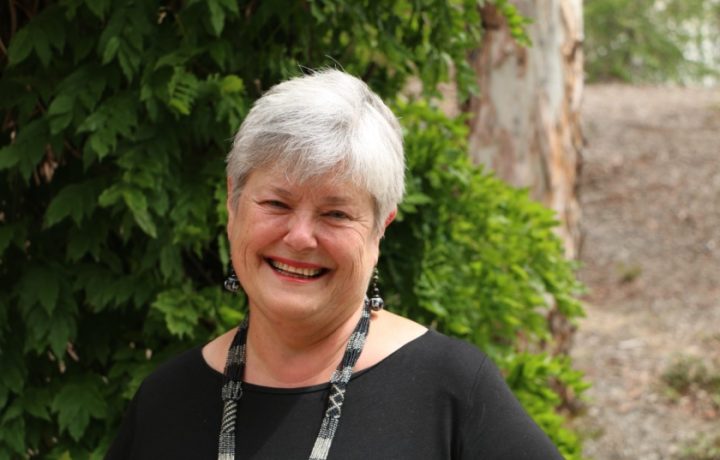
Dr Fiona Tito Wheatland has no qualms about describing herself as fat. In fact, in recent years she has reclaimed the word to empower herself as part of her own body positivity. And she understands all too well that people of a higher weight are often faced with many social and psychological barriers to health, including weight stigma and limited social support.
But one Canberra based research study at the Australian National University (ANU) is offering an evidence-based group psychotherapy program called Groups 4 Health, to address these barriers to help higher weight people.
The program is completely free, open to anyone 18 years and older with a BMI of 30 or more. Fiona is part of the Groups 4 Health research team—and a role model and advocate for higher weight people who are battling weight stigma.
However, it hasn’t always been this way for the vibrant, intelligent, down-to-earth woman who lives by the motto “Eat well. Live actively and socially. Feel good about yourself.”
When she was only six years old, Fiona realised she might be viewed differently to her peers.
“I was participating in physical culture classes—a ‘girl approved’ activity when I was growing up—and my mum pulled me out when the uniforms changed to leotards. My mum’s reason, ‘Little fat girls look awful in leotards’,” Fiona says.
“My mum probably said this because, like me, she was big-boned and people made comments and poked fun at her weight when she was growing up.”
There were also eating rules in Fiona’s household. Her brother—who was considered skinny—was allowed to eat cake but Fiona’s diet was restricted.
“It was unfair, and I learnt sneaky ways to get around the restrictions,” she says. “I would whip up batter and eat it in secret. It was the start of my troubled relationship with food.”
“Throwing up is something I learnt unintentionally. I’m allergic to coconut, so as a child, I’d throw up from time to time when I ate a lamington or coconut icing. Eventually, it became easy to throw up. From there it turned from an occasional vomit to an eating disorder when I was a teenager.”
When Fiona started losing weight and family and friends started to comment on how wonderful she looked, she felt like was finally receiving approval for her appearance. It reinforced her need to maintain the thin look.
“My mum thought my weight loss was great. She didn’t know what was going on and it didn’t cross her mind to ask,” she says.
“When I became engaged at 18 years old, my mum signed me up for a weight loss program. Upon arrival we were weighed in. If you hadn’t lost weight from the previous week you were shamed by having to stand in a separate area to everyone else called the ‘pig pen’. I ate a lot of lettuce during that period. It’s the closest I’ve been to anorexic.”
What changed Fiona’s eating habits for the better was being pregnant with her children.
“I’d read so much literature about pregnancy that I knew I had to modify my habits. The best thing about pregnancy was that my hormones calmed me down. For both pregnancies the purging and restricted eating habits were gone but returned after each of my kids’ births.”
“As the children grew, life got busier and more complicated. I tried to juggle the demands of motherhood, a career, and a deteriorating relationship. I was struggling and the bulimia reappeared.”
“I decided to start counselling. Through that process I came to understand better the links between my weight and my relationship between food and emotions. I gained weight initially as I tried to normalise my relationship with food.”
“I realised the bulimia was my way of dealing with complicated emotions, particularly anger. Although it initially made me feel like I was in control, I eventually realised I wasn’t.”
Now, after finding a healthier way to manage her weight, Fiona has found the courage to challenge those who have internalised bias and weight stigma.
“Over the years, I have been involved with running support groups for higher weight people, with the focus on being active and socially connected,” she says.
“If you look at the research about risk factors for premature mortality, social isolation poses a much higher risk to health than being overweight.”
“It’s one of the reasons I think the Groups 4 Health program is such as wonderful program. It’s not about a person’s weight. The focus is on guiding participants to do what makes them happy in a way that works for them, especially through positive, affirming connections with other people.”
Consisting of five group sessions that occur over eight weeks, according to Dr Joanne Rathbone—a social and health psychology researcher at ANU—in the program participants explore their social environment and learn how they can build better and more supportive social networks.
“They’re provided tools to manage challenging groups in their lives, including those that might be a source of stigma, and learn how to strengthen existing social networks to support their health and well-being,” she says.
“I also know the importance of having support from those with a similar experience. The Groups 4 Health program is structured to allow for that support,”
Interested in participating? See if you’re suitable for the program by completing the online form.