The other side of Nepal
Posted on
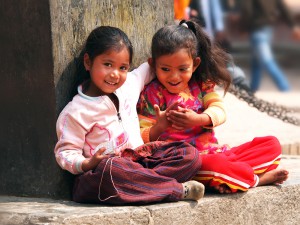 When it comes to the sisterhood, women will move mountains to look out for their own particularly when it comes to education, opportunity and way of life. Recently, I had the pleasure of sitting down with two incredible women who are doing just that through their work with Project Didi Australia—a not-for-profit group that provides educational opportunities and skill development to women and children in Nepal with the aim of combating inequality and poverty.
Fiona Toll and Leonie Keogh together with Sarah Bartram are the three women who run Project Didi Australia.
While the group has only just become official, it has run in an unofficial capacity for years, working closely with its project partner and human rights organisation, Asha Nepal, to provide assistance and educational opportunities to girls that have been sold into sex slavery. Having worked in Nepal with these very girls, Fiona shares her experiences and says the difference between our children here and those in Nepal are vastly different.
“We look at our children and they have so many opportunities,” she says.
“They do get educated; they do have equality; they do have a voice and they have choices and freedom. So to be able to work with these girls and give them similar privileges that our children have…it’s beautiful.”
Leonie, another of the Project Didi Australia trio, runs photography programs for the girls in Nepal and describes the positive impact that it has on their lives.
“It was fantastic,” says the passionate photographer by trade.
“Just seeing the change from when we first walked in to when we finished the program…we were only with them for six days but the change in that six days was amazing.
“Their confidence and self-esteem just grew, and they were able to communicate and express themselves in a way they hadn’t felt able to before.”
While these programs help to build the girls’ self-esteem and create a sense of empowerment, Fiona explains that they also give the girls the skills they need to start generating an income.
“A lot of these girls are very young when they’re trafficked into India – they’re usually between the ages of four and five years old,” she says.
“Asha Nepal has a team that actually go in to rescue these girls from India and bring them back to Nepal. But they can never go home to their families and they can never go back to their villages because the threat of being sold again is too high.”
Instead the girls are housed by Asha Nepal, are educated, counselled and provided with a lot of medical support. But a lot of these women and girls come back with AIDS or HIV which, of course, has a very large stigma attached to the girls who have been trafficked.
“Asha Nepal really gives them a chance to be educated, have a life, be successful…and just be who they really are,” continues Fiona.
“We run these programs so that women who are in these refuges can actually have something that they can use to create an income; and have something of their own.”
With all of the work that Fiona, Leonie and Sarah were doing, Fiona says that it was only a matter of time before Project Didi Australia became official.
“We now take school groups over and take part in service programs. We’re taking the Orana Steiner School over in five weeks, and they’ll be doing a trek and running a service program with Asha Nepal. Then next year we have hairdressers who will run a program, as well as photography, jewellery making – all sorts of stuff,” she says.
“So realistically, it sort of got to a point where we went ‘we have to actually become official’; we’re running programs, but we have to do something here to let people know about these girls and women getting trafficked out of Nepal every single year.”
Prior to meeting Fiona and Leonie, I had never before connected Nepal with the sex-trafficking industry, so I was shocked when Leonie revealed to me just how prevalent it is.
Every year up to 10,000 girls are trafficked over there. Every year.
So it’s huge.
Fiona went on to explain the ignorance of people when it comes to Nepal and its status as a country.
“People don’t realise that Nepal is a developing country. People see Nepal for it’s beautiful mountains; Mount Everest is what everyone talks about when they talk about Nepal. But it’s a very poor country. Education is very hard to get over there.”
Unless you have money, which most people don’t, or access to a school, which again most people don’t, these children just don’t have a chance.
Many are often quite horrified that parents or family members would sell these children, but what they don’t realise is that it is fuelled by desperation. These desperate parents don’t believe that they’re selling their girls to the sex industry but actually that they are sending them off to get a better education. Because that is what they are told—they’ll have an education, they’ll have a job, they can send money back to the families.
And these are very remote villages where a lot of this happens. In some villages there are no girls aged between the ages of 10 to 17.
None. They’ve all been sold.
A lot of people don’t understand that and they don’t see what happens over there, but girls are seen as second-class citizens, there’s no doubt about it.
And they aren’t valued in society – to have a girl means you have to come up with a dowry, and most people just don’t have the money to do that. It’s not to say that it doesn’t happen in other countries, because it definitely does. It occurs in many different countries. But Nepal is an area where you wouldn’t associate trafficking yet because of its unclosed borders that meet with India t closed, girls can be taken from one country to the next.
This occurs regularly.
After hearing their stories I wanted to find out more and how we here in Canberra can help support Project Didi Australia’s mission. With many ways to assist, Leonie says it;s definitely not hard to get involved.
“We’re always looking for people who have ideas or want to be involved in running programs,” she says.
“We have lots of events coming up – we’re always looking for help with events.’ Fiona added.
“If people do want to be involved they can definitely contact us and say ‘I want to come to Nepal’ or ‘I’d just like to come to a fundraiser’ – whatever it is, we’re always interested. We can also look at doing programs for people that want to take groups over – they can do a trek and see that side of Nepal, and then come into a service program – we can organise a program for them to do and then they will implement that over there. Schools, corporate groups, it doesn’t matter. We can handle anything.’
To promote the work of Project Didi Australia and increase awareness about Nepal, a special screening of the film Girl Rising will be screened this month. If you’re interested in pledging your support and learning more about the positive impact that educating girls can have on the world then grab your girlfriends and a ticket.
the essentials
What: Girl Rising screening
Where: Dendy Cinema, Civic
When: 18 September at 6.30pm
Book online: Tickets available here.
More info: You can email Project Didi Australia or find them on Facebook for more information.
Feature image: Image of two Nepalese girls on the streets of Kathmandu from shutterstock.com.
Leave a Reply