Six unmissable Matisse & Picasso artworks, as selected by the exhibition curator

Posted on
VisitCanberra got the scoop on the National Gallery of Australia’s summer blockbuster exhibition—Matisse & Picasso.
Matisse & Picasso is the first exhibition in Australia to tell the story of the artistic relationship between two of Europe’s greatest twentieth-century artists.
Explore these favourite works of Simeran Maxwell, Curator of International Painting and Sculpture, and much more at the National Gallery of Australia, 13 December 2019 – 13 April 2020.
PABLO PICASSO BUST OF A MAN (THE ATHLETE)

Pablo Picasso, Buste d’homme L’Athlète, 1909, oil on canvas, 91 x 73.5 cm, Museu de Arte de São Paulo Assis, Chateaubriand, © Succession Picasso / Copyright Agency.
Both Picasso and Matisse were inspired by the work of Paul Cézanne.
For Picasso, this manifested itself in his development of Cubism, where he broke up an image into a series of geometric forms, usually in a monochrome palette. Matisse was derisive of Picasso’s approach.
HENRI MATISSE STILL LIFE WITH ORANGES
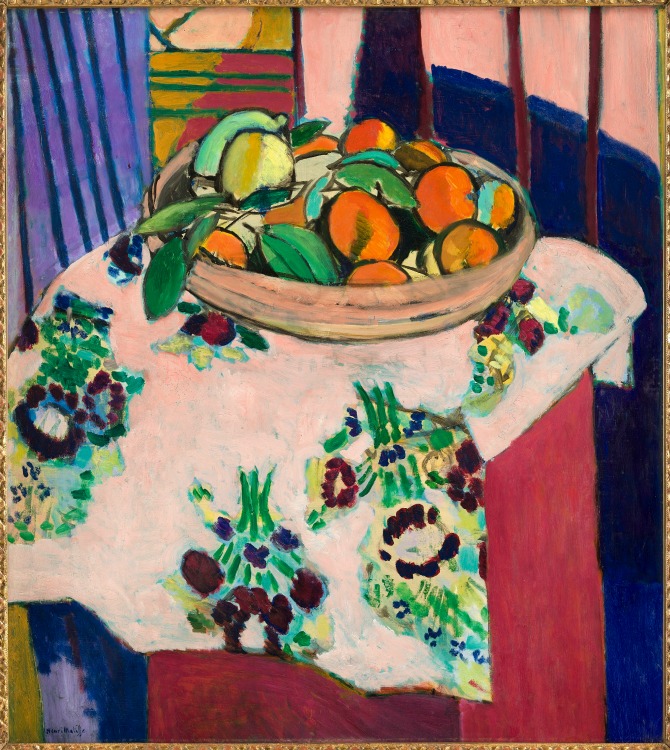
Henri Matisse, Nature morte aux oranges, 1912, oil on canvas, 94 x 83 cm, Musée Picasso, Paris, © Succession H Matisse/Copyright Agency, Photo © RMN-Grand Palais (Musée national Picasso-Paris) / Mathieu Rabeau.
The impact of Cézanne on Matisse is demonstrated in complex interior views, combining several of the other artist’s distinguishing motifs: the tilting table top, bowl of fruit, the inclusion of patterning an obscure space.
PABLO PICASSO WOMAN BY THE SEA

Pablo Picasso, Femme assise au bord de la mer, 1922, oil on canvas, 58.4 x 48.3 cm, Bequest of Putnam Dana McMillan, Minneapolis Institute of Art, © Succession Picasso / Copyright Agency.
After the First World War both artists were drawn to classical images and stories. In this work, Picasso depicted a monumental figure whose facial features mimic the sculptures of Hera that the artist saw in Naples.
Adopting the chiaroscuro method of shading, the fabric, face, arms and feet are rounded in dark shadows.
HENRI MATISSE WOMAN BY A WINDOW
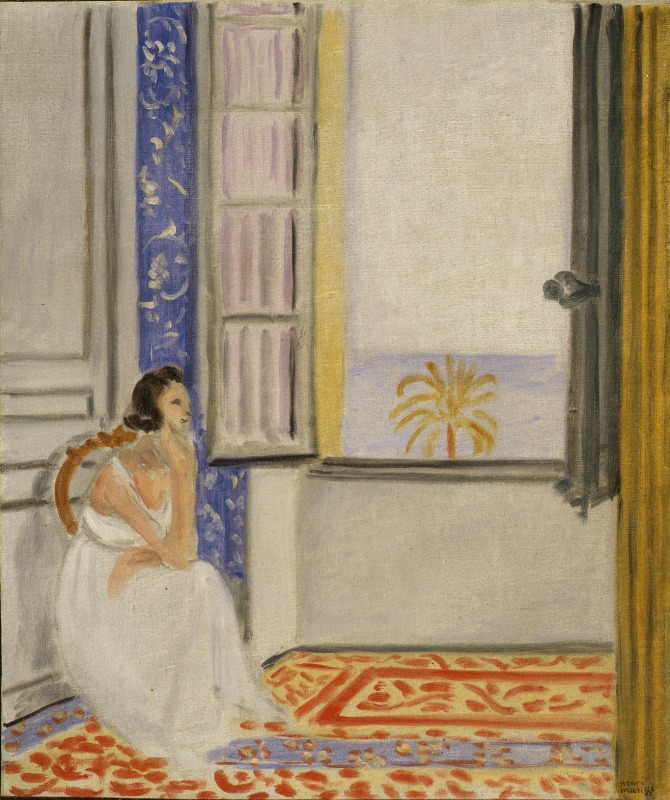
Henri Matisse, Femme par une fenêtre, c 1920-22, oil on canvas, 55.6 x 46.4 cm, Gift of Ferdinand Howald, Columbus Museum of Art, Columbus, © Succession H Matisse / Copyright Agency.
One of Matisse’s favourite pictorial devices was the inclusion of a window in the background of his compositions. It appeared in his art throughout his career.
After moving to Nice in 1918, he was inspired by the southern light and painted a series of light-filled hotel rooms facing the sea. When Picasso paid homage to Matisse after his death, he used this distinctive device in his own paintings.
PABLO PICASSO READING
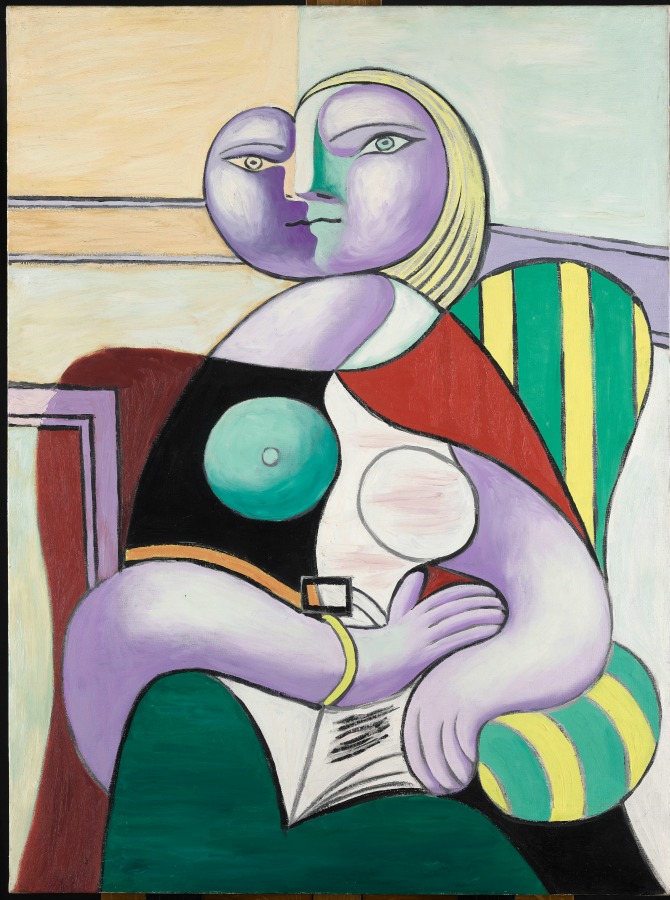
Pablo Picasso, La Lecture, 1932, oil on canvas, 130 x 97.5 cm, Musée Picasso, Paris, © Succession Picasso / Copyright Agency, Photo © RMN-Grand Palais (Musée national Picasso-Paris) / Mathieu Rabeau.
Images of women dominate the work of both artists and they each favoured specific women and different times in their careers.
Here Picasso has used his mistress and muse Marie-Thérèse Walter as his subject using his familiar cubist forms.
HENRI MATISSE SEATED ODALISQUE
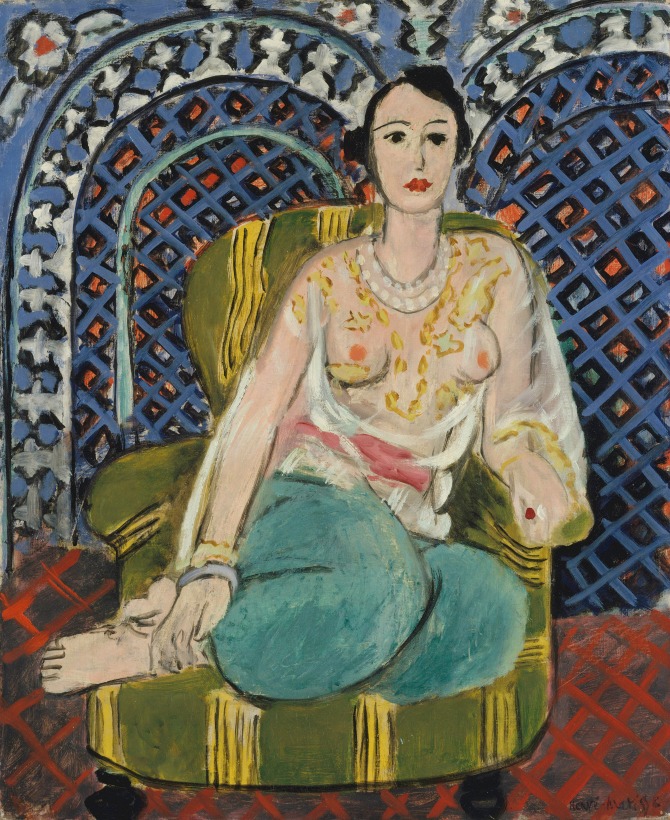
Henri Matisse, Odalisque assis, 1926, oil on canvas, 73 x 60 cm, Gift of Adele R Levy Fund Inc, 1962, The Metropolitan Museum of Art, New York, © Succession H Matisse / Copyright Agency.
Matisse’s drew on his personal collection of North African decorative arts to assemble exotic compositions, particularly his favourite models dressed as odalisques.
Here he uses an appliquéd wall hanging as a backdrop for model Henriette Darricarrère dressed in Moroccan pantaloons and a sheer blouse.
Tickets for Matisse & Picasso are available online now.


Leave a Reply