Five Minutes with author Gabbie Stroud

Posted on
Gabbie Stroud is a freelance writer, novelist and recovering teacher.
After years of juggling the demands of the primary classroom, she became disenchanted and disillusioned, eventually making the painful decision to leave the profession she had loved.
In 2016, her critical commentary of Australia’s education system was published in Griffith Review’s Edition 51 Fixing the System, which went on to be shortlisted for a Walkley Award.
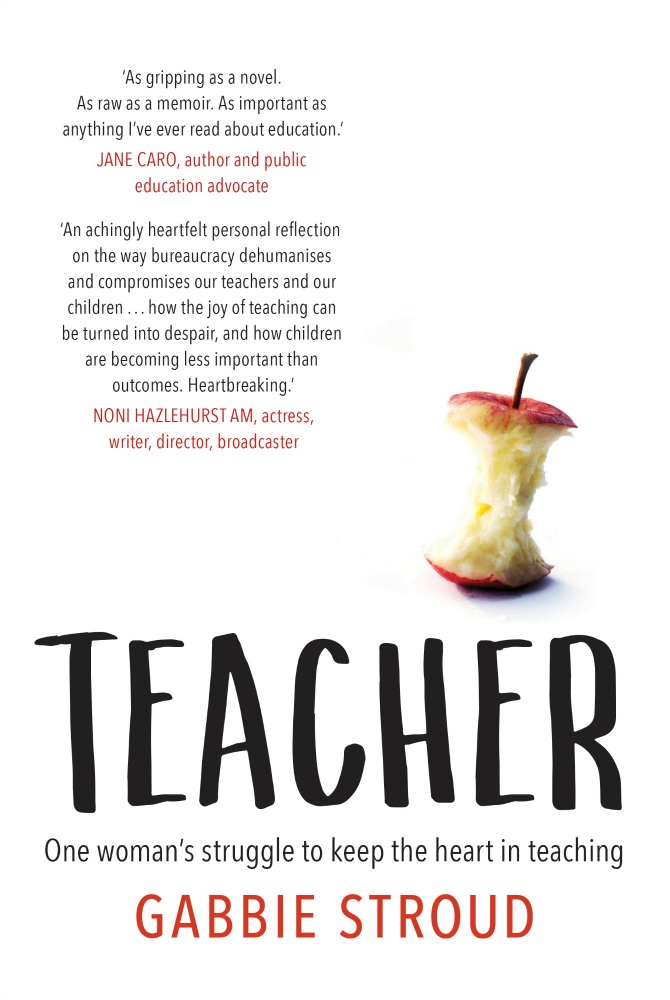
Gabbie’s smash-hit memoir Teacher was shortlisted for Biography Book of the Year at the 2018 ABIA Awards and contributed to the national dialogue on education.
We caught up with Gabbie ahead of her In Conversation event with internationally acclaimed and award-winning author Chris Hammer at Harry Hartog ANU on Wednesday 11 March
Why did you write this book and who is it aimed at—parents or teachers?
This book is very much a book for parents, although teachers will find themselves within the pages because it’s told from a teacher’s perspective.
I wrote this book because I believe, on the whole, parents are trying very hard to do the right thing by their children and they’re trying their best to support their schools too. Unfortunately, though, parents are somewhat misguided—believing in things like the value of NAPLAN and that learning is a competitive pursuit.
There are also some terrible misconceptions out there about the work that teachers do, particularly around the role of a teacher—there’s a ‘schools will fix it’ mentality out there these days that puts enormous pressure on school communities and teachers.
I wanted to help parents come to realise the nature of learning and the important professional work that teachers do. As I was writing, I realised that I had two key messages for parents…
- Parents need to recognise themselves as the first and life long educator of their child.
- Parents need to do the work of a parent at home so that teachers can do the work of a teacher at school.
Can parents help to improve the education system?
Yes—because they vote! We need to become more invested and aware of the politicians and policymakers who govern education.
Parents need to start asking more questions of ‘the people in charge’ and raise their expectations of those people. Parents have an incredible opportunity not only to contribute powerfully to education but also to remoralise teachers who are feeling particularly defeated these days.
What are your biggest concerns?
That changes that do occur in education are over-simplified and not made with any long term vision.
That the people making these decisions and changes in education don’t have the relevant, informed classroom experience to understand the ramifications of their changes.
That we have students graduating our schools with sub-standard skill sets or feeling like they need to ‘recover’ from the experience of school—and worse, that they don’t recognise themselves as a lifelong learner.
The terrible rates of poor mental health in our young people.
Teacher demoralisation and high attrition rates of teachers.
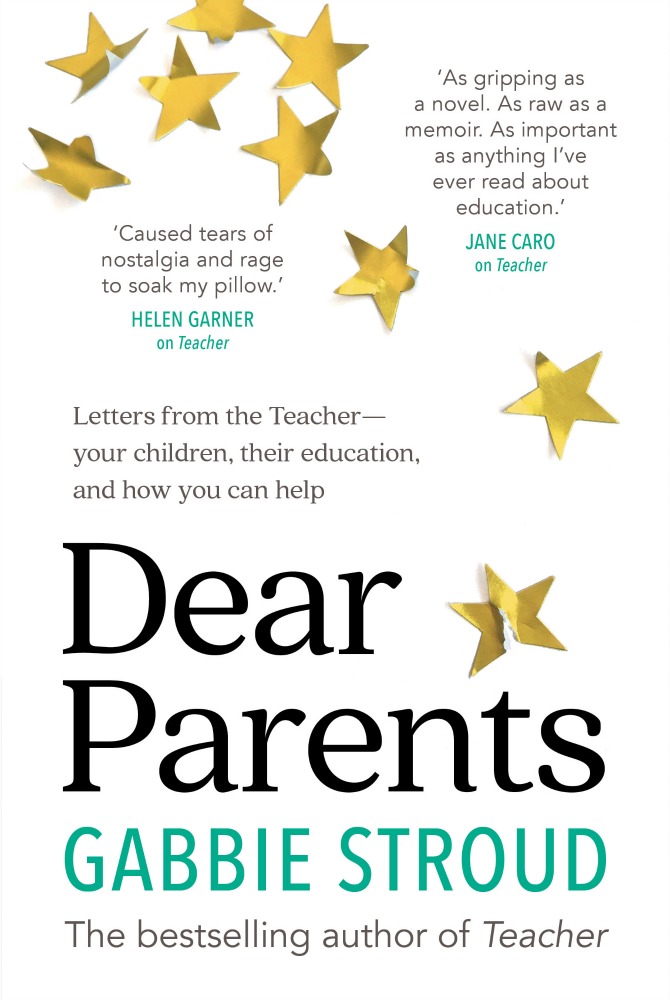
Why did you decide on the format of the book being a series of letters?
The original plan was for letters that were more like essays… however, when I sat down to write, the natural voice I slipped into was ‘teacher voice’ and the first letter teachers write each year is always similar.
I started writing that initial ‘beginning of year’ letter and found myself playing around with it—including my ‘thought bubbles’. From there the letter style was born and continued throughout the book!
Your latest book, Dear Parents, has been described as a Call to Arms —what is the main message?
There are many messages but I would say the main ones are:
- Parents need to recognise themselves as the first and life-long educator of their child.
- Parents need to do the work of a parent at home so that teachers can do the work of a teacher at school.
- As a parent, you need to question the system that educates your child.
- Ask questions! Don’t be complacent!
- Let’s stop asking ‘what works’? in education and shift to a better question: ‘what matters’?
the essentials
What: Gabbie Stroud In Conversation with Chris Hammer
When: Wednesday 11 March at 6 pm
Cost: Free
Where: Harry Hartog ANU, 153-11 University Avenue, ANU
More information: via Eventbrite
Leave a Reply
You must be logged in to post a comment.