A seat at Nonna’s Table
Posted on
“He watched me get off the bus. He say, ‘this is the girl I am going to marry’.”
Out of a modest but meticulous home in Jerrabomberra, Nonna Rosa Lanzetta produces the finest Italian food —capable of drawing hordes of her boisterous family and many a hungry hanger-on—for regular lunches that seem to last all day.
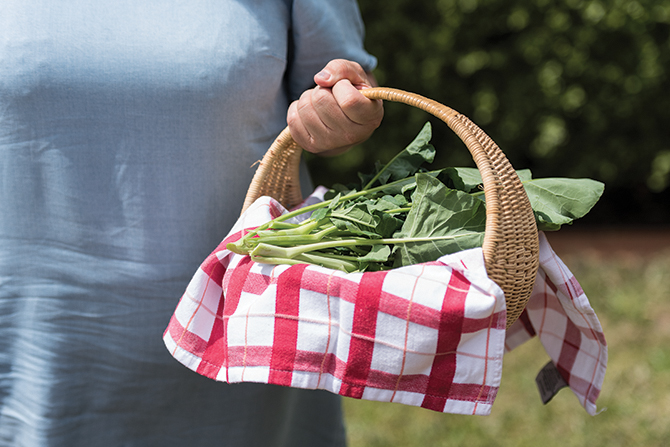
Nonna’s suburban block holds a garden, a vegetable plot, an indoor and an outdoor kitchen and acts as a giant magnet for family and friends.
Under a vast pergola sits a long table which can cram about 20. This just barely accommodates Nonna’s three children, 10 grandchildren, three great-grandchildren and all the associated partners and guests when it comes time for a regular family lunch.
Then, the backyard resembles a village square over a suburban plot. And it is at these moments, when she is surrounded by her family, that Nonna is in her element.

The table doubles as a workbench for “Tomato Day” when the family gets together to pump out litres of sugo, or salami day, when spicy meat mixture is encased and hung to cure from an old bed frame suspended in the garage.
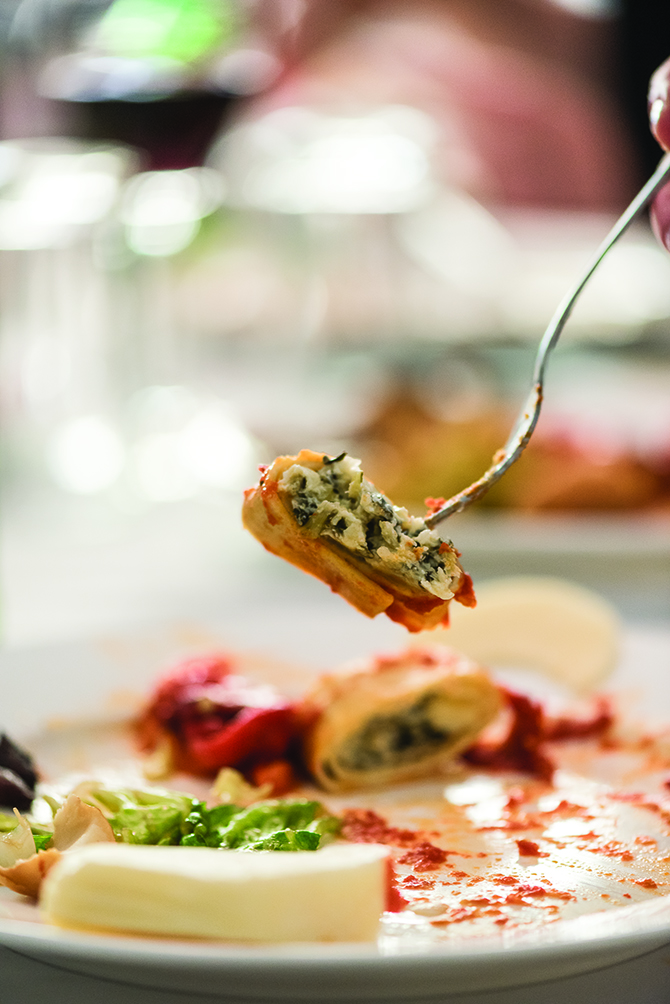
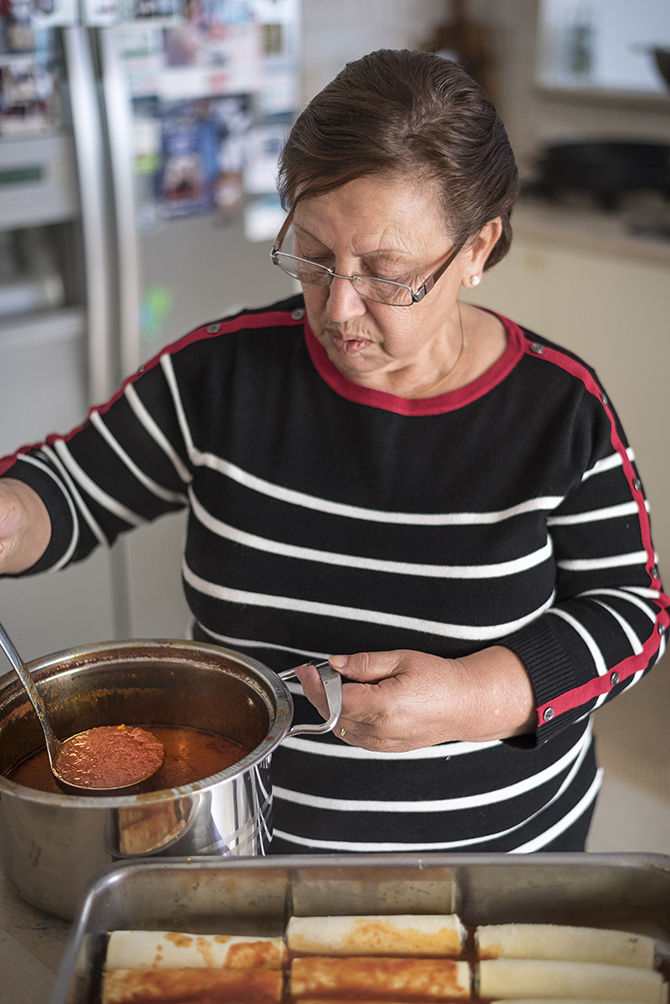
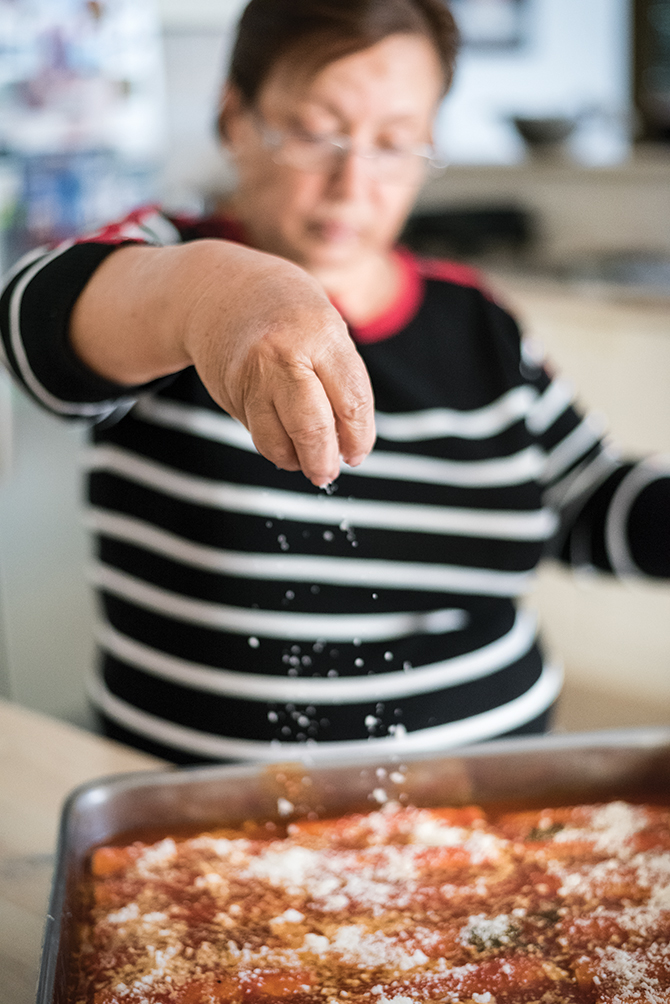
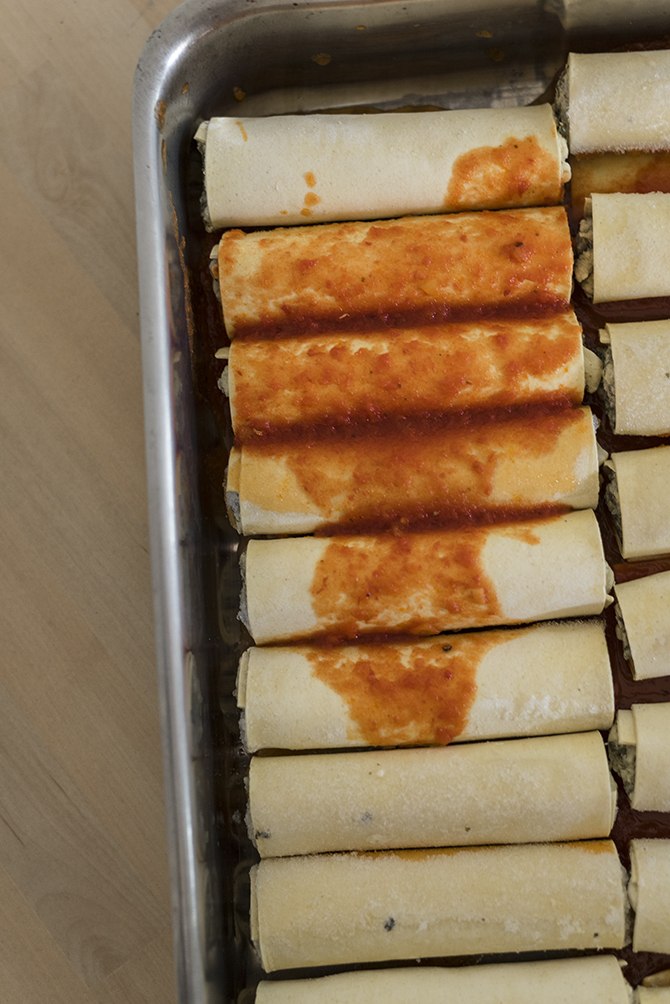
Meanwhile, there is one thing you can be certain of—in Nonna’s backyard, one shall never go hungry. In the open air she will deep-fry the most crispy and delicious zucchini fritters, or her famous rice balls. Inside, the oven is packed with platters of cannelloni—pasta and sauce all made from scratch of course.
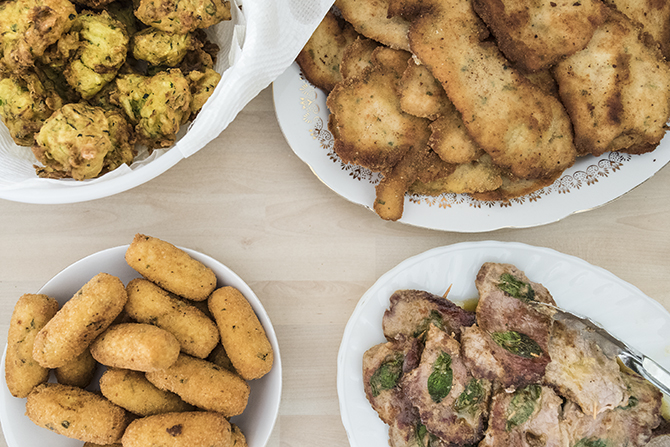
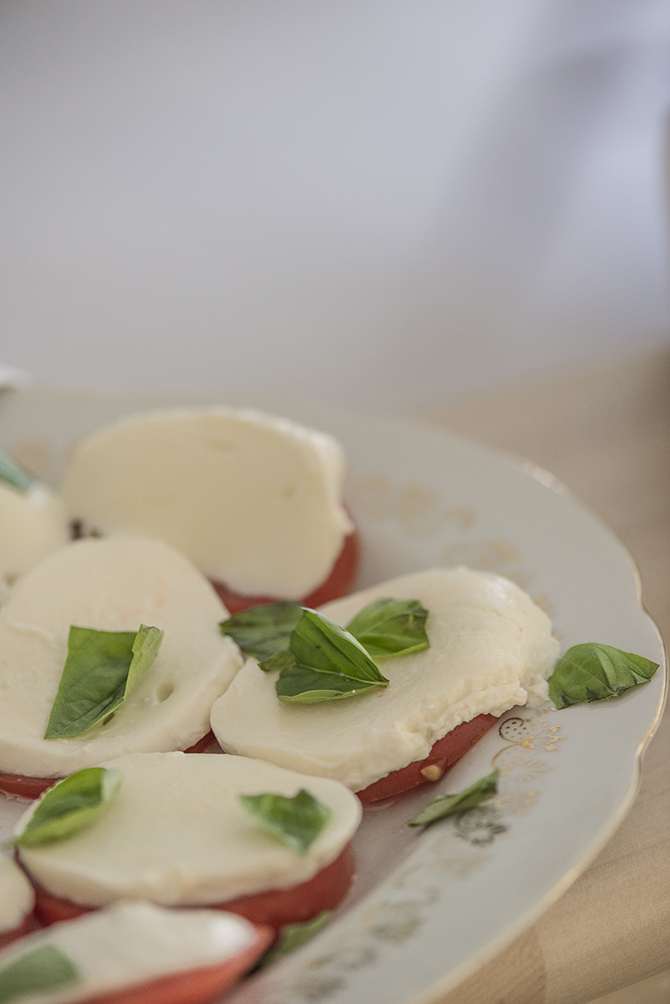
An ordinary lunch will see the table groaning under the weight of chicken and veal, green salads and caprese, crusty Italian bread and platters of specialised Italian cheese and the most recent salami—once it meets Nonna’s stringent test for quality and taste.
She is a perfectionist who will provoke peals of laughter across the table as she points out everyone else’s wonky salami formations. For hers, of course, are perfect.

With each dish she creates, and her truly incredible pasta centrepieces, the tiny but indomitable Italian great-grandmother smiles on her flock before declaring with conviction “Mangia! Mangia!”
It is time to eat.
Nonna carries Italy in her heart—her dedication to the cuisine of her homeland is as evident today as it was when she left Arena in Calabria in 1969 to join her beloved husband Giuseppe in a far-off country—Australia.
They would live in several homes and raise three children together over nearly 40 years—having met in their village when Nonna Rosa was just 12.
“He watched me get off the bus. He say, ‘this is the girl I am going to marry’.”
She tells the sweet story of hiding some succulent grapes under a bush after a day of picking. When she snuck back to retrieve them, Giuseppe had left a small posy of wild flowers and his name rolled up in a note.
While Nonna Rosa lost her beloved husband in 2001, she is kept inordinately busy with her close-knit family, with get-togethers happening every few weeks and lasting an entire day.
Her adult children are in constant contact and her grandchildren clearly adore her—hulking great lads twice her size bending down to kiss the top of her head as they stroll in the back gate and pull up a chair for a preserved black olive or slice of smoked mozzarella.
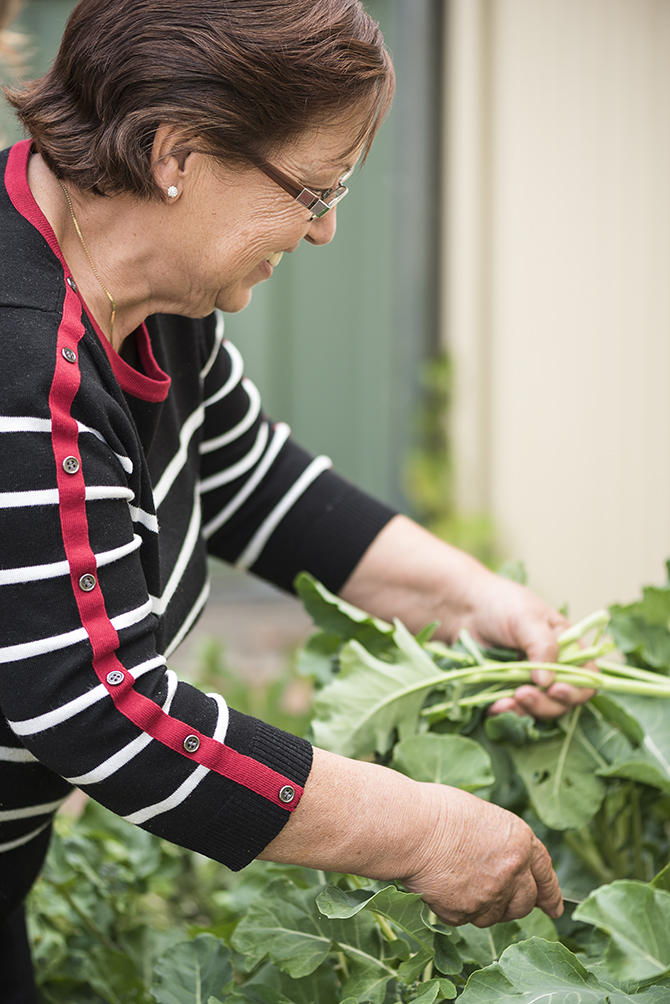
Of course, her children and grandchildren tease her relentlessly, from the quirks of her meticulous home (she folds all her plastic bags with military precision) to the tongs she hangs in trees to help her reach the highest fruit. And her strong Italian accent, and well-worn sayings, are mimicked by all. But the minute someone pokes fun at Nonna’s open vowels, she points to a certificate of proficiency in English as a second language which proudly hangs next to the dining table.
“When your Italian is half as good as my English—then you can make fun of my accent!” she chides.
For all the banter, nobody can withstand the allure of Nonna’s table laden with seasonal produce. In an age where families are so busy it can be months before they get together, a family lunch takes precedent over any other scheduled event.

The biggest surprise is that there is not an electronic device in sight when it is time to sit down. The youngest children play in the backyard, or put one of Nonna’s 1950s Italian records on and dance. The only “i” celebrated in this household is the one that starts the word Italian.
Nonna’s cooking expertise has been handed down the family line, although she demands respect and will tolerate no short-cuts in the kitchen—despite the encroachment of modern day convenience food. She prefers not to have a store-bought pasta in her immediate vicinity.
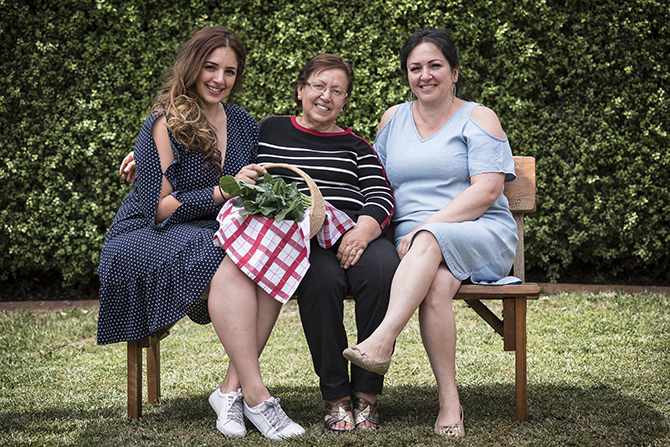
Rosalie, Nonna Rosa and Lyn.
“Nobody can cook like mama,” says her middle daughter Lyn.
“It’s in the way she decides the amount of ingredients, the exact seasoning, her taste, her choice of when to pick the vegetables—it all makes it come together in a way we can’t replicate no matter how hard we try.”
“Yes, and she sometimes keeps secrets,” adds Rosalie, Lyn’s middle daughter and Nonna’s namesake granddaughter.
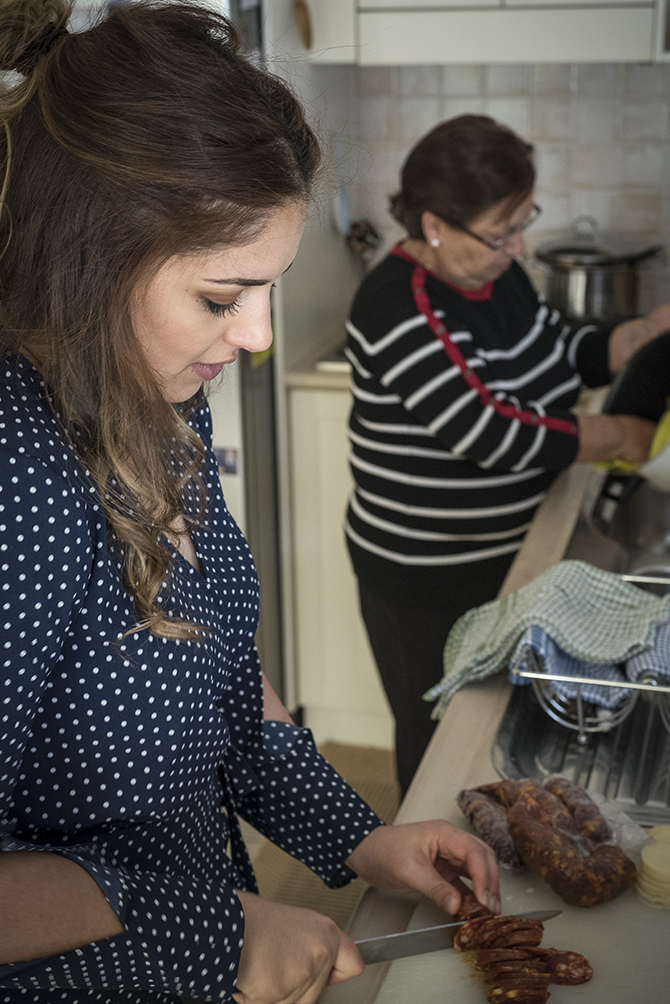
“So you need to keep a close eye on her in the kitchen if you want to know exactly how to cook like she does—and even then it will never taste the same.”
The backyard fills quickly on a Sunday—drawing a busy family from near and far, connecting them across a long table and facilitating endless and loud debate, conversation and laughter—as well as the occasional burst of utter silence, when mouths and glasses are full.
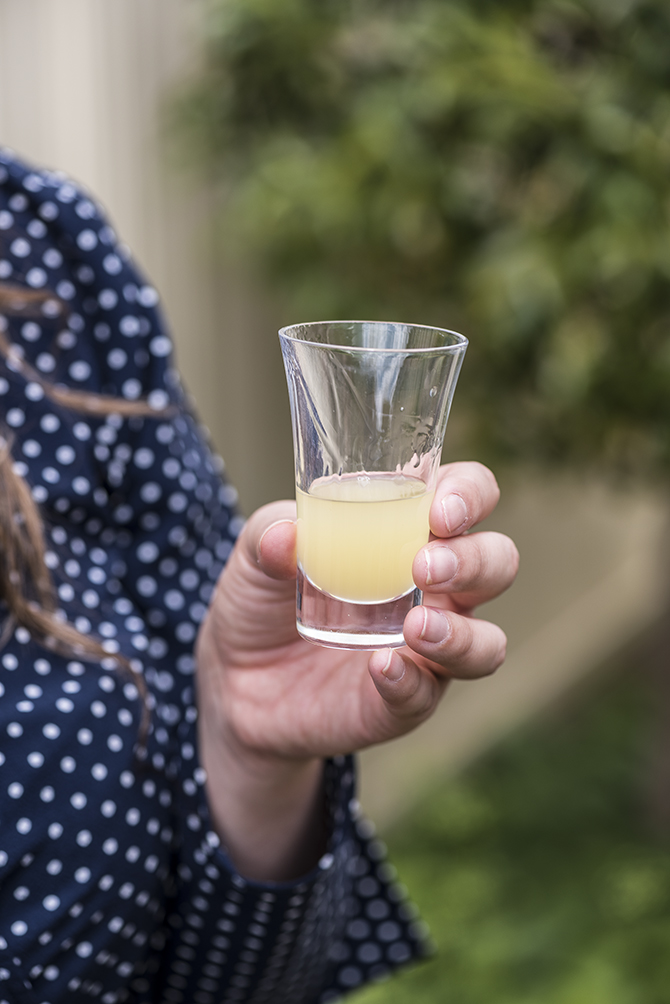
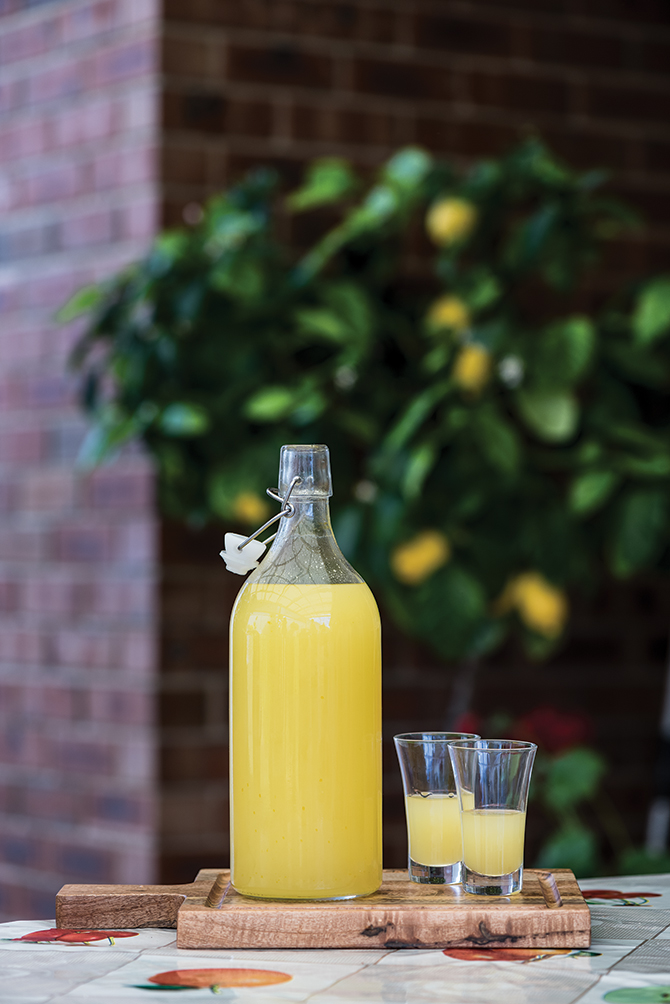
And until you’ve tried Nonna Rosa’s limoncello, using fat lemons from her trees, you haven’t tasted the next best thing to a summer’s afternoon in Italy.
Nonna’s Zucchini Fritters
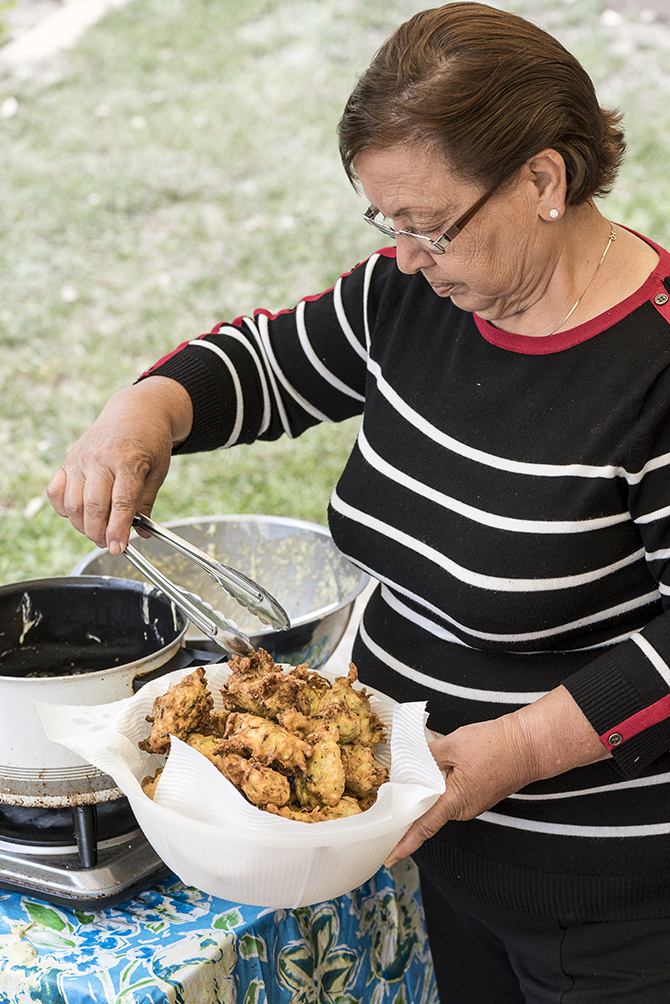
Measurements are guestimates only. Nonna likes to keep a secret.
Ingredients
- 3 medium zucchini, grated
- 2 cups plain flour
- 1 large handful of parsley, finely chopped
- 1 cup parmesan cheese, grated
- 2 eggs
- Soda water
- Salt and pepper to taste
- Vegetable oil
Method
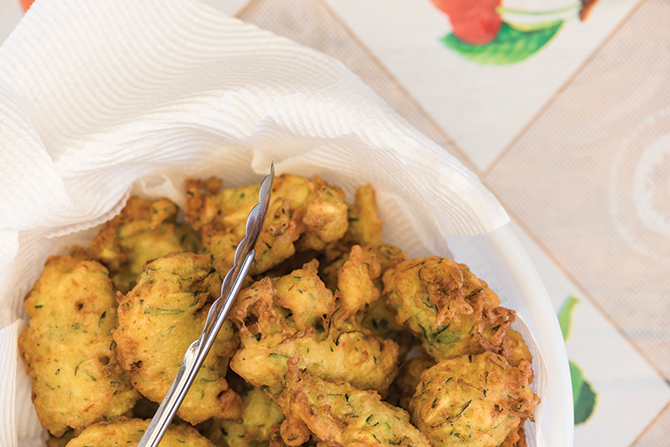
- Add grated zucchini to a strainer with some salt. Cover it with a plate and put something heavy on top to draw out the water. Leave for at least half an hour.
- Squeeze any excess water from the grated zucchini using your hands. It’s important you get rid of as much water as possible.
- Preheat a deep fryer with vegetable oil.
- In a large bowl, add flour, parsley and cheese and mix together. Make a well in the centre and add the eggs and a little soda water. Using a fork, begin to whisk the edges of the dry mixture into the wet mixture. Continue whisking and adding soda water as needed to bind the mixture together until it reaches a batter consistency.
- Using a big spoon, drop a spoonful of batter mixture into the deep fryer. Fry until golden and crispy on the edges.
- Drain on paper towel.
- Mangia!
Photography: Tim Bean Photography
This article first appeared in HerCanberra’s Magazine in 2019.

Leave a Reply