Goodbye corporate ladder, hello diversity
Posted on
When diversity champion David Morrison was announced Australian of the Year in January, it guaranteed to elevate the issue to a national stage.
Morrison has gained a reputation as an advocate of workplace diversity – but in a nation where men are paid, on average, $27,000 more a year than women, where people with ethnic-sounding names find it harder to secure a job, and where just 10 per cent of our corporate leaders are women, he has his work cut out for him.
While “diversity” is often a code for “gender balanced”, a truly diverse workforce is one that gives everyone – regardless of age, gender, ethnicity, religion or sexual preference – an opportunity to contribute and to be their best self.
Perhaps one of the easiest ways we can do this in the corporate world is to ditch the archaic notion that careers are linear trajectories. After all, isn’t it strange to think a person is locked into the choices they made and followed in high school or university? And isn’t it strange that we judge someone’s suitability for our organisation largely based on the progression outlined in their CV?
In her runaway best seller Lean In, Facebook’s Chief Operating Officer Sheryl Sandberg wrote that “careers are a jungle gym, not a ladder”.
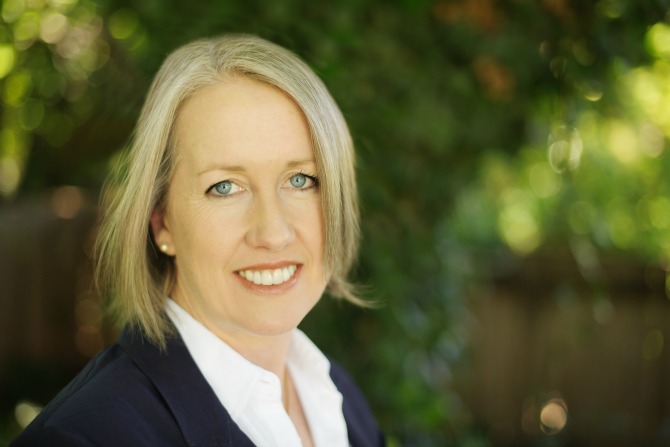
Suzanne Moulis calls this “having a portfolio career”. The Chief Executive of Canberra-based Moulis Legal, Suzanne originally studied law but later found a passion in landscape architecture. She is a working mother who now manages the business of one of Australia’s leading boutique law firms, undertakes independent design reviews for a number of Sydney councils, and who sits on the board of the Australian Institute of Landscape Architects. She also has a passion for diversity and for bringing about meaningful change in the workplace.

Suzanne Moulis
Suzanne says she always “felt like a square peg in a round hole” and “had this thing about me that’s been different, I never wanted just a straight path.”
This yen for the road less travelled resonates with many people – particularly women who want to “have it all”, but perhaps not all at the same time.
Perhaps the idea of a single career trajectory is one of the factors preventing us from truly embracing diversity. Once we stop limiting people to staying in one field to “climb the corporate ladder”, and understand there are many ways to achieve our life goals, we may be more open to diversity. That may mean employing the parent who has taken time out to nurture children, the wanderer who has returned from roaming the globe, the person with the messy CV with multiple degrees and disconnected career paths, or the adventurer that simply wants to have a crack at something different.
“When you embrace diversity, you get a wider skill set. But you need to be flexible in understanding how people choose to build their careers and their lives,” Suzanne explains.
It goes without saying that the benefits of diversity stretch far beyond the “feel good factor”. Ultimately, diversity breeds ideas and innovation. It sparks creativity and challenges the status quo.
Suzanne floored me with a statistic from a report from the Australian Women Lawyers’ Association recent career intentions research has found that 50 per cent of male law students would avoid a career at the bar because of the lack of diversity at the top.
“That’s young men saying they don’t want to work in male dominated environments,” Suzanne says. “And a similar percentage of respondents say the bar is not ethnically diverse enough to attract them either.”
These figures demand change. And change starts with each of us.
In the case of Moulis Legal, which is determined to be a loud voice on the issue of diversity, it took leadership and an overhaul of employment policies.
“We recognised we needed to create an environment that supported the type of organisation we aspire to be. We now have a policy that clearly articulates our commitment to diversity,” Suzanne explains.
“Everyone in the leadership team is committed to this policy. We want critical thinking, creativity and accountability – characteristics that have nothing to do with whether someone is male or female, Catholic or Muslim.
“We’re all about finding solutions for our clients, and having an inclusive and diverse workplace gives us that edge.
‘We’ve found that while our team members still need the fundamentals in terms of the right qualifications and skill sets, that when we draw people from culturally diverse backgrounds, or work to ensure that we have gender equity within the firm, that we can see and frame issues in different ways and with new perspectives.
“After all, the world out there isn’t made up of only white 50-something men, so why would we run a business like that?”
Image of Suzanne Moulis courtesy of Christie Nelson Photography

Leave a Reply