Hoarding Treasures: inside the homes of Canberra hoarders

Posted on
Domestic life necessitates some sort of cleaning and tidying at regular intervals. But what if your possessions overtake you?
Sarina Talip looks at the issue of hoarding and what happens to a home when the light can’t shine in.
John never thought of himself as a hoarder. Instead, he thought of himself as an environmentalist.
“There are feelings of responsibility that a lot of us have—we’re the custodian of this stuff and if we throw it out that’s being wasteful, or it’s going to be bad on the environment,” he explains. “And so some of that thinking, although laudable, is something that can get in the way of managing what we have.”
When the 63-year-old retired public servant heard about the hoarding support group “Buried in Treasures” on the radio, which at the time was conducted by Woden Community Service (WCS), he signed up straight away.
The free, peer-led, 20-week program, designed by American psychologist Randy Frost, is based on his book of the same name and aims to put power back into the hands of individuals by helping them to understand why they hoard, and how to stop.
John is friendly and quick to smile, but beneath the warmth you can sense his pain around about hoarding.
“It does impinge on friendships. You might want to have somebody around and you think, ‘Oh no, it’s all too much, it’s all too embarrassing.’ … Having your kids’ friends around too, there’s an embarrassment about that,” he says.
“And if somebody turns up unexpectedly then there’s a mad scurry: ‘Hang on, hang on, I’ll be there in a moment,’ and you’re busily shoving things away.”
John’s main issue was paper. “Collecting bills, ‘just in case’—this ‘just in case’ thing. But then the methods to keep them in an ordered manner become so sophisticated that it’s too difficult to actually keep them. So you end up with this pile of organised things from five or six years ago, but the last four years is in some disorder.”
He gives the example of his thinking process with a coffee machine that had broken. “Acquired another coffee machine in the meantime, because this one was broken, but I’ll keep the other one ‘just in case’ I can repair it.”
His very understanding wife has put up with his hoarding habits for years, but the couple is in the middle of a knockdown rebuild of the family home in Watson where they’ve lived since 1980, which has sped up the process of decluttering. It has been a hard process.
Source: iStock.
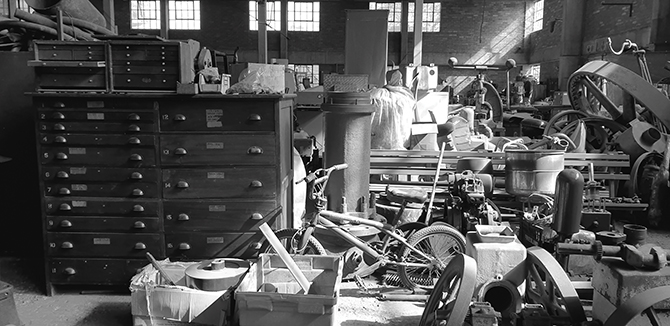
Most of us have too much stuff. But what happens when clutter becomes more than clutter—when it becomes a health hazard and a danger to not only occupants, but also to neighbours?
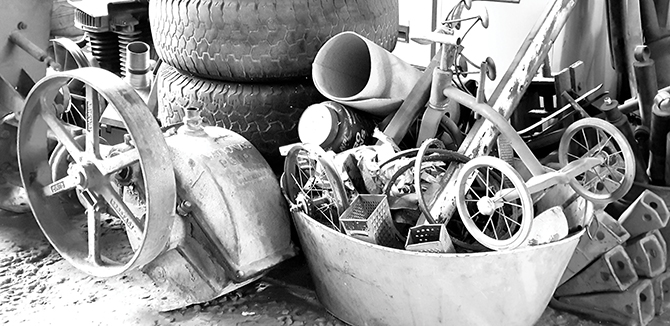
This happens if stuff escapes the confines of a house, leaving front and back yards filled with cars past their registration dates, broken fridges and washing machines, and in extreme cases, old meat and vegetables attracting mosquitos, rats, snakes.
Then it becomes hoarding. The Diagnostic and Statistical Manual of Mental Disorders, known as the DSM-5 and published by the American Psychiatric Association, defines hoarding as a disorder characterised by difficulty discarding possessions, regardless of their actual value.
While acquiring items isn’t part of the official definition of hoarding, it usually goes hand in hand with an attachment to objects and an inability to throw them away. It’s estimated that five to six per cent of the population suffers from hoarding disorder, from the most extreme (think: the notorious Bondi Hoarders) to a bit of clutter in the “junk room.”
Dr Christopher Mogan, a Melbourne clinical psychologist who specialises in hoarding disorder, says because it is a “very young condition,” (it was only included in the DSM-5 in 2013) it’s hard to get funding for research.
“There’s not a lot of awareness about hoarding, but it’s a growing awareness because it’s very disruptive of family life, and a lot of people suffer homelessness as a result of being hoarders,” he says.
“They breach their lease, and their crowded house becomes a health hazard, a source of odour, and a fire risk—people who have hoarding problems carry an extreme fuel load.”
He says people with hoarding disorder have been largely misunderstood and badly treated. “People think it’s laziness, and complain about it from the outside…And it is very disruptive to a household to try to live with someone with hoarding disorder. It’s a nightmare,” he admits.
“It affects relationships, and those who can be badly affected by it might be an elderly person whose house has been taken over the hoarder. Similarly, a child raised in such a household might not ever sit at a meal at a table or have a space to play or study.”
A light was shone on in the issue in late August when Opposition Leader Alistair Coe introduced new laws into the ACT Legislative Assembly that seek to strengthen the government’s power to force clean ups of “squalid properties”.
Under proposed amendments to the Planning and Development Act 2007, once an order to clean up a property has been issued, a government inspector must attend the premise at least once every 20 working days. If an ongoing order is issued, work to clear the property must be completed within five working days. The home’s occupant would also be forced to pay twice the expected cost of the cleanup.
“For many years now we’ve been contacted by some very distressed neighbours of properties that really are examples of extreme squalor and a pretty significant health hazard,” Alistair says.
“So whilst the government has identified these properties as requiring attention, they just seem unwilling or incapable of actually doing anything about it. When you see these properties, the rats, the mosquito infestations, you realise that doing nothing is not an option.”
Community groups and experts have criticised the new laws, saying the focus should be on funding to help people to get support. WCS Director of Mental Health and Housing Pam Boyer says she’s “very wary” of punitive measures such as fines and enforced cleanups that create more trauma and fail to address any underlying issues.
“I totally sympathise if there’s an extreme hoarding situation that might be very difficult for neighbours, and very difficult for friends and family,” she says.
“And all of those people involved—neighbours, friends, family and most importantly the person themselves—all need support. But too often we end up only looking at the rubbish, at the stuff and the clutter, and we forget that there’s a person underneath there with often very difficult circumstances.”
However, Alistair is quick to point out that the issue is not widespread. Where it does exist, however, it is a big problem. He says the proposed legislation targets only “a handful” of five or six properties, does not create any new offences, and does not focus on the inside of houses. “It exclusively deals with the front yard and only the back yard where it’s adjoining public land,” he explains.
Alistair says he’s met with met with community organisations such as ACT Council of Social Service and Woden Community Service and is “very supportive” of increasing funding for support services for people with hoarding disorder but that the new laws are tackling a “public health issue.”
“In some instances there are people who are operating businesses that are not permitted in residential zones and this makes a mockery of the current legislation and enforcement,” he says.
Source: iStock.
A spokesman from the ACT Government says Labor is cautious about the introduction of penalties that can be used as a “blunt tool” against Canberra’s most vulnerable. “Imposing inflexible and strict conditions on compliance orders as suggested by the Canberra Liberals fails to account for the needs of the vulnerable,” the spokesman says.
“Every situation is different and the Government response varies based on site safety, community interest, mental health issues and circumstance. The Planning and Development Act contains a wide range of compliance options, including fines, prohibition notices, and controlled activity orders. Providing compliance officers with a range of options means that the enforcement of the planning system can be tailored to the particular situation.”
The government’s Litter Bill, tough new anti-littering laws which passed the ACT Legislative Assembly in October, proposes an “escalating framework” to deal with litter on a private site. The Litter Bill amends the current Litter Act and several new provisions in the Bill have created new powers and new offences under the Act.
The new Bill will eventually allow the Government to enter a site to clean-up and abate the hoarding of litter when all other actions have been unsuccessful, following an application to the ACT Magistrate’s Court. “Importantly, this framework does not criminalise the mental health issue of hoarding.”
Over the next six to 12 months, the ACT Government will be developing a hoarding code of practice in consultation with mental health and community organisations and experts.
The ACT Government’s hoarding case management group has overseen nine “complex cases” this year, currently manages five cases, and is monitoring one case.
Further, ACT Health Directorate funded Woden Community Service to conduct a $90,000 hoarding advocacy services trial in the first half of this year, which has now received a further $300,000 to extend the program for 18 months.
The program uses a case management process to connect people with relevant services including mental health and aged care support, as well as cleaners and gardeners.
John says the knockdown rebuild came about after he did the Buried in Treasures program.
“If you’ve got too much stuff, it’s hard to get tradespeople in, it’s hard to do maintenance, and it actually got to the point where there was a lot of work that was required on the old house… It was a great opportunity to rebuild in an area that we like, and to have something that’s neat, environmentally friendly and will last us into our senior years.”
John says his case of hoarding wasn’t “overly severe,” and that the severity of the psychological condition is on a spectrum, or a continuum. “In terms of being able to have a bath, to have a clean kitchen, those sorts of things weren’t a problem for me. But I suppose untidiness, inability to find things readily—chaotic is a good way to describe it, and that is stressful in itself.”
As well as being a participant, he has facilitated the Buried in Treasure program. (The WCS ran the program 11 times from 2015 to early 2018, but haven’t been able to hold it since because of “financial constraints” the service’s Pam Boyer says.)
John says that when people don’t quite make the progress they want to they can be really hard on themselves. People with hoarding disorder are often acutely aware of the problem, don’t want to be that way, have lots of good intentions, but that discarding items, as well as not bringing them into the home in the first place requires practice.
“I don’t think you can say that you’re ever cured as such, but you can say that you have recovered … meaning that you can lead a more normal life, the spaces that you have can be more utilised for their intended purpose, that you can have friends around and that it’s not confronting.”
As for owning less stuff, John puts it simply: “It feels lighter.”
This article originally appeared in Magazine: Shine for Summer 2019/20, available for free while stocks last. Find out more about Magazine here.
Love Magazine?
You can support its production by becoming a patron, which gives you access to exclusive rewards. Find out more on our Patreon page



Leave a Reply