How I Got Here: Eleni Gabrielides, Sexologist
Posted on
Admit it, we’ve all been there – stalking social media and LinkedIn profiles, trying desperately to figure out how the hell someone got their dream job.
It seems impossible and yet there they are, living out your career fantasy (minus the itchy business suit). It might seem hard to believe, but once upon a time, they were also fantasising about their future career, and with some hard work, they made it.
Welcome to How I Got Here, HerCanberra’s series that reveals everything you want to know about the secrets of career success. This week, we sit down with Eleni Gabrielides, a Canberra-based sexologist, educator, public speaker, and writer.
Passionate about supporting people to understand, explore, and embrace pleasure and sexual health as part of living well, we chat with her about what a sexologist actually does, how you become one and why working in sexology is so rewarding.
Existential crisis time: Who are you and what do you do?
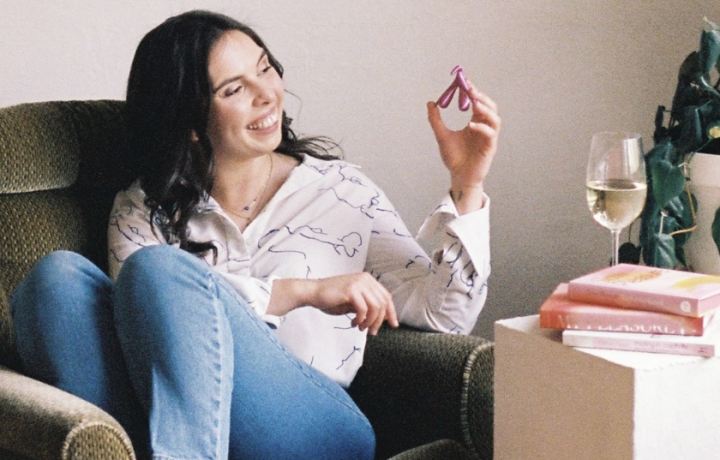
I’m Eleni Gabrielides (she/her), and I’m a sexologist based in Canberra. My work centres on sexual health education and health promotion. Through The Pleasure Is Yours, I develop ways to help people explore and enjoy open, shame-free conversations about sex and pleasure. I also work with Flossy to create educational, pleasure-focused experiences—from in-home soirées to event pop-ups—where people can learn, ask questions, and confidently explore concepts and tools of sexual pleasure. These events offer a safe, non-judgmental space for people to learn about and purchase high-quality products without pressure.
To be a sexologist, I completed a Master of Sexology (MSexol) at Curtin University, where I gained specialist training in the biological, psychological, and social dimensions of sexuality, along with research methods, ethics, and skills in sexual health education and counselling. Sexology is a broad discipline, with applications in therapy, education, health promotion, allied health, research, forensic and legal contexts, and human rights.
It’s also worth noting that the term ‘sexologist’ isn’t currently protected in Australia, so anyone can technically use it, but not everyone should. The Society of Australian Sexologists (SAS) sets ethical frameworks and accreditation pathways so that only those with specific training can call themselves ‘psychosexual therapists’ or ‘sexuality educators’. If you’re seeking professional support around sexuality, it’s important to check their learning background to ensure you’re getting support that suits your needs.
Let’s go back to when you were a kid, have you always dreamed of working in this industry?
Honestly, yes. As soon as I understood what sex was, and that adults treated it as a secret or shameful, I was fascinated. Not by sex itself, but the secrecy. Throughout puberty, my mum gave me a thorough, honest sex education, which empowered me and highlighted all the gaps in my school-based education I received later at 16.
One moment stands out. I was in Year 12 when a close friend came back from the bathroom during class, sat beside me, and whispered, “Isn’t it so annoying that you have to take your tampon out every time you pee?” She genuinely didn’t know how her own anatomy worked. I drew a vulva in the back of my notebook and explained it to her. It floored me that someone who had received the same school education I had could be without such vital information about her own body. It made me realise how uneven access to sexual health knowledge can be.
Before university, I asked my careers advisor if sex education could be a job. She said it wasn’t a career unless I became a PE teacher or nurse. I didn’t want either, so I pursued other skills that ultimately shaped my path here.
Tell us about when you were first starting out, what set a fire in your belly to get here and how did you do it?
During my first degree, I kept sharing sexual health information – posting on Instagram, talking to friends, volunteering, and working in sexual health fields. People were hungry for these conversations, often disclosing personal experiences and seeking advice. Hearing ‘I’ve never told anyone this but…is this normal?’, watching the shame lift, and their eyes light up after a conversation, made me realise this work was necessary. That fire still drives me every day. I pursued the Master’s of Sexology to develop the toolkit I needed to hold these conversations safely, ethically, and effectively.
Recall a time when you wanted to chuck it all in; what did you tell yourself when it got too hard?
I’ve never truly wanted to quit, but this work can be defeating at times. Being a sexologist sparks a mix of reactions from people, including curiosity, surprise, and sometimes arousal. And behind any reaction, stigma is usually at its core. There wouldn’t be anything particularly special or intriguing about my job if it wasn’t stigmatised, as a matter of fact, I don’t even know if I would have a job if sex wasn’t stigmatised. And that same stigma is what is so defeating.
There’s little structural support for this kind of work in Australia, and for the most part, globally. Social media platforms often remove educational content about sex and bodies, so we make up jargon to stay afloat (s3x/vulv@/cl!t/peen). Politicians can remove funding or access to HIV prevention and care, gender-affirming care, reproductive healthcare, and holistic sex education. Decades of work can vanish in minutes, a constant reminder of how fragile progress can be.
What I tell myself is: keep fighting. Science and fact are on our side, and while it’s okay to feel defeated, stopping only lets stigma win and pushes us further backward. I’m so lucky that the people I work with are intelligent, open, kind, and strong-willed. Standing alongside them keeps me going.
What was your biggest break?
Honestly, my biggest break has been learning to get out of my own way. I’m a perfectionist, have ADHD, and imposter syndrome has been a constant companion. Therapy, understanding my brain, and connecting with like-minded people taught me that the biggest barrier wasn’t the work, or my competition – it was my own standards.
I worked on lessening my overthinking, waiting for permission, or seeking validation. I showed up, took opportunities, and even casual conversations became growth moments. That’s been my biggest break: learning that progress comes from action, support, confidence, and curiosity – not perfection.
What’s the best piece of advice you’ve ever received?
There’s no single piece of advice that comes to mind, but little nudges built a mindset that carries me:
- A mentor showed me how much control I gave others’ opinions, teaching me to reclaim my focus and choose whose voices mattered.
- A friend pointed out that frustration from comparing myself to others was really about my own inaction and hesitation to press go on my own ideas.
- Therapy continues to teach me to let go of perfectionism, not let fear of mistakes hinder progress, and embrace my brain for its strengths.
All of these help me get out of my own way.
What is it about your industry that you love, and what makes you want to pull your hair out?
I love the passion, collaboration, and engagement of this industry. Before my master’s, I felt quite isolated in my passion for sexual health education, as if no one in my life at the time truly understood. But in my first class, I realised I wasn’t alone. My newfound peers had the same curiosity and passions, which were validated by rigorous studies. That sense of belonging makes this work feel like home.
What frustrates me is the ongoing fight against shame, sex negativity, misinformation, and unsafe practices, even within our community. Sometimes, professionals within my industry unintentionally reinforce shame, share misleading information, sell unsafe pleasure products, claim unproven libido boosters, and offer courses that suggest you need a certain body type to be sexual. It’s frustrating because these are trusted voices, profiting off and perpetuating the same societal pressures and myths the rest of us are trying to dismantle. Despite these challenges, it is an utter privilege to support people in reclaiming their bodies, pleasure, and confidence.
Tell us how you ‘stay in the know’, what media do you consume?
To stay in the know professionally, I’m a member of the Society of Australian Sexologists, attend conferences, and follow universities and researchers who publish on sexual health and sexual wellness. Also, I love the work of Esther Perel and Dr Emily Nagoski. On socials, I follow Bryony Cole (@bryonycole), High Tide (@hightideau), Sel Nguyen (@comebacktobed_), Aleks Trkulja (@_thepleasurecentre), Niamh Mannion (@myfriendinsexed), and Mariah Caudillo (@sexedfiles), among so many others. I surround myself with voices that spark curiosity, inspiration, growth, and joy.
Where do you see yourself in five years?
I tend to focus on the short term, but in five years, I hope to see Canberra embracing its sexiness. I want to provide more spaces for Canberrans to explore sexuality meaningfully, with education, conversation, and supportive spaces for learning without shame. I aim to help shape a city that celebrates curiosity, well-being, and pleasure in all its forms.
Why should people follow in your footsteps?
Sexology is so rewarding. Beyond education, therapy, or research, it provides tools to make care in any profession more holistic and affirming. Many people integrate sexology into other practices, such as physiotherapy, massage, specialist healthcare, or boudoir photography, to name a few. Through further learning (like a graduate certificate), professionals can create spaces where people feel safer to talk about sex and pleasure, reducing shame and addressing overlooked gaps. In practice, this might look like asking the right questions in a clinic, supporting clients to understand their bodies, or holding a vulnerable moment without judgement.
Our field continues to evolve, and there is real value in welcoming a broader range of voices, lived experiences, and ways of knowing into sexology. When the people doing this work reflect the diversity of the communities they support, the conversations become richer, the care more nuanced, and the impact more meaningful.
Following my path also means embracing pleasure as a practice. Pleasure doesn’t have to be sexual; it can be enjoying a warm cup of tea, feeling the sun, or taking a deep breath. Slowing down enough to notice what brings you pleasure, even briefly, can be grounding, joyful, and nourishing. Approaching life this way has made me more open, present, and resilient, even when things get hard.
What advice would you give your past self?
I’d tell myself that this is a real job. Building a career in sexology and sexual health education is possible, even without a traditional pathway. Trust the journey: detours teach skills and perspectives you can’t get any other way.
I’d also say: surround yourself with people who celebrate and support you. That community keeps you motivated, learning, and reminds you that you’re not alone.
Finally, take the driver’s seat in your own life. Don’t let others’ opinions control your confidence, worth, or choices. It’s not easy, but stepping into my own power has been one of the most defining parts of my life.