Why strong women stay
Posted on
When we look at coercive control and domestic abuse from the outside, the answer often seems simple: why didn’t she just leave? But as Canberra author and mental health coach Jenni Rowland knows firsthand, the reality is far harder.
After the success of her debut book, Show, Don’t Tell, Jenni offers an intimate look at her own story of survival, financial loss, and self-discovery. Her hope is simple: that by speaking openly about her past, another woman might recognise her own story and find the clarity to choose herself.

I packed what I could into my car and drove away. I didn’t know exactly where I was going, only that heading towards Sydney –where most of the people I loved were – made sense. About 20 minutes later, I stopped for fuel.
A message arrived from my husband. Did I want the rest of my clothes, he asked, or should he give my leftover things to Vinnies?
There I was, almost 51, standing at a petrol station with what I’d managed to take piled into the back of my car, begging my husband not to give away what remained of my life.
Even the car had been contentious. I’d been called “defiant” for buying it. Without a car of my own, leaving would have been that little bit harder.
I never saw him again.
For a long time afterwards, one question followed me: Why did I stay?
Except that’s not entirely true. I left. More than once.
Perhaps the harder question is why I kept going back.
It didn’t start with fear
It started with charm, possibility and the intoxicating feeling of having met someone who seemed larger than life. I’d already been through the collapse of a marriage and the loss of my home. I was lonely. I wanted love and, perhaps more than anything, the feeling of belonging somewhere again.
He offered me a vision of a future together and I believed in it.
Within six months, I was living with him. I loaned him all the proceeds from the sale of my home because I thought we were building a life together.
I had a binding financial agreement drawn up to protect what I’d brought into the relationship.
I genuinely believed I was safe financially.
We were living in what was often described as ‘blue water paradise’. And from the outside, it was beautiful. But as my world became smaller, paradise began to feel more like a prison.
Relationships with friends and family became harder. His words could be cruel and cutting. My self-respect slowly eroded. I became skilled at reading moods, keeping the peace and questioning whether what I was experiencing was really as bad as it felt. Today we have more language for coercive control. Back then, I didn’t. I understood domestic violence largely through the obvious things: physical violence, threats, police being called. I didn’t yet understand how control could accumulate quietly.
A key taken away. A friendship made difficult. Something I wanted to do turning into an argument. My own judgement becoming something I increasingly doubted.
Something inside me knew. And I became very good at talking myself out of it.
Maybe I’m overreacting. Maybe he’s having a difficult time. Maybe I need to be more understanding.
I could find a compassionate explanation for almost anything somebody did. What I wasn’t nearly as good at was asking: What is this behaviour doing to me?
I kept moving the investigation away from what I was experiencing and towards how I could explain it.
One night, we’d been invited to dinner at our friends’ house. After he’d been drinking heavily, I became the target of a torrent of verbal abuse in front of them and his teenage son. I was shaking and crying. My friends were visibly shaken by what they’d witnessed and insisted I stay with them.
I did. For a while.
Then I went back.
In 2019, things escalated again. That night isn’t neatly ordered in my memory. I remember my house key being taken. I remember asking how I was supposed to leave and being told I could climb out a window and down a drainpipe.
At another point, I remember locking him outside and hiding under the desk in the office while I called the police. He was furious that I’d locked him out and threatened to smash through the front door with a sledgehammer. As I waited for the police, I genuinely believed he would.
The police came. At some point, I found myself packing my belongings into garbage bags while police officers stood nearby.
I remember looking at those bags, at the police, at what my life had become, and thinking:
This is fucked.
I was an intelligent, capable, independent woman. I’d raised children, built careers, earned money, bought homes and solved problems. And there I was, putting my belongings into garbage bags because I didn’t feel safe in my own home. I felt ashamed that this was my life.
An apprehended violence order followed. I left. I put hundreds of kilometres between us.
For months, I lived on my own on the Central Coast, a long way from most of my friends and family. Apart from a couple of practical emails about my belongings being moved into storage, we had almost no contact.
Then COVID arrived, and the distance between me and the people I loved suddenly felt much greater. Around March 2020, I went to the storage unit and found he’d left me a kind note and a jar of honey.
I was touched by it. Then came a tender message from him. In that loneliness, his kindness reached somewhere in me that was still open to hope.
Over Easter, I moved back in. The following month, I married him. Nobody in my family knew.
You married him? After all that?
Yes.
And that’s the part of this story I most need to tell. From outside a relationship, the facts can look obvious. Love, loneliness, hope and the memory of the person you fell in love with don’t disappear simply because you have evidence that something is terribly wrong. Marriage still meant something almost idealistic to me. I’d already been through two divorces, and I couldn’t bear the thought of another marriage failing. By then, we had been together for almost five years, apart from the brief periods when I had left. When he proposed, part of me saw that as reassurance. Whatever else had happened between us, surely this meant he was choosing me. Choosing us.
What I had forgotten was that the binding financial agreement I’d put in place years earlier would no longer protect me once we married. I only understood the significance of that later. In hindsight, I felt played. I came to believe that what I had understood as commitment may have served a very different purpose for him.
I’d made vows. And I meant them. I believed relationships took work. I believed in forgiveness and second chances. I believed commitment meant something. The problem wasn’t that I valued commitment. The problem came when I began believing that honouring my commitment required me to continually dishonour myself. For me, that happened gradually. One explanation. One compromise. One apology. One more chance.
Until things I’d once thought unimaginable somehow became part of my normal.
The final time I left
In January 2021, the relationship ended for good. There was another argument. I was told to pack my bags, leave and hand back my key. Before I could, the key had already been removed from my key ring. Within two hours, I was gone. And this time, I didn’t go back.
I can’t point to one dramatic revelation that made this time different. Perhaps I had finally seen the pattern repeat enough times. Perhaps I was braver by then. Or perhaps I was simply done. I can’t say for certain.
I only know that this time, I stayed gone. There was no “just” about leaving. I had no home of my own. Almost all my money was inaccessible to me. Many of my belongings and much of the documentation I needed were still at the house. Then I remembered Dropbox.
I’d had the foresight to save copies of important documents and old payslips there. At the time, it felt like a lifeline. The only money I could immediately access was a $20,000 business overdraft. Debt isn’t normally something we describe as salvation, but mine was. Without it, I don’t know what I would have done. Looking back, I still sense an element of divine intervention in that first week. I chased paperwork, made calls, filled in forms and solved one problem after another. When I desperately needed doors to open, somehow enough of them did.
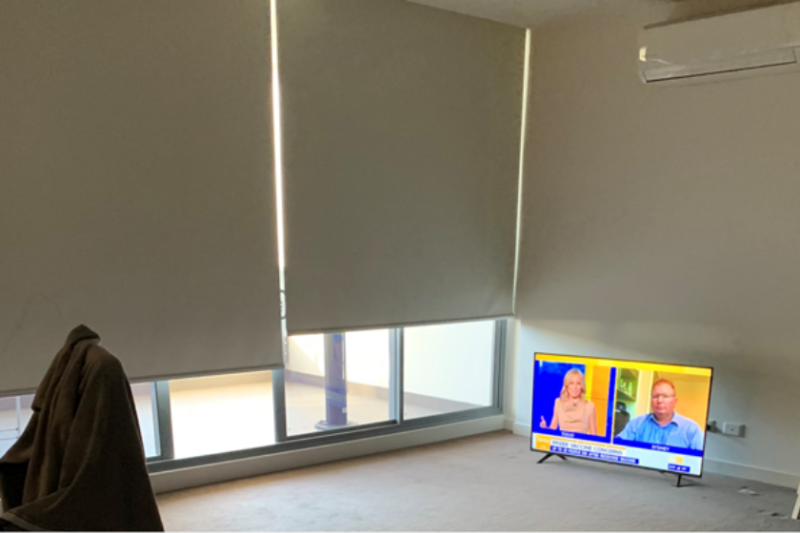
My faith had sustained me through some of my darkest moments. I believed I was going to be okay. And alongside that faith was sheer bloody determination. Within a week, I had secured a lease. I walked into an almost empty apartment of my own. I had a television and an office chair.
For the first week, I slept on the floor. I took a photo. I didn’t really know why. I just had an instinct that one day I would want evidence of where I’d started again.
But what I remember most clearly is the relief. I was safe. But leaving him didn’t mean I was free of the relationship’s consequences. It would take more than a year, and a lengthy and expensive legal battle, before I recovered the rest of my money. Leaving wasn’t one brave moment. For me, it happened in pieces.
And I had become quite good at leaving. It was staying gone I hadn’t yet learned how to do.
A better question
Rebuilding my life was only part of it. I also needed to understand how I had got there.
For a long time, I thought that meant answering: Why did I stay?
But there was an accusation hiding inside that question: You should have known. You should have been stronger. You should have left.
What I really needed to explore was what had made staying, and returning, make sense to me at the time. As a child, I’d become very good at adapting, at not asking for too much, at reading a room and trying not to become another problem somebody else needed to solve. Those qualities became some of my strengths: adaptability, empathy, resilience, independence and the ability to see other people’s perspectives. But somewhere along the way, I’d also absorbed the idea that everybody else’s experience mattered more than my own.
I began studying trauma, human behaviour and the beliefs we form about ourselves and our relationships. Some of the beliefs I’d been living by hadn’t felt like beliefs at all. They’d felt like truths. That marriage meant staying. That compassion meant considering somebody else’s behaviour before honouring my own experience. That being strong meant coping. The abuse was not my responsibility. But understanding myself became part of how I found my way forward.
The more I learned, the less sense it made to me that women stay in unhealthy or abusive relationships because they’re weak. Sometimes we stay because of the very qualities we’re praised for: loyalty, compassion, optimism, forgiveness, commitment, the ability to see the best in another person. Writing became part of how I healed and made sense of what had happened. I’d journalled as a teenager but had barely written for years. Now, almost instinctively, I found myself writing again.
My first book, Show, Don’t Tell, grew from my attempt to understand the experiences that shaped me. Later, I wrote Soul-Aligned Leadership, which includes a chapter called Why Strong Women Stay. By then, I’d understood something I couldn’t see while I was living it. I no longer needed to turn somebody into a monster before I was allowed to protect myself. And I no longer needed to turn myself into a fool for not leaving sooner.
That changed the way I looked at the woman standing at the petrol station. I look back at her differently now. I understand what she hoped for, what she believed marriage meant, and how much easier it was for her to extend compassion to somebody else than to herself.
I no longer think it is fair to put an earlier version of myself on trial using evidence gathered years after the verdict. That’s part of why I’m willing to tell this story publicly: because another woman might recognise something of herself in it. Maybe she’s strong too. Maybe she’s capable, successful, funny, independent and the person everybody else relies upon. Maybe she also keeps explaining away the voice inside her that whispers: Something doesn’t feel right.
I’m not interested in standing outside another woman’s life and telling her what she should do. But perhaps we can begin somewhere quieter.
Instead of asking What’s wrong with me? perhaps we can ask:
What made staying make sense to me?
What is this costing me?
What do I already know that I keep talking myself out of knowing?
I once measured my strength by how much I could endure. Now I know there is strength in knowing when to stay gone.
Understanding gives us something shame rarely does.
Choice.