Five minutes with Heather Morris, author of The Tattooist of Auschwitz
Posted on
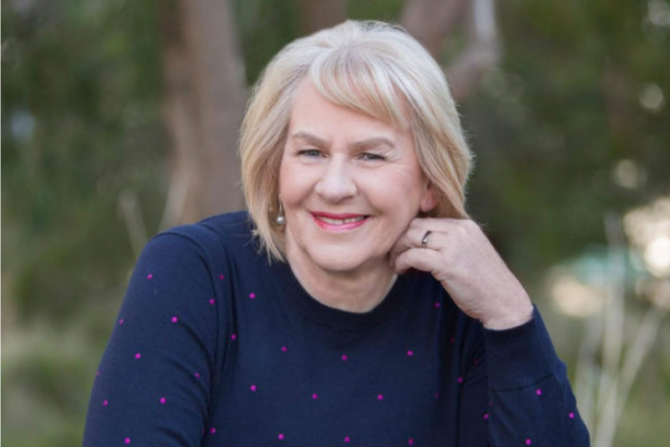
Heather Morris is an international number one bestselling author, who is passionate about stories of survival, resilience and hope.
In 2003, Heather was introduced to an elderly gentleman who ‘might just have a story worth telling’.
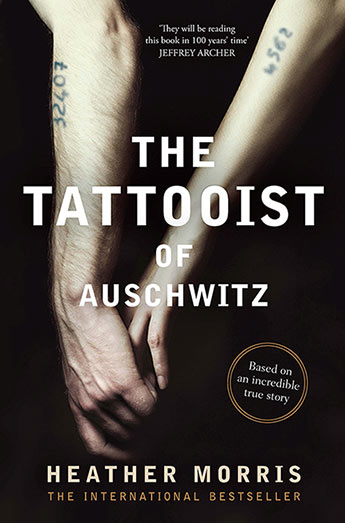
The day she met Lale Sokolov changed both their lives. Heather originally wrote Lale’s story as a screenplay—which ranked high in international competitions—before reshaping it into her debut novel, The Tattooist of Auschwitz. Her second novel, Cilka’s Journey, is the much-awaited sequel.
We caught up with Heather ahead of her in conversation event with Canberra best-selling author Karen Viggers at Harry Hartog ANU on Monday 11 November.
Tell us about Cilka’s Journey
Cilka’s Journey is the story of a 16-year-old girl who was sent to Auschwitz from eastern Slovakia in April 1942.
Cilka survived because she was kept as a sex slave by Schwarzhuber, the commandant of Auschwitz-Birkenau. When discovered by the Russians at the end of the war, Cilka was accused of collaboration—sleeping with the enemy.
Having survived Auschwitz, this 19-year-old girl was sent from the horror of the Nazi death camps to the gulag system in Siberia, where she served ten years of a fifteen-year sentence.
But in Siberia amid the brutality, she found friendship with the other women there. She also met a female doctor who took her under her wing and trained her to be a nurse—work that helped her to survive.
Above all though, this is a story of love. Cilka must have felt she would never find love, after years of abuse and brutality. But she met a man in the gulag and they were married on their release, and returned to Slovakia, very near to where Cilka grew up, and lived the rest of their lives there.
Why did you want to tell her story?
It was Lale who told me about Cilka—“she was the bravest person I ever met”, he told me, “she was a tiny young girl. And she saved my life”.
Among all the wonderful letters, emails and questions I get from readers, it is the question I am asked over and over again—“what happened to Cilka?”.
After having written about Lale, I wanted to write about women’s experience of Auschwitz, and of war—including the often untold stories of sexual abuse and violence.
As for Cilka herself, the more I found out about her, I realised just how extraordinary she must have been, to survive all that she did, and find life and love after her time in two of the most brutal places on Earth.

What was your research process?
It all began with Lale. He told me Cilka’s story over a number of years, often circling round to her over and over again in our conversations. She was clearly someone who meant a great deal to him and to Gita.
Since then, I have visited eastern Slovakia four times and seen the records of Cilka’s birth, her school records, visited her grave, the synagogue she would have worshipped at (now in ruins), the street her family lived on, met and spoken to people who knew her.
I have also spent time at Yad Vashem and looked at many archives of Holocaust survivors.
The gulag story is less well documented: there are no open records of prisoners sent to Vorkuta. But I used a researcher in Moscow who provided me with an enormous amount of information on the system and how it works, and the experiences of women in particular.
Why another novel?
I’m a fiction writer, not a historian—that’s the writer I am. I decided to write Lale’s story because it allowed me to breathe life into the stories this man who became my friend had told me and imagine all that he and Gita and the others experienced.
With Cilka, I’ve chosen to work in the same way. There are wonderful history books that readers can use to know more about the Holocaust and the Soviet gulag system.
I hope my novels will tell something of these times through the perspective of individual characters and I hope that this is a way of bringing these stories to more people.
What’s next for you?
One of the most wonderful things about the success of The Tattooist of Auschwitz is how many people contact me with the desire to tell their own story of hope.
I’m a fiction writer who loves writing about untold stories. And in Cilka’s Journey I’ve so loved writing about the experience of women in war—which has been so much less well-documented than the experience of men—that I wonder if this is where I’m headed next. But it’s too early to know for sure—I’ll see where this magical journey takes me.
the essentials
What: Heather Morris In Conversation with Karen Viggers
When: Monday 11 November at 6 pm
Cost: Free, registration required via Eventbrite
Where: Harry Hartog ANU, 153-11 University Avenue, ANU
Leave a Reply