Meet the finalists of the ACT Women’s Awards 2026: Robyn Smith
Posted on
From transforming healthcare and improving women’s safety to opening doors in construction, automotive and sport, 11 remarkable women and gender-diverse people have been named finalists in the 2026 ACT Women’s Awards.
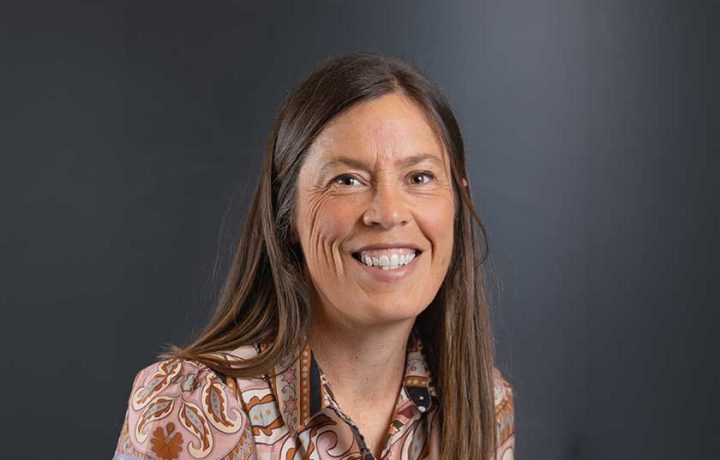
In the lead-up to the 2026 ACT Women’s Awards ceremony on Thursday 3 September, we wanted to get to know each of the finalists a little better. Today we meet Robyn Smith, a national advocate recognised for improving education, psychosocial support and policy outcomes for people living with inherited cancer risk.
Congratulations on being named a finalist in the 2026 ACT Women’s Awards! How did you feel when you found out?
It’s such a privilege to be among the names listed for the group of finalists. Being able to connect with women who lift up other women is something special. To be recognised as a finalist in these awards means I must be doing something right. These awards are not a popularity contest; they are assessed on merit and genuine achievements. The judges themselves are extraordinary people, so I’m grateful to be in the running.
In a nutshell, tell us about the work or initiative that led to your nomination.
I’ve been nominated for my advocacy work (both paid and volunteer) across two communities: people living with inherited cancer risk (people with gene mutations like BRCA) and those who live flat after a mastectomy. Both of these groups of marginalised people lack support and recognition in the health system.
I live and work with inherited cancer risk, so I hear, see and experience the challenges myself, which drives me to push for changes, to create better access to services so that people in this community have better health outcomes. If people with high cancer risk (up to 70% – 80%), aren’t educated and supported to make informed decisions about managing their risk, there’s a high likelihood they’ll end up with a cancer diagnosis.
I am also working to ensure that women who are making life-impacting decisions about their mastectomy are provided unbiased information about ALL their surgical options – something that is not always standard practice.
What achievement are you most proud of – and why?
My most memorable and boss move was last year when I ran the City 2 Surf topless baring my mastectomy scars across my flat chest, with the slogan ‘Flat out of Funding’ painted across my chest. This was to bring awareness to our charity Inherited Cancers Australia not having sustained funding and to raise awareness for the option of living flat after a mastectomy. I wanted to challenge societal norms and show that women can be fit, strong and happy without breasts. I also co-founded an online support group with over 1,500 flat women in it. Some of whom had not spoken to or met another flat person before they joined.
Over the past three years, I’ve generated media for the flat community through ABC compass, SBS Insight and the Marie Claire. Ensuring this group of women feel seen fills my cup. I like the thought that there might one day be a flat woman sitting in the chair at a hairdresser, feeling a bit isolated, who opens up the Marie Claire magazine and comes across a photo of someone that looks like her. After the ABC Compass episode ‘The Breast Decision’, our online support group had an influx of new members who were 60+, identifying a new cohort of under-supported people.
I have also driven research into women’s experiences of going flat after a mastectomy, collecting evidence to drive systemic change in the way healthcare professionals approach conversations about mastectomy options (including the option of living flat). I am working to challenge the assumption that is often made that all women (given the choice) would reconstruct their breasts after a mastectomy. Each patient will make a different decision based on their values, needs and health situation (and that is awesome), but what is essential is that women are informed of all of their options in an unbiased way.
Is there a woman, mentor or role model who has inspired your journey?
I often find myself telling my kids that they can’t whinge about something unless they are going to try and change it or make it better. They need to advocate for something to create change. My City to Surf topless run was inspired by Louise Butcher, a UK flat advocate who runs marathons regularly. I only did it once, yet she has done it for years and continues to do it!
What does being recognised as an ACT Women Awards finalist mean to you?
Being acknowledged as someone who drives change and makes outcomes better for other women with inherited cancer risk is such an honour. Sometimes we forget that little changes, grouped together, create momentum which can lead to systemic change. I feel like I’m doing my small part in a much bigger picture.
What advice would you give to a young woman or gender-diverse person hoping to make a difference in their own community or industry?
I am one of the privileged people who get to get up each day to support and advocate for a community I am part of. I know how lucky I am, but it can also be ‘a lot’; it’s not something I can switch off from. I work and live this path, some of it really uncomfortably.
My family and many others who have cancer-related gene mutations that are passed on generation after generation, after generation, experience poorer health outcomes, financial and emotional trauma – and this is all because of something we can’t control…our genes. My advice to others would be to keep showing up for your cause. Advocacy is a long and often challenging game, but keep showing up!