Rewriting the rules of fertility: Why Dr Anna Dalton believes information is power
Posted on
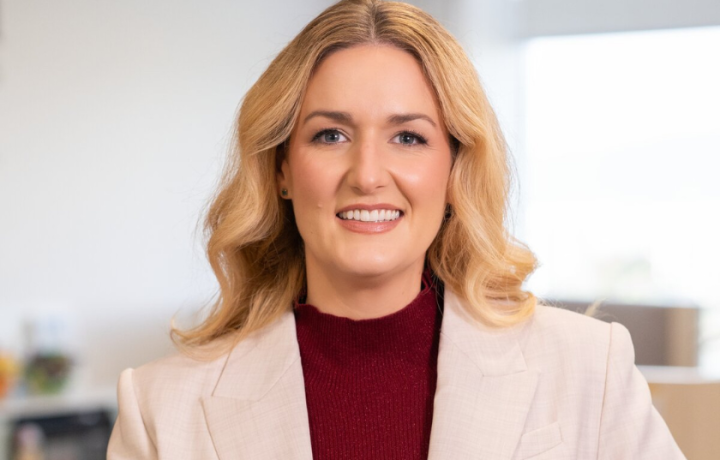
The ANU graduate, fertility specialist and gynaecologist is returning home to join the team at Genea Canberra with a mission to destigmatise fertility care.
For fertility specialist and gynaecologist Dr Anna Dalton, information is power.
It’s why she’s so passionate about helping both men and women in their fertility journey.
It’s also why she’s so thrilled to join the Genea Canberra team – and for her, the new role is a homecoming in every sense of the word.
As she prepares to provide her services to the city she once called home, Anna wants her future patients to know that seeking out information about fertility is one of the most empowering things you can do.
“I wanted to do reproductive medicine because it’s so impactful on people’s lives,” she explains.
“It permeates every aspect of their life, and it has a very big psychological impact, as well as physical. As a society, we’ve done a reasonable job teaching people how to avoid pregnancy, but we don’t teach them how to fall pregnant when they’re ready, and we don’t teach people about the finality of fertility for women.”
Growing up in Canberra, Anna always wanted to work in women’s health.
“I’m a feminist,” she says. “I wanted to improve healthcare access and education for women.”
She points out a sobering reality: even though women make up half the population, they are still underrepresented in clinical trials. For her, gynaecology and reproductive medicine are a way to help rebalance the scales.
“There’s multiple layers of things within our community and our society that we could do better, but my goal is to try and help patients to understand what their own bodies are doing and what their options are.”
“That’s why I love fertility medicine, because it’s very individualised. It’s also probably one of the only areas in women’s health where there’s quite big advancements every few years.”
Completing her medical training at the Australian National University in 2012 before relocating to Adelaide in 2013, Anna followed her passion to become a Fellow of the Royal Australian and New Zealand College of Obstetricians and Gynaecologists.
After working across major metropolitan hospitals in Adelaide and Darwin and commencing specialist training in Obstetrics and Gynaecology in 2016, joining the Genea Canberra team was the logical next step for Anna. Her head just happened to align with what her heart was telling her.
“Genea has really an excellent reputation for patient care as well as innovation and technological advancement in the laboratory, and the laboratory outcomes… I wanted to partner with a company that I think values the patient as the most important part,” she says.
“It’s a real national network; there’s a lot of accessibility. Even though we are in the ACT, I have colleagues that are interstate in Sydney, in Queensland, and in Melbourne. Even though we’re spread out across the country, it’s very accessible to contact colleagues, get information and discuss complex cases with them. That has been something that’s really blown me away.”
Bringing her diverse experience to the clinic, at Genea Anna will not only manage all aspects of fertility care (including fertility testing and IVF) but also perform clinical procedures like oocyte retrievals, embryo transfers, IUIs and surgical sperm retrieval.
With a strong interest in male factor infertility, Anna also believes those who carry sperm cells need to be involved in every step of the fertility process.
Part of her mission is to de-stigmatise infertility and encourage men to see fertility care not as an indictment of their masculinity, but as an opportunity to take charge of their health and their role in building a family.
“It’s about addressing the stigma of infertility, which has been a burden that’s generally been borne by women. While this is often a very heterosexual kind of discussion, there are many variations of what families look like,” she adds.
“For those individuals who do carry sperm cells, we want to get them involved in the discussion…so they feel like they have a place and a clear role. That’s really important.”
It’s obvious that being back in Canberra has strengthened Anna’s sense of purpose. And for anyone in Canberra who’s starting to think about fertility, Anna’s advice is simple but powerful: seek good information early.
She cautions against relying solely on stories from friends or siblings, or on the often-overwhelming mix of advice and anecdote circulating online. She also stresses the approachability of fertility specialists in the ACT.
“What is happening for your sister or your friend may be very different to what is happening for you,” she explains.
“You want information that’s personalised to your specific circumstances. It’s very reasonable for anyone to seek out information about their own fertility.”
Whether someone is actively trying to conceive, thinking about fertility preservation, or just beginning to ask questions, her door is open.
“It’s rewarding when people fall pregnant…but even if you don’t achieve a pregnancy, you may have really had an impact on that patient,” she says.
“Obviously for patients it’s often about that goal of pregnancy, but I think for the doctor it’s about treating the patient as a whole, and where possible, you’re trying to optimise their health as much as you can.”
For more information or to book an appointment, visit genea.com.au