The science (and heart) behind Running for Resilience
Posted on
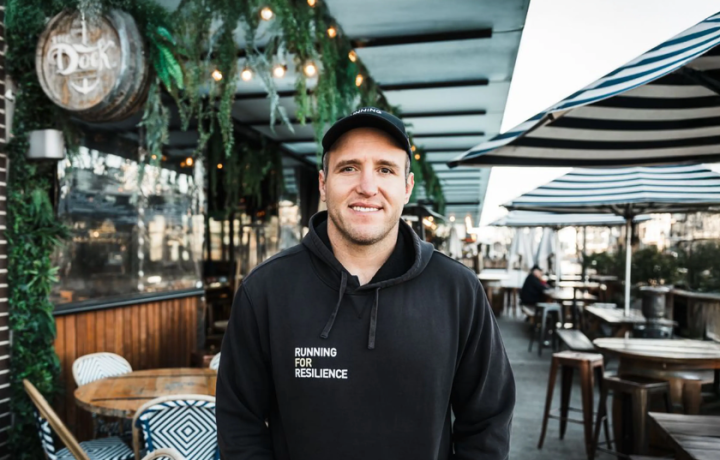
In 2019, Matthew Breen and former rugby player Ben Alexander had a simple plan: organise a single group run for mental health, then head to The Dock in Kingston for some well-deserved free pizza.
Fast forward to today and what began as a casual catch-up has blossomed into a much-loved local movement, drawing hundreds of Canberrans to weekly sessions across the city to pound the pavement, share a laugh and check in on each other.
Running for Resilience, or R4R, has become so successful it’s even expanded to Newcastle (and despite the name, activities now stretch beyond running to include everything from crafty get-togethers to pickleball).
Now, the group’s social impact has the official scientific backing to prove it, thanks to a study by Dr Joanna Tweedie, Dr Annaleise Naylor and Dr Andrew Flood from the University of Canberra Research Institute for Sport and Exercise.
Intrigued by R4R’s rapid popularity, the team conducted more than 25 hours of interviews with participants.
Joanna says the findings revealed the group’s success is thanks to a “simple but powerful recipe.”
“Firstly, R4R is about building meaningful social connections: the time and the space at The Dock or the coffee shop after the activity allows for this in a way that is distinct to a standard exercise group,” Joanna says.
“Another key mechanism is what researchers describe as social identification. The mission and shared purpose at R4R means that people can be part of something bigger than themselves, and it provides the opportunity for people to be active together in a way that is informal, non-competitive and easy to access.
“Another important feature is allowing for reciprocal caring; for example, people are cared for and they can care for others. We know from other research that this reciprocity is very powerful for mental health and wellbeing. People gain benefits not just from receiving support, but from feeling valued and able to contribute to the wellbeing of others.”
Joanna says the interviews allowed the team to hear the incredible stories of people whose lives have been impacted by R4R.
“Participants shared stories of how R4R helped them through difficult periods of transition; whether that was moving to Canberra, relationship breakdowns, grief or career transitions,” she says.
“It has been significant to hear how the consistency and dependability of R4R gives people comfort and assurance to face future challenges. One person spoke about significant challenges they had faced and said: ‘If I ever experience that again, I know I won’t be alone.’ We cannot put a number to just how important that is for someone.
“It was also very refreshing to see the diversity of the community with a lot of different ages (from university students to retirees) and different professional backgrounds coming together at R4R.”
Ben says the stories uncovered by the research team prove just how powerful connection and belonging can be.
“Professor Tweedie and the UC team’s research gives real weight to the community mental health approach we’ve stumbled across at R4R,” he says.
“We couldn’t be prouder to work with them, and hope that partnership continues for many, many years to come.”
The team have presented their research at conferences across Australia, the United States and the European College of Sport Science in Switzerland, and recently received an award for population health at a Canberra Health Annual Research Meeting.
“The award was positive recognition for the rigour of the work and the underlying message that community‑led initiatives can contribute to more connected, preventive models of allied health care in the ACT,” Joanna says.
While suicide rates in the ACT have dropped 44 per cent from 2021, now sitting below the national average, Ben says his goal is to get the number “down to zero” by 2033.
“Hopefully, Canberra can show what’s possible when a whole city works together to prevent suicide.”
Find out more: runningforresilience.com