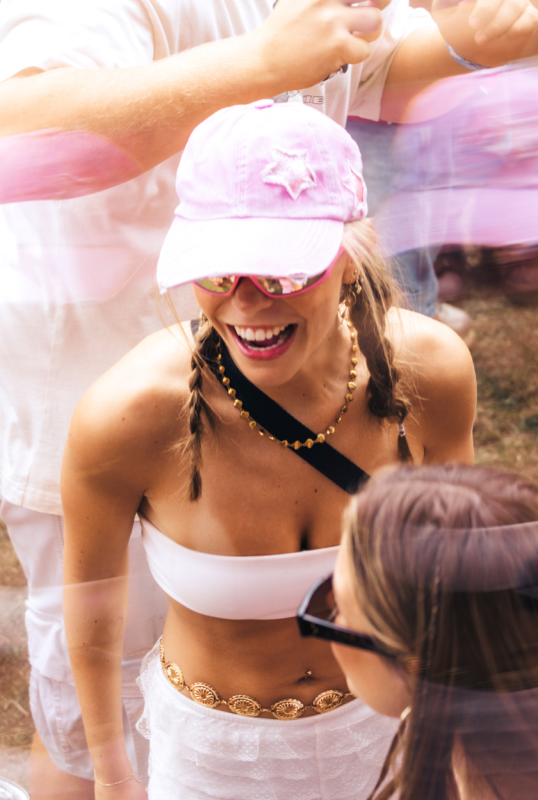
Golden Days is Canberra’s newest music and wine festival, and it’s set to take over Patrick White Lawns on Saturday 28 November.
Golden Days is the latest event from Decibel Creative – the creative minds behind the Digi Culture & Music Festival, The Times Festival, and the occasional warehouse and street party.
Promising “music, wine and good times”, Decibel Creative co-founder Ben Amando says the event is about bringing back that feeling of summer festival season — the music people know and love, good wine, good food and a beautiful setting.
“Golden Days came from seeing a gap in the market for people who still love going out, dancing and experiencing music, but are looking for a different kind of festival experience,” explains Ben.
“We wanted to bring back that feeling of summer festival season – a great lineup, good wine, good food and a really good energy – in one of Canberra’s most iconic locations.”
Featuring iconic Australian DJs, producers, and musicians who have helped shape the country’s club and dance culture over the past two decades, the line-up reads like a setlist from a touring festival packed with 2000s/2010s dance music. It includes the likes of Hot Dub Time Machine, Rogue Traders, Sgt Slick, Minx, Anna Lunoe, Dirty South and Touch Sensitive.
Decibel Creative also wanted Golden Days to feel as ‘Canberra’ as possible, including local performers like Ashley Feraude and Offtapia in the lineup.
Add in an iconic lakeside venue and you have a festival that not only pays tribute to the city, but to Australia’s music legends.
“It kind of touches on a little bit of nostalgia – it’s like the triple j era is coming back to the shores of Lake Burley Griffin,” says Ben.
“What we wanted to do here is bring a scenic, really Canberra environment that’s close to water, that’s close to landmarks.”
And of course, it’s not a festival without food. Still curating what food trucks will be there on the day, Ben says attendees can expect “all their local favourites”. As for the drinks? Picture sipping a rosé in a dedicated wine tent while Rogue Traders rock out on stage.
“Because we’re trying to celebrate the region and the location, another idea for this event was to bring some of the key local wineries to a more central location,” explains Ben.
“We’ll be working with a number of wineries in the region, bringing them in here and having a couple of big wine tents so they can show their offerings, which will be really cool.”
As for the event name? It’s a nod back to the golden days of festival season – flower crowns and Doc Martens optional.
“It’s about bringing those acts that people love already and combining them with food, wine, and a really nice period of the year to celebrate,” says Ben.
“Everyone is welcome. The lineup definitely taps into that iconic triple j and Australian dance music era, but ultimately, it’s music people know and love. We want Golden Days to feel familiar while still being something completely new for Canberra.”
Tickets go on sale at 12 pm on Thursday 10 September.
THE ESSENTIALS
What: Golden Days When: Saturday 28 November, 12 pm – 10 pm
Where: Patrick White Lawns, Queen Elizabeth Terrace, Parkes
Tickets + more information: goldendays.dance
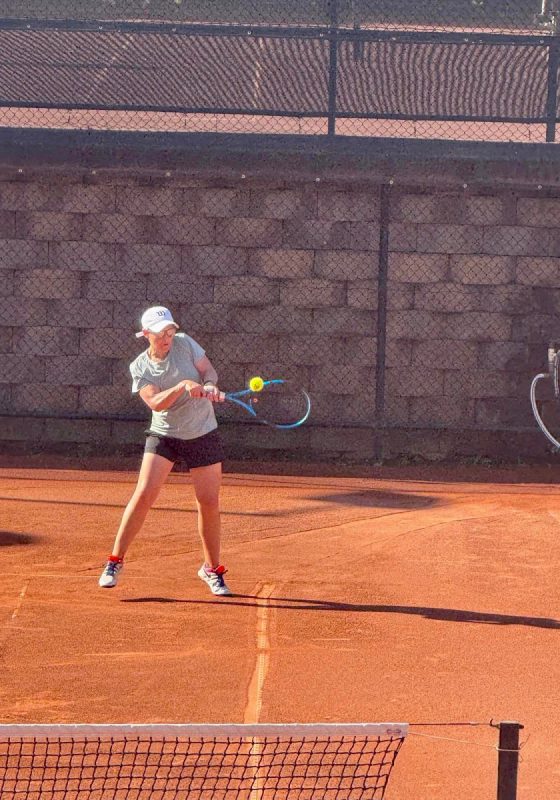
Stephanie Bayley-Nelson has been chasing the feeling of a clean forehand for as long as she can remember.
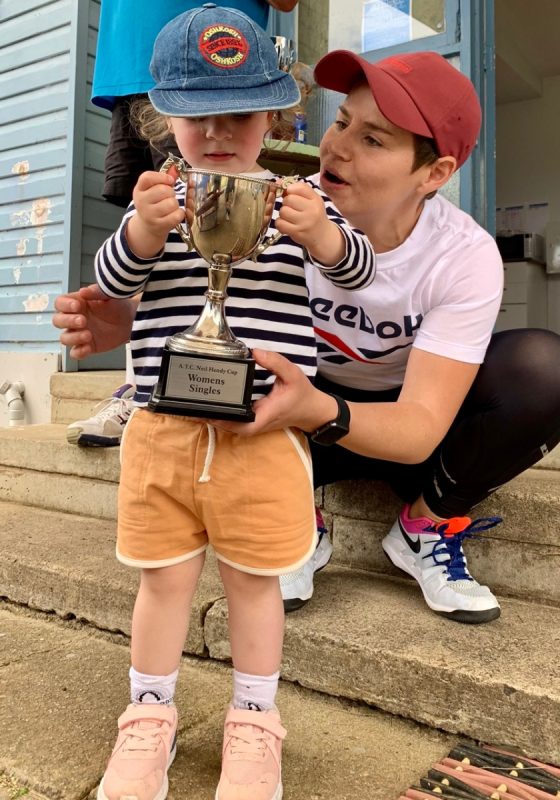
She first picked up a racquet at three-years-old, and tennis has always been part of the rhythm of her life – even if the thought of taking the podium in an international tournament felt like a far-off dream.
Now, after years of training, competing, juggling work and family, and refusing to let the dream fade, the Canberra local has been selected to represent Australia at the Masters Tennis Championships in Tokyo in November 2026.
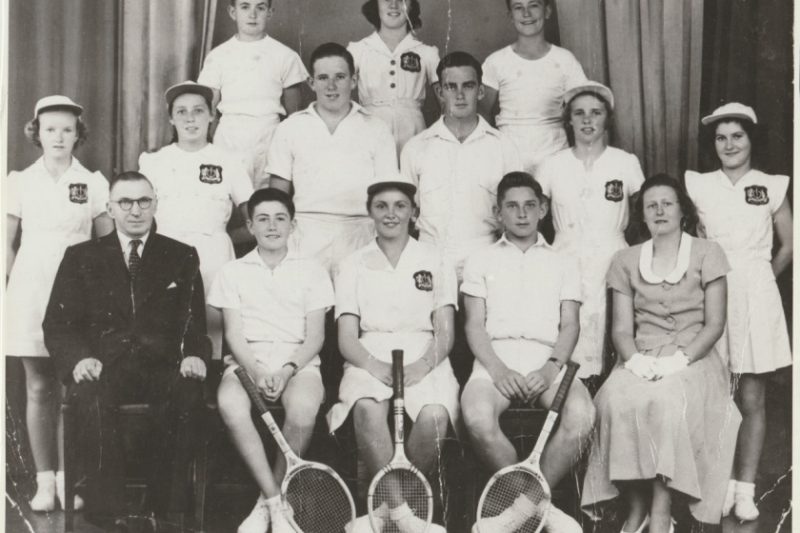
For Stephanie, wearing the green and gold is not just a personal milestone, it’s a deeply emotional family moment. Her late Nanna Evie was a talented tennis player who once played with Australian great Ken Rosewall and was herself selected to represent Australia. But as one of nine children, Evie’s family could not afford to send her overseas.
The NSW tennis team in the early 1950s, featuring Ken Rosewall (front row, first boy from the left) and Nanna Evie (second row, second girl from the right).
Decades later, Stephanie has the chance to step onto the international stage in her grandmother’s honour. Every training session, match and sacrifice now carries that legacy with it and the hope that this time, the opportunity can be taken.
The championships will take place in Tokyo in November 2026, where Stephanie will compete as part of the Australian Women’s 35 team before staying on to compete in the individual World Championships.
“There have been plenty of periods when I’ve parked my first love (of tennis) to pursue other loves – like different sports, study, travel, friends, building my own little family,” she says.
“I didn’t play tennis for a few years through IVF, pregnancy and postpartum because I just didn’t have the time, energy or space for it. Tennis wasn’t my priority at that point, and I didn’t want to force it – I knew it would be there waiting for me when I was ready.”
But the road to Tokyo comes with a significant financial challenge. While Tennis Seniors Australia is providing a small contribution, Stephanie’s campaign will be almost entirely self-funded. As a wife, mum to a five-year-old, and full-time school psychologist with the ACT Education Directorate, she is balancing the demands of elite preparation with the everyday responsibilities of work and family life.
That is why Stephanie is calling on the Canberra community to help her get to Tokyo. Donations can be made through a fundraiser supported by the Australian Sports Foundation – with donations of $2 or more being tax deductible.
Every contribution will help Stephanie carry a family dream onto the court, represent her country with pride, and show the next generation – including her daughter – that sporting greatness is possible at any age and that some dreams do come true.
“It’s such a privilege to have been selected. I know I’ll feel very proud (and maybe a little emotional) wearing the green and gold – it feels bigger than tennis, it’s about representing my country and there’s a great honour that comes with that. I really want to do my country and family proud!” she says.
“It also means so much that I’m able to take this opportunity my Nanna Evie couldn’t. I can’t help but feel close to her when I’m on the court – I often hear the things she used to say to me before or after a match. So in a way it feels like she’s coming with me. I’m doing it for her too.”
A little while ago, we teamed up with local building designer and author Adam Hobill to ask our community a simple question: what do you wish someone had told you before you started your renovation or build?
The responses were candid, amusing, and cathartic for some. Hidden costs. Variations. The difficult task of finding a builder you can trust. And, our personal favourite, whether the whole experience would leave you with a home you could live in and a marriage you could live with.
We shared the themes with Adam, who has spent more than 30 years helping Australian families navigate exactly this process. His response? “This is exactly why I’m updating the book.”
That book is Nail it!, a plain-English guide to the home design and building process that Adam first published in 2014. A second edition is in the works, and your responses are shaping it directly. Here is what Adam wants to share with us, based on what you told us.
The real cost conversations nobody has with you
Ask a builder for a ballpark figure, and you’ll likely get one. Getting the full picture is much more difficult.
The costs that most commonly catch people by surprise aren’t usually the big-ticket items. They’re the ones that accumulate quietly: energy efficiency upgrades now required by law, bringing old electrical work up to current codes, engineering reports, approval fees, landscaping items that somehow didn’t make it into the quote, the gap between the allowances your builder included and what things of decent quality actually cost when you go to buy them.
One of our readers flagged “hidden fees and the cost of essentials such as heating, cooling and energy efficiencies” as her biggest stress. From 2024, all new Canberra homes must meet a minimum seven-star energy efficiency rating, and extension and renovation projects also get caught up in this, “in a very messy Canberra distinct way” according to Adam. This results in significant changes that affect insulation, glazing, orientation and often the overall design solution. If your designer or builder hasn’t raised this with you early in the process, that’s a conversation worth having now, not later.
Adam’s advice: before you fall in love with a design, ask your designer to walk you through the full cost picture. Not just construction, but approvals, compliance, landscaping and a contingency buffer suitable for your project depending on complexity and scope.
‘Variations’: the term that should come with a warning label
If there’s one word that resonates with renovators far and wide, it’s this one: “Being stung on variations!” as one reader wrote.
A ‘variation’ is any change to the scope of work after the contract has been signed. Some are unavoidable: work begins on the roof and you find something unexpected. But many are entirely preventable (or at least predictable), and they’re almost always expensive.
The most common source of preventable variations is lack of insight and understanding of the existing building and incomplete documentation at the quoting stage. When a builder doesn’t have a clear understanding of the scope and your selections, right down to the flooring type, the robe fit-out and the door hardware, they’ll make an allowance based on their best guess. When your taste turns out to be different from their guess (and it usually does), the difference becomes a variation. And variations don’t come at cost price; they generally attract an additional 20 per cent margin under the contract.
Adam ensures the solution isn’t complicated, but it does require a thorough approach to the design and documentation process, and discipline when it comes to finalising your selections. Before your project is quoted, you need a schedule that makes allowance for every finish, fitting and fixture you intend to include. It can be time-consuming and overwhelming, but a good designer should be able to assist as part of their service, and it is significantly less costly and stressful than managing a string of variation claims mid-build. This document, which Adam refers to as an Inclusions Schedule, is the single most practical thing you can prepare before you ask anyone to quote your project. It protects you at the quoting stage by creating a level playing field and it protects you during the build by giving you a written record of what was agreed and included in the contract.
Finding a builder you can trust
“Finding the right tradesmen”, was another common thread of anxiety for our readers.
The building industry in Australia is not short of skilled, honest, hardworking people. But it’s also an industry that has seen significant stress in recent years, with a higher-than-usual number of firms in financial difficulty. Adam points out that’s not meant to alarm. It’s said because the way you choose a builder matters more now than it ever has.
References are not optional. Recommendations are valuable. Asking to inspect completed work in person is not too much to ask, nor is speaking to those clients. What you’re looking for isn’t just quality of finish; it’s whether the homeowner felt informed, respected, and fairly treated throughout the process.
Ask your builder directly about their current workload and pipeline. Confirm they carry building insurance and request confirmation in writing. Ask how they handle variations, specifically, whether they’ll notify you in writing before proceeding with any change that affects cost. A builder who answers these questions confidently is a builder worth talking to further.
Adam highlights another common trap which has earned its own chapter in his book:‘Beware the quote you were hoping to receive’. Simply put, a significantly lower quote when compared to two or more other quotes should be treated as high risk. A consistent grouping of quotes usually indicates a fair and reasonable cost to complete the project, and a dramatically lower quote will often have a different scope, hidden costs, and omissions, meaning you are not comparing apples with apples.
If something feels off? It usually is. Trust that instinct.
Adam Hobill is a building designer with more than 30 years of experience and the author of Nail it! — a guide to the home design and building process for Australian homeowners. The second edition is currently in development. To find out more, visit adamhobilldesign.com.au
With traditional dishes, plans for palm wine and a deep love of culture, Nigerian friends and chefs Silverline Uzomanze and Promise Rose Okuchukwu want their new Civic venue, Unique African Restaurant, to be more than a restaurant.
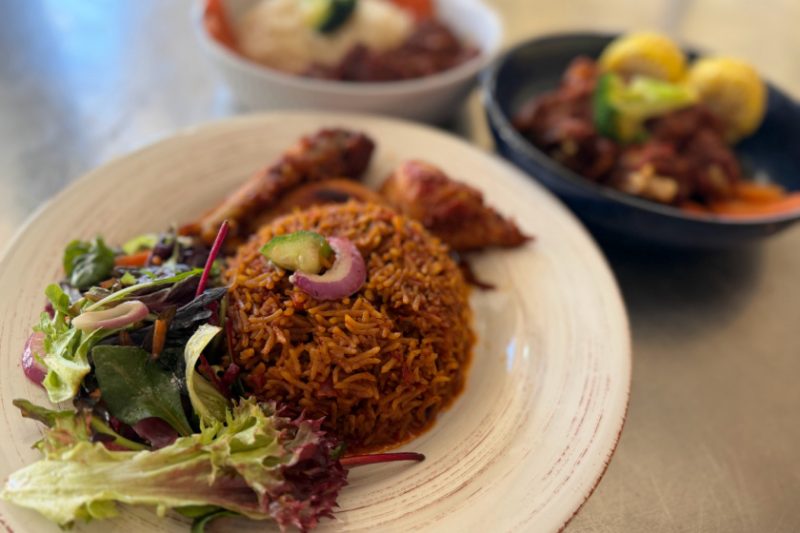
For Silverline, a plate of jollof rice is never just rice cooked with tomato, capsicum, onion and spices, and fufu shared with hands is never just a meal – it’s connection and a taste of home.
So, when you arrive at the restaurant on West Row in Canberra’s historic Melbourne Building, understand you will likely get more than just a taste of Africa, you may get a cultural immersion.
“I’m a lover of culture,” says Silverline, who came to Australia from Nigeria in 2021. “I want Africa to be out there, because I feel Africa is amazing and there are a lot of things people don’t know about Africa. There is no better way to tell the story than through good food.”
The restaurant will seat about 65 people, with booths down one side, tables through the dining room and a courtyard-style lounge space for private functions and organised events. But Silverline and Promise are imagining something bigger than lunch and dinner service, they want the venue to become a cultural destination in the middle of the city.
On weekends, they plan to host cultural nights celebrating different African countries, with food, music, dance and conversation. A Ghana night, for example, might include Ghanaian dishes and a singer sharing stories about Ghanaian culture. A projector will show African dance and cultural performances, giving diners another way to connect with the traditions behind the food.
“Every country and every state in Africa has a unique story,” says Silverline. “That’s what we want to tell.”
The menu will centre on traditional African dishes, especially the Nigerian food both women know and love. Diners can expect jollof rice with turkey or chicken, rice and beef stew, goat meat, grilled fish, grilled lamb, egusi soup, efo riro, and fufu. For those new to African food, the team plans to offer a buffet every second Saturday, giving customers the chance to taste a wide variety of dishes before returning during the week to order their favourites.
Silverline’s joloff rice
Breakfast and lunch are also part of the plan. From 7 am, city workers will be able to grab coffee alongside African snacks such as fish rolls, African meat pies and puff puff, with takeaway lunches and delivery through Uber Eats intended to make the food as accessible as possible.
And once their liquor licence is approved, they hope to serve alcohol too – including palm wine, a traditional drink made from palm tree sap that Silverline describes as sweet, slightly sour and gently fermented. It is part of a dish-and-drink pairing she is especially excited to introduce – cow leg served in red palm oil sauce with oil bean, presented with palm wine in a local wooden cup.
If nothing else, this restaurant seems intent on breaking the stranglehold of Italian, Asian and Indian restaurants on that side of Northbourne Avenue.
For Promise, who arrived in Australia in 2024, the restaurant is the next step in a career built around cooking. A private chef in Nigeria, she continued cooking after moving to Canberra, catering private events and building her own food business. The two women met through Canberra’s Nigerian community and discovered they worked well together while cooking for events. Their big break? Like many emerging local food brands, it was the National Multicultural Festival.
For Canberra’s African communities, the restaurant will offer a taste of home. For others, it will be an invitation to try the famed African dish of jollof rice for the first time, or to experience a steaming bowl of Pepper Soup, featuring meat or fish in a light broth of uziza seeds, ehuru, calabash nutmeg, scotch bonnet, scent leaf, onions and seasoning. Perhaps an African breakfast of Akara and Pap might hit the spot, combining crispy bean fritters made from seasoned black-eyed peas, served with smooth, creamy Nigerian pap. Whatever the order, it promises an adventure.
In a city that prides itself on being multicultural, Silverline and Promise hope their new restaurant will become a place where people do more than eat. They hope they leave with a fuller understanding of Africa – and maybe discover a new favourite dish.
THE ESSENTIALS
What: Unique African Restaurant
Where: 43/24 West Row Civic
When: 7 am to 9 pm Tuesday to Sunday
Web: uniqueafricanrestaurant.com.au
Yes, we are literally doing the Nutbush to promote a conversation about Canberra’s city limits. I’m not sure whether Tina Turner ever imagined her song being used to talk about urban sprawl in Canberra, but I like to think she would approve.
The idea comes from the Save Our Western Edge community campaign, and behind the fun is a deceptively simple question: as our city grows, where should it end?
The Western Edge is around 9,800 hectares of bushland stretching along the Murrumbidgee River and bordering parts of Belconnen, Molonglo Valley and Weston Creek. It includes woodlands, grasslands and river corridors and provides habitat for threatened species and other wildlife. But its value isn’t only ecological. The bush is part of the way we experience Canberra.
Our suburbs don’t feel entirely separate from nature because, in so many parts of Canberra, they aren’t. The bush weaves around and through them. We walk in it, ride through it, picnic in it and escape into it. It is part of the reason the description Bush Capital still feels like more than a marketing slogan.
And perhaps because the bush is always there, we sometimes take it for granted.
Canberra is growing. We need more homes, and we need to plan for a bigger population. But good public policy is about more than identifying the next piece of land to develop. It is about how we accommodate growth sustainably, make better use of the city we already have and protect the natural environment around us.
Does growth really have to mean growing out and beyond our city limits?
That is the much bigger question hiding underneath a fairly simple community event in Civic Square.
What kind of Canberra are we planning for in 20 or 30 years? How do we provide the housing people need and build connected, liveable communities while protecting the natural environment that has always been part of Canberra’s identity?
I don’t think those ambitions need to compete.
Good planning should allow us to do both – to accommodate more people within our existing urban footprint while making deliberate choices about the places we want to protect for generations to come.
Of course, those aren’t questions that will be solved by several hundred people doing the Nutbush on a Saturday morning.
But perhaps that’s not really the point.
What I love about this event is that it makes a serious conversation accessible. You don’t need to understand planning policy. You don’t need to consider yourself an environmental activist. You don’t even need to be particularly good at the Nutbush.
You just need to turn up.
And really, is there a more democratic dance? You don’t need a partner or dance training. Someone plays those opening bars and Australians instinctively start arranging themselves into lines. For anyone whose muscle memory isn’t quite what it used to be, there will even be a practice run before the main event.
Bring your children. Bring your friends. Bring your parents. Bring the person in your life who insists they are an excellent dancer despite considerable evidence to the contrary.
And if dancing isn’t possible or isn’t your thing, there will be a seated, shaded area so you can still come along and be part of it.
Because this is what community can look like.
It doesn’t always have to be a meeting, a submission, a petition or a debate. Sometimes it is simply people showing up for something they value and having a bit of fun while they’re doing it.
So, on Saturday 19 September, I’ll be dusting off my Nutbush moves and joining a few hundred other Canberrans in Civic Square. I cannot promise elegance. I cannot promise coordination. But I can promise enthusiasm.
And if there was ever a very Canberra way to celebrate our Bush Capital, surely it’s several hundred of us doing our very best Nutbush together for something that matters.
So, Canberra, let’s find 350 people. Let’s fill Civic Square. Let’s break the record.
Canberra’s Biggest Nutbush: Line Up for Our City Limits is on Saturday 19 September, 11 am–12 pm, at Civic Square. Everyone is welcome and participation is free. More than 350 people are needed to make it Canberra’s biggest Nutbush. Register through Humanitix here.
THE ESSENTIALS
What: Canberra’s Biggest Nutbush: Line Up for Our City Limits When: Saturday 19 September, 11 am–12 pm Where: Civic Square, City Tickets + more information: events.humanitix.com
With the rise of BookTok, Lit-Girl culture and the popularity of book clubs, the dream of becoming an author is no longer reserved for the literary elite. Here, Online Editor Erin Cross asks a simple question with a complicated answer: Why does it feel like everyone wants to write a book?
A strange thing happened to me the other week – in the space of three days I happened to meet four aspiring authors. One was a close friend, one was a former intern, and the other two were mutual acquaintances. Each had interests spanning different genres, and all were from different backgrounds; the one thing they had in common was that they were all young women aged between 20 and 35.
It feels like everyone wants to write a book.
Scroll through your LinkedIn feed, open Instagram or grab coffee with an old friend, and it feels like you’ll hear the inevitable announcement: “I’m writing a book!”. When did writing a book go from a lifelong, gruelling artistic pursuit to the new universal bucket-list item?
Canberra-based Australian Chinese writer, editor and literary advocate Emma Pei Yin believes that people have always wanted to tell stories – what has changed is the visibility of authorship.
“Writers are no longer encountered only through a photograph on a dust jacket. They’re on Instagram, TikTok, podcasts and festival stages, discussing their routines, advances, rejections and stationery. The profession feels less mysterious and therefore more imaginable,” she says.
“Of course, wanting to have written a book and wanting to write one are two very different desires. One involves a beautiful object with your name on it. The other involves spending three years wondering whether a fictional dinner scene has any reason to exist and if a character has nodded one too many times.”
From solitary craft to social aesthetic
Reading culture has always been shaped by popular culture. From platforms like The New York Times to celebrities like Reese Witherspoon, public figures have long dominated what people should be seen reading. But with the introduction of BookTok came ‘Lit-Girl’ culture – and it’s completely changed the way people see authorship.
However, Emma warns that what people see on social media is completely different to the reality of working as an author.
“The contemporary literary world can look like a very attractive social universe from the outside. There are book launches, linen dresses, candlelit readings, tote bags, European residencies and photographs of people appearing beautifully exhausted beside annotated proofs,” she says.
“There’s also a class dimension to the ‘lit girl’ fantasy. The image often assumes a person has the time, money and cultural access to attend festivals, buy hardbacks, work from cafés and participate in an aesthetic of cultivated leisure. That lifestyle isn’t the reality of most writers.”
Emma published her debut novel When Sleeping Women Wake in 2025, and the historical fiction novel has made waves in Australia’s literary scene. Featured in Vogue Australia, Cosmopolitan and even Glamour UK, her work has been named a ‘must-read’ multiple times by various media companies. But with the average annual income for practising authors estimated at $18,200, even with acclaim, writing does not offer a sustainable life.
Add in the pressure for authors to become miniature media companies in their own right and the reality of writing a book is harder than it seems.
“You’re expected to write the book, explain the book, package your personality, film yourself explaining the book, respond to comments about the book and somehow begin the next book while doing all of this. Some authors genuinely enjoy content creation and are brilliant at it. Others became writers precisely because they prefer spending time alone with imaginary people,” says Emma.
“There’s also an uncomfortable inequality in who is expected to be visible. Women, writers of colour and queer authors are often asked to turn their identities into accessible content. You’re not merely promoting a novel. You’re expected to explain your culture, your politics and your trauma.”
MARION Chair and Vogel Award-winningauthor Emma Batchelor has been a part of the literary scene for many years. She believes that it’s incredibly important for people to interrogate why they want to write before jumping in headfirst.
“Is it to achieve fame? Financial success? Is it to find community? To nurture a creative outlet? To gain respect? I think understanding what lies behind your desire to become an author will help point you toward the right path to achieving your idea of success,” she says.
“Research from the Australian Society of Authors has revealed that it is almost impossible to make a living wage as a writer. Achieving global success is almost like winning the lottery.”
Through her work with MARION, Emma B says that the number of people interested in writing in Canberra and the surrounding region has remained consistent. What she finds interesting is evolution in the types of people interested in writing and the works they want to share.
“I am also having more conversations with young femmes about writing and art making lately, and this is also reflected through engagement in our programs at MARION,” she explains.
“I feel like several factors are contributing to this. Appetites for reading and writing have shifted since the pandemic; online mechanisms for sharing writing and connecting with readers have become more prevalent; there seems to be an increased desire to connect through creative expression; and intriguingly, writing seems to be particularly fashionable at the moment. At least in my corner of the internet.”
Accessory or intellect?
In June 2023, Dua Lipa made headlines when she launched her own book club, Service95. Then, in 2024, Miu Miu made books the new fashion status symbol, hosting a multi-day event in Milan with its inaugural Literary Club. Jump forward to 2026, and Dior has launched a bag collection celebrating literary classics while Chanel is focusing on fairy tales in its Fall/Winter 2026 Haute Couture show.
The rise of books and their link to celebrity – as well as fashion houses – has been meteoric. But with books becoming the basis for accessories and events, are they simply the new status symbol – a way to perform intellectualism?
“Throughout history, the possession of books – both as objects and as containers of knowledge – has been connected to wealth and privilege, which in some ways makes them a natural fashion accessory. They too connote exclusivity, just like a Miu Miu bag,” says Emma B.
“There is also something appealing in the juxtaposition of these art forms; one is often seen as feminine and frivolous while the other is more often perceived as intellectual and rigorous.”
Emma also agrees that books can be seen as an accessory that signals intellectuality.
“Books have always had symbolic value beyond their contents. A wall of leather-bound volumes once communicated wealth and education. Today, a carefully positioned paperback beside a handbag can communicate taste, politics, sensitivity and a very specific kind of leisure. But performance and genuine engagement are not mutually exclusive,” she says.
“Human beings perform identity through everything we consume. Clothes, films, restaurants, music, even reusable water bottles. Books are not somehow corrupted because people also use them socially or aesthetically.”
For both women, the more interesting question is: what happens after the performance?
“Did you read the book? Did it unsettle you? Did it make you reconsider something? Or was it merely an accessory in the photograph? I’m not terribly scandalised by someone buying a book because the cover looks good on their coffee table,” says Emma.
“The problem begins when books are treated as evidence of moral or intellectual superiority rather than invitations to think.”
“I think the degree to which that intellectualism is read by others might depend on the book and its medium,” adds Emma B.
“I know I feel a bit smug wearing a killer outfit while reading my weird little book on the tram among a sea of people on their phones. Am I actually cooler? Who’s to say.”
For 29-year-old aspiring author Grace Barbic, this performance is frustrating. While she is happy that more people are interested in writing, she says that she can’t help but question whether people actually want to write a book or be seen writing a book.
“Books are now chic,” she says. “It can make the industry look very misleading.”
“It would be great if it could translate into infrastructure or support, like writers’ grants, residencies or basic income for artists while their work is in development.”
Finding connection in the ‘romantasy boom’
Statistics show that Australians love reading. With over two-thirds of the population (aged 15+) reporting that they read for pleasure and Australian bookstores selling around 69 million books a year, reading has become one of the most popular and common pastimes.
Grace believes that the rise in the interest in authorship can be directly attributed to the rise in the popularity of reading.
“Overall, it’s a good thing, but it’s less about people wanting to be authors and more about people getting interested in books again,” says Grace.
“People are being surrounded by books and, like anything, it makes you want to do it yourself. The great thing about now is you can just go and write a book. But I do think that there’s a difference between wanting to be an author and wanting to write a book.”
Grace is firmly in the earlier camp. Currently working on two ideas, she has been an aspiring author since her early 20s, applying for international residency programs. She says that while more people want to write, she’s not sure if it will actually translate into more books on the market.
“It’s also very genre-specific. Romantasy in particular has had a really big boom because people love it and they want to join in.”
According to Google Trend data, the term ‘romantasy’ has had over a 5,000 per cent increase in interest in Australia over the past five years.
A literary hybrid that fuses fantasy’s mythical worlds and supernatural beings with the emotional pull (and steaminess) of romance, the genre is largely led by female authors with names like Sarah J Maas at the helm.
As the saying goes, you can’t be what you can’t see, and with more women being published, Grace believes that the romantasy boom can be thanked for the sudden spike of interest.
“I’m 30 next year, and it’s a time when you’re reflecting on your life – especially when you are starting to think about having children, getting married or starting the next stage in your life. For a lot of women it’s an outlet,” she says.
“I also think women have this innate desire to share. I’m thinking of the classic authors like Austen, Woolf and the Brontës – they just had this innate desire to share. I think a lot of women are reading those stories and finding connection with them.”
Emma also believes that writing offers something particularly powerful to young women.
“It allows them to move from being observed to being the observer. Women are raised inside cultures that constantly narrate them, what they should look like, desire, tolerate and become. Writing gives them the authority to interrupt that narration,” she says.
“There is also a political dimension. We’re living through renewed attempts to control women’s bodies, queer lives, racial histories and reproductive choices. Writing becomes a way of recording what institutions would prefer to simplify, sanitise or erase. A novel can say, ‘This happened. This interior life existed. You do not get to reduce it to a headline’.”
Human authenticity in an AI era
In a world increasingly flooded with AI content, more people are craving and searching for human authenticity. In a story about The Era of The Bookish Influencer Vogue Business reported that knowledge-seeking is also increasingly becoming an important shared activity. Linked to the rise of book clubs, it turns out that Gen Z are gravitating towards communal spaces where intellectual life is embedded.
For many people, writing is also an urge that stems from a desire to create something permanent and human.
“Personally, I write to connect. I write to express myself and to explore feelings and ideas, and in sharing what I create, I hope to find connection and community. This desire is inherently human, I think,” says Emma B.
“I engage with art to feel something, to learn something and to be part of something, and I don’t believe AI-derived content will ever be able to ignite those responses.”
Emma also agrees that the desire to create is real, but permanence is increasingly difficult to promise.
“AI can produce language quickly. What it cannot possess is a life. It has no body, inheritance, shame, longing, family mythology or memory of being misunderstood in a particular room,” she says.
“The value of human writing is not that every sentence is perfect or entirely unprecedented. It is that someone risked something in making it. They chose what to remember, what to conceal, what to distort and what they could finally bear to name. I suspect many people are drawn to writing because they feel overwhelmed by disposable content.”
However, with the rise of AI comes another layer: it’s even more accessible to write a book. Through her own observations of the industry and her own experiences, Grace believes this is not necessarily a good thing.
“I think while there are people who have a desire to create something human and create something beautiful or just create for themselves, there will also be people who use AI as a tool to do it for them,” she says.
“Anyone can write a book, which is fantastic! But anyone can write a book, and that is also worrisome…Humans want things written by humans, but I wouldn’t be surprised if we see a rise in books that are AI-generated in some way.”
Craft over clout
Anyone who writes knows that the act of writing itself is unglamorous. Often, it’s solitary, emotional and hard. But it’s also rewarding, cathartic and a pursuit that shouldn’t be gatekept.
As books and writing continue to be seen as ‘chic’, it highlights something important: whether a person is published or not, creating a piece of work is exactly that – work. And it deserves to be celebrated.
And while she warns that we should not romanticise authorship for a multitude of reasons, Emma wants society to stop treating the desire to write as embarrassing or delusional.
After all, as Robin Williams said as John Keating in Dead Poets Society, “We don’t read and write poetry because it’s cute. We read and write poetry because we are members of the human race.”
“People are permitted to learn pottery, run marathons or play music without immediately being asked whether they will become commercially successful,” says Emma.
“Writing should also be allowed to be a practice, not only a product.”
Canberra-based award-winning actor Andrea Close has spent a fair bit of her life in front of cameras – which has taught her that good lighting is not a luxury. Here, she shares her truths about turning 59, ageing, performing, love and life – and the peculiar indignity of comparing your life with an icon.
There are a surprising number of similarities between Nicole Kidman and me.
We’re both 59.
We’re both tall.
We’re both Australian actors.
We’ve both been divorced twice.
And we have both known Keith Urban in the Biblical sense.
I feel it is important, particularly in the interests of journalism, to establish the facts before they become distorted by celebrity, wealth, talent or an Oscar.
It is worth noting that Nicole and I have both recently turned 59, which seems significant. Although, looking at the photographs from her recent British Vogue shoot, I am beginning to question whether we have been on the same planet for those 59 years.
Nicole spent her birthday celebrations travelling through Portofino, Ibiza, London and Iceland, posing in designer clothes, looking windswept and impossibly beautiful.
I spent mine wondering whether I had enough protein-enhanced yoghurt to last the weekend.
The problem with celebrity birthdays is that they can make you feel you’ve somehow failed at ageing.
The difference is that Nicole Kidman has staff to make sure she looks like she knows exactly what she’s doing.
I have a staffy. And frankly, he’s no help whatsoever!
Nicole won an Oscar. She has worked with Stanley Kubrick, Sofia Coppola, Jane Campion and Baz Luhrmann.
I have worked with some extremely talented directors, actors and producers and remain disproportionately excited whenever someone says, “We’d like you to audition.”
Nicole gets offered film roles. Big ones. And she’s become exceptionally skilled at creating work for herself.
My most recent gig was a television commercial for seniors’ insurance.
So, in fairness, I too am creating work for myself.
I get emails saying:
“Hi Andrea, just wondering if you’re available next Tuesday for a commercial…”
And I am.
I am always available next Tuesday.
You can have decades of experience.
Stage.
Screen.
Voiceovers.
And still, when the phone rings, a tiny part of you thinks:
Please let them want me.
The men.
This is where, on paper, our lives are definitely aligned.
To a point.
Nicole and I have both been married and divorced twice.
Nicole has dated men who write songs about her.
I have dated men who should write apology letters.
And there is one similarity between Nicole Kidman and me that deserves closer examination.
We have both ‘known’ Keith Urban.
Admittedly, Nicole has known him rather more recently, extensively and exclusively.
But I refuse to let facts get in the way of a good opening paragraph.
Nicole married Keith.
I am prepared to let you draw your own conclusions about the comparative significance of my contribution to his life.
Post Keith, Nicole is photographed lounging glamorously at exclusive resorts with handsome men.
I am photographed by the security camera at Bunnings buying potting mix.
I’ve recently started Pilates.
I’m sure Nicole does Pilates.
There.
Another similarity.
Although Nicole probably finishes Pilates looking elongated, radiant and serene. Her body appears to respond to exercise by becoming more elegant.
Mine responds by reminding me that I slipped over in spilt scotch and coke and injured my knee at the Kingaroy B&S while dancing to Tears for Fears in 1986.
My knee has apparently been waiting 40 years to shout about it.
But I’m still here.
At 59, I know myself better.
I know what I like and what I don’t like.
I know the people who make me laugh and the people who drain me.
And I know that some things simply aren’t worth the argument.
Women in their fifties and beyond are not finished products.
We’re not background scenery.
We’re still working.
Still making mistakes.
Still having sex
Well…backdate that one to May 2022.
Still laughing.
Still wondering why we walked into the kitchen.
So – the inevitable question … would I like to have Nicole Kidman’s life?
Well…
Obviously.
I mean, come on.
I’d quite like the Oscar.
I’d quite like the film sets. And those handsome co-stars.
I’d quite like just one of the beautiful houses.
And I wouldn’t say no to having someone whose actual job was to make sure I never had to assemble flat-pack furniture again.
But most days I’m pretty content being me.
In my cosy townhouse — with TWO courtyards!
I have work I love.
I have stories I want to tell.
And I still get excited when the phone rings.
Perhaps, after all is said and done, the real similarity between Nicole Kidman and me is that we’re still saying yes.
Pack your bags (or at least fuel up the car) – we’re going on a café hunt.
Why? Because the best food finds are often the ones you have to travel for. We’re looking beyond the Canberra border to spotlight some must-visit regional cafés – we promise that these out-of-the-way spots deliver maximum payoff for minimal drive time. Ready for a taste test?
This gourmet deli, pantry and creperie offers the best of artisan produce, speciality coffee and French galette and classic crêpes to Braidwood.
Made with gluten-free buckwheat flour and served with a leafy side salad and Dijon mustard, it’s worth going for the galettes alone (although it’s worth noting the crêpes can also be made gluten-free). Our pick? The Braidwood Classic – cheese, bacon, black garlic aioli, avocado and egg with added potatoes.
A joint venture with Clementine Bakery in Yass, along with all the Two Before Ten classics – like their signature mushrooms on toast – at this café, you’ll also be able to get your hands on a selection of delicious Clementine Bakery goodies to take home (on Thursdays through to Sundays). And honestly, what sounds better than a Two Before Ten coffee and a Crème Brûlée Tart?
It’s Lonsdale Street meets the country, which makes Some Cafe a must-visit for anyone who loves good food.
With a short but satisfying menu that has breakfast classics like eggs on toast to a ham, cheese and tomato toastie, there’s sure to be SOMEthing for everyone (get it?). Make sure to check the cake cabinet!
Gourmet pies, potato bakes, lasagne, quiches, wraps, pastries and more – Roses Café is a must-stop destination.
Located in a heritage building, this spacious café specialises in homemade comfort food that will leave you wanting more. Perfect for grabbing something quick and easy (think crispy, crunchy, cheesy spinach and feta rolls or frittatas) or settling down to enjoy a cuppa with a well-deserved lunch break, your stomach will thank you.
There are gluten-free, vegetarian and vegan options available.
Freshly made pizza, filled focaccia, salads, Barrio coffee, wine and more – this little café is equal parts cosy and mouthwatering.
Set in the old Police Stables, Cork Street Café is only open Thursday to Sunday, and is available for takeaway or dining in. For the pizzas, gluten-free bases are available with notice and half-and-half options are available on medium and family-size pizzas (so there’ll be no need to fight over flavours).