Rome Up Late: grisly history, cinema and Richard Fidler

Posted on
Winding streets, iconic architecture and history that endures.
Though it’s been centuries since the Roman Empire relinquished its grip on the world, we’re still fascinated by the people, power and passion of the Eternal City.
From tales of egomaniacal emperors to gruesome gladiatorial feats, the streets of Rome drip with history, a slice of which Canberrans can enjoy at the National Museum of Australia’s (NMA) Rome: City and Empire exhibition.
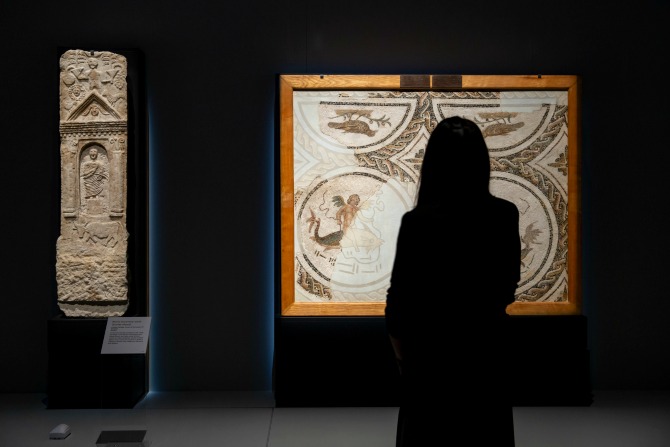
Courtesy of the National Museum of Australia. Credit line: Photo Jason McCarthy, National Museum of Australia. © Trustees of the British Museum
Created in partnership with the British Museum, Rome: City and Empire contains many artefacts never seen before outside of Europe and includes statues, frescoes and bronze cavalry masks. But you don’t need to be a history buff to know that the gilded parts of Rome also had a grisly underbelly.
It’s this side of the city that will be explored at the NMA’s Rome Up Late event next Wednesday 5 December, when the museum will host a variety of after-hours attractions, including a bar and a panel of expert speakers led by none other than Radio National Conversations darling Richard Fidler.

Female statue head, possibly of Artemis. Hadrian’s Villa, Tivoli, Italy, 2nd century CE, marble © Trustees of the British Museum © Trustees of the British Museum, 2018. All rights reserved.
Joining him will be panellist Richard Hobbs, who holds the enviable title of Weston Curator of Roman Britain at the British Museum, Dr Rhiannon Evans, lecturer at La Trobe University and co-host of the popular podcast Emperors of Rome, and the Honourable Bob Carr, academic, author and former New South Wales Premier.
With only 20 tickets left for this event (and only HerCanberra lucky enough to have access to them), make sure you get in quick using our special ticketing link: romeuplate-hercanberra.eventbrite.com.au.
This esteemed panel will be giving Canberrans a peek into the gritty aspects of life in Ancient Rome.
“For many people, Rome embodies the western ideal of civilisation, even if this is a rather romanticised view. I think anyone from the modern world parachuted into ancient Rome would get a shock,” he says.
“The overcrowded apartment blocks, the general lack of sanitation, the babble of a huge range of languages (aside from Latin and Greek), the stench of rotting food and the latrines.”

Richard Hobbs
“Contrary to popular lore, Romans didn’t really have a proper sewer system, what they built below the streets were simply enormous cesspits which were rarely cleaned out and heaving with all sorts of parasites and nasty diseases.”
Richard also notes that modern-day visitors might also be surprised by the “savagery of the gladiatorial arena” as well as the Roman’s version of medicine.
“I think one of my favourites is the belief that the dung of boars was good for treating wounds, either fresh or dried,” he says. “But if that’s not bad enough, some thought that dried boar dung mixed with vinegar was good to drink for the same reasons, it had healing properties.”
“According to Pliny, the emperor Nero was fond of drinking this because he believed he would do well in chariot races. Oh, and if you couldn’t get boar dung, pig would do instead…”
But Richard Hobbs won’t just be stunning guests with his insights into Ancient Roman life— he’ll be busting a few myths too, such as the commonly held belief that Roman feasts had a ‘vomitoria’, where guests could purge their full stomachs in order to eat more.
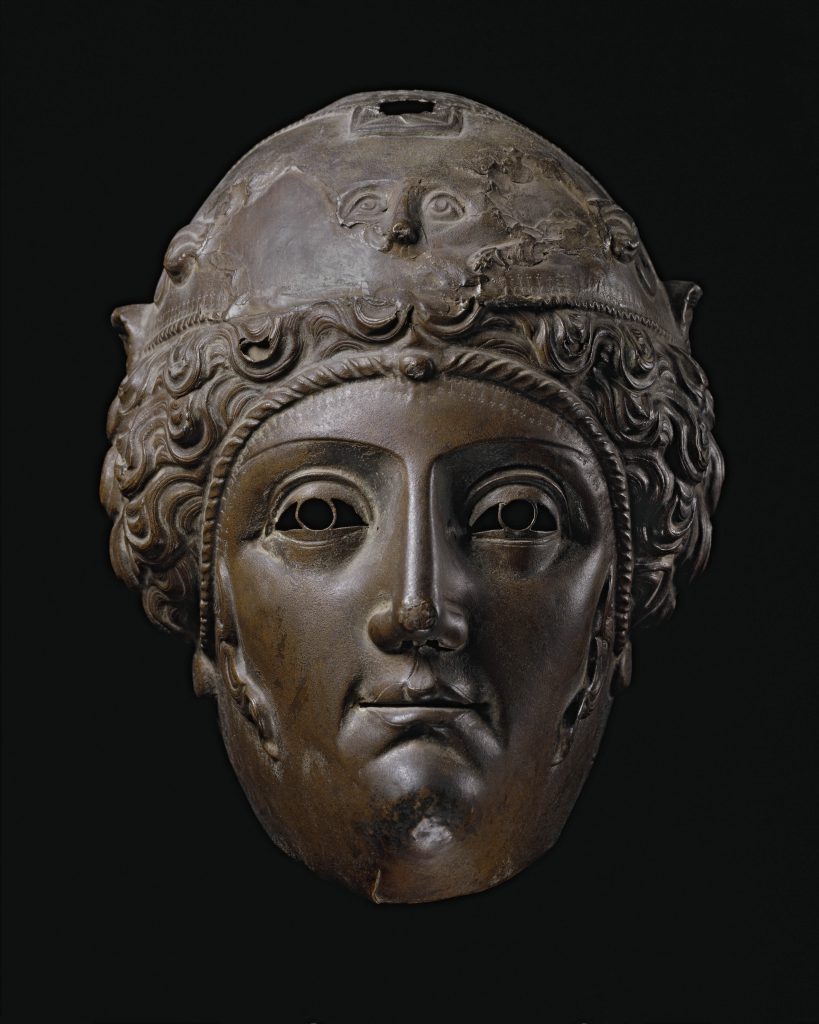
Parade helmet with woman’s face. Nola, Italy, 2nd century CE, bronze © Trustees of the British Museum © Trustees of the British Museum, 2018. All rights reserved.
“The idea that they had places to vomit in order to then consume more food and drink is a myth,” he explains. “A ‘vomitoria’ were the entry and exit passages from the theatre or amphitheatre, ‘vomiting’ out the crowd after games.”
Another fascinating fact is that Romans considered drinking wine neat “the height of vulgarity”. One to think about next time you pop open the shiraz, perhaps?
After the panel, top your night off with a screening of cult classic film Hercules Returns or a walk-through of the exhibition itself, which will stay open until 8.30 pm. The perfect chance to soak up the artefacts before the summer rush.
However, if you’re busy on Wednesday 5 December or missed out on tickets, the Museum will be holding another Rome Up Late after-hours event on Friday 18 January 2019. This final event for the series will offer a bar, a screening of 1966 classic musical A Funny Thing Happened on the way to the Forum and entry to the exhibition, with a talk to be given by Canberra’s own Emeritus Professor Elizabeth Minchin from the Centre for Classical Studies at the ANU.
Professor Minchin will be delving into the archaeological evidence and ancient texts that tell us about everyday life in Ancient Rome, including what houses looked like and what Romans did when it came to heating, lighting and water supply well as their diets and family compositions.
the essentials
What: Rome Up Late 2018
When: Wednesday 5 December from 5 – 10 pm. Panel discussion starts at 5.30 pm ends at 6.30 pm. Exhibition is open from 5 until 8.30 pm. The bar will also be open from 5 pm – 9.30 pm
Cost: Tickets are $35 adult, $30 Concession and $25 Museum Friends (includes exhibition entry, panel discussion and film). HerCanberra code to access tickets:
Tickets and more information: nma.gov.au/exhibitions/rome-city-and-empire/rome-up-late
What: Rome Up Late 2019
When: Friday 18 January 2019 from 5 – 10 pm. Talk will commence at 6 pm, the film screening starts at 8 pm and the bar will be open until 9.30 pm. Exhibition is open from 5 until 8.30 pm
Cost: Tickets are $35 adult, $30 Concession and $25 Museum Friends (includes exhibition entry, panel discussion and film)
Tickets and more information: nma.gov.au/exhibitions/rome-city-and-empire/rome-up-late
Feature image: Courtesy of the National Museum of Australia. Credit line: Photo Jason McCarthy, National Museum of Australia © Trustees of the British Museum
This is a sponsored editorial. For more information on sponsored editorials, click here.


Leave a Reply