From Canberra Hardcourts to the FIBA Masters: The local mum headed to Greece
Posted on
By 10 pm on a Tuesday night, most Canberran households have gone quiet; the kids are tucked into bed, school lunches are packed, and the dishwasher is on its final cycle. But for Erin Green, mum of two, that time belongs on a basketball court. And from tip-off to final whistle, nothing else exists.
“It might only be an hour a week,” Erin says, “but it’s an hour a week that you’re on the court. You’re not thinking about anything else. You’re not worrying about the kids and work and all of that kind of stuff.”
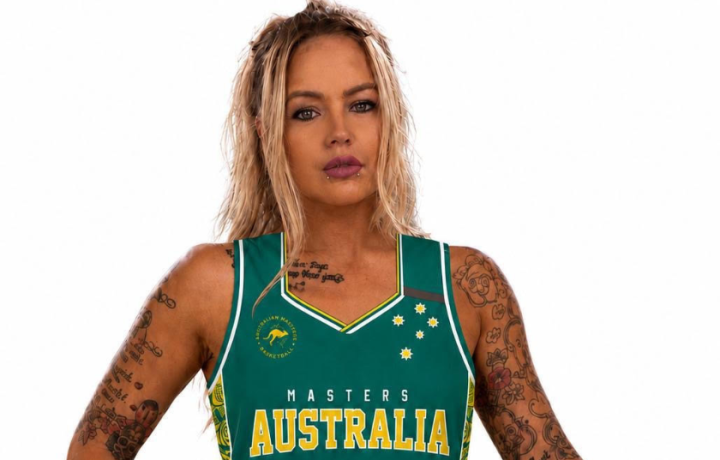
Erin has been playing basketball since Year 5 and, 30 years on, still plays socially while coaching and serving as Vice-President for the Ginninderra Rats, Canberra’s largest basketball club with around 800 junior players. Now, Erin is preparing to represent Australia at the FIBA Masters Open in Greece.
While Erin’s connection to the sport has endured, the landscape around her has changed. Women’s basketball in Canberra is struggling at the senior level in ways the junior numbers don’t yet reveal.
“I feel like over the last few years [girls] have dropped off a lot,” she says. “I was playing A grade, and there weren’t enough teams to keep that comp going. We had to move to a different one.”
Her observation may feel familiar to anyone who has followed women’s sport in this country. Roughly 60 per cent of Australian women quit club sports at 16, nearly twice the rate of boys.
“Once [girls] hit 17, 18, social lives become a little bit more important,” Erin notes. “But also, people are having kids younger. You have girls who are eighteen with kids. They’re not going to be able to afford to play. It is an expensive sport.”
Cost is just one barrier; a lack of resources and infrastructure to support female players is another key obstacle. Late-night game schedules lock out single mothers without support, and a shortage of referees for women’s teams means games get cancelled – and players get more physical.
“People get hurt…and mums can’t afford to get hurt,” she says simply.
“When you see…[that] there’s a men’s game playing and a women’s game playing, they’ll have the stronger referees on the men’s game…because in their eyes, it’s more competitive with men, and they need stronger referees.”
She’d like to see more involvement from elite players and Basketball ACT to provide more support for female players.
“There’s always just been a massive focus on the junior Premier League and the Centre of Excellence…whereas the tier one to five kids just miss out. They just don’t get good coaches…or the best referees. So I guess for them, it just feels like a kick in the face.”
Beyond the court, Erin’s relationship with the game was completely upended when she had to undergo a major hysterectomy.
“It was pretty difficult… because your hormones and everything are changing as well. You feel like you’re at that age where you’re just old. You don’t have a choice over your body anymore. And then not having that breakaway from life and reality – you don’t get that outlet where you can just clear your head. It does take it all.”
“And then also coming back and not being where you were before is just even more of a kick in the face,” Erin adds.
She framed the experience of returning to the court, as she frames most things, through her daughters.
“In my head, I’m like I’ve got two young girls, so I need to show them that, no matter what, we might be women and we might have to do these things, but it doesn’t mean that we can’t do the things that we love.”
Showing up and doing what she loves is a mindset that carries directly into her role as the Manager of Counselling, Outreach and Tenancy Support at EveryMan.Erin manages accommodation and support services, working with men experiencing homelessness and those exiting the justice system – some of the most difficult-to-house and least supported people in Canberra.
“We house [these men] and reintegrate them back into the community, but…because they are men…the only properties we get are in high-density rough areas where there’s a lot of drug use. We’re getting them out and putting them straight back into what they’ve come from. So it’s really hard to get change,” explains Erin.
She believes it’s critical for women to work in the space.
“If we’re trying to teach men how to change their behaviour and respect women, they need to hear it from women,” Erin says.
“It’s a hard job to do. It’s a hard job to feel.”
It was at a friend’s suggestion that Erin decided to try out for Australia at the FIBA Masters Open.
“Either way, I make it, or I don’t. It’s not gonna change me playing [basketball],” she recalls thinking. “If I make it, that’s amazing. If I don’t, then it’s just another day.”
Despite her initial hesitation, she made the team.
“I was pretty nervous. They’re from all over Australia. I didn’t know if I was at their level,” she admits, “But I’ve been training with the other girls in the older teams here. We’ve built a little community together between the three women’s teams. It’s just been really nice.”
Telling her daughters was, she says, a pretty proud moment.
For women considering returning to sport but hesitating because of cost, time, exhaustion or the guilt of taking something back for themselves, Erin’s advice is uncomplicated.
“Just rip the band-aid off. There has to be a point where you have to put yourself first. To be the best version of yourself for your kids and your family. You need some time for yourself. You can’t just keep doing everything for everybody else.”
Erin will wear the green and yellow to compete for the Brolgas Women’s 40+ team in Greece from 4–12 July.

